
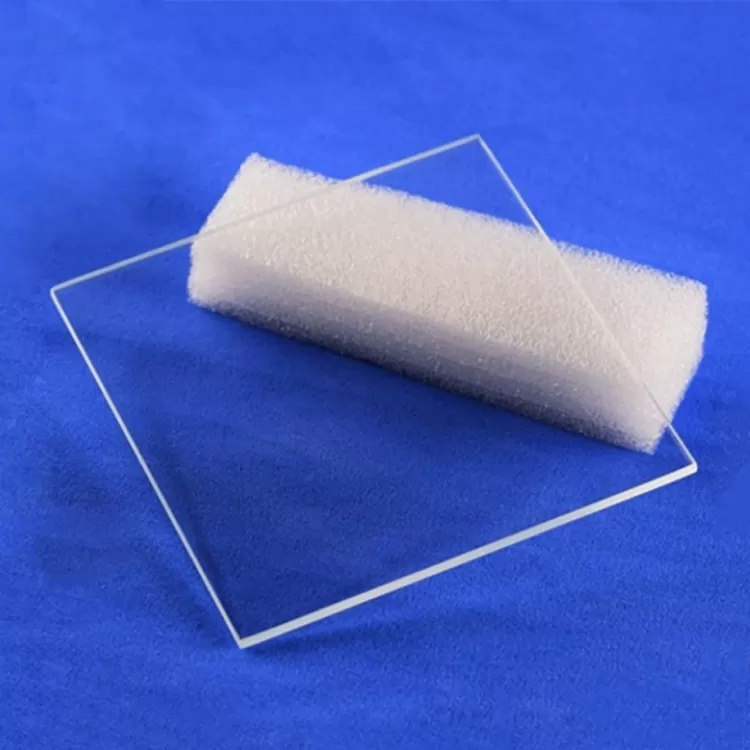

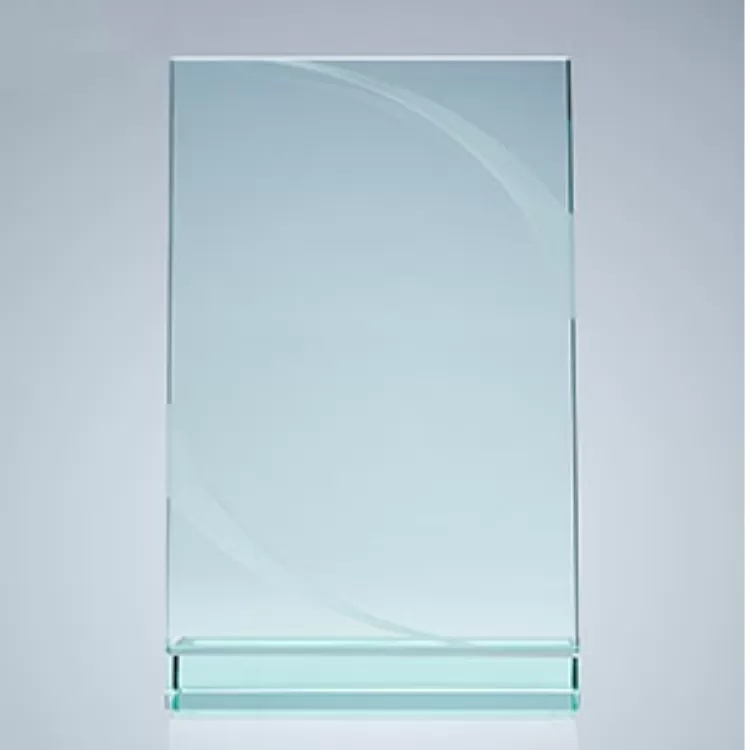
Soda-lime glass wafers are a cost-effective and widely used alternative to borosilicate and quartz wafers, especially in applications where high optical clarity, smooth surface, and low material cost are required.
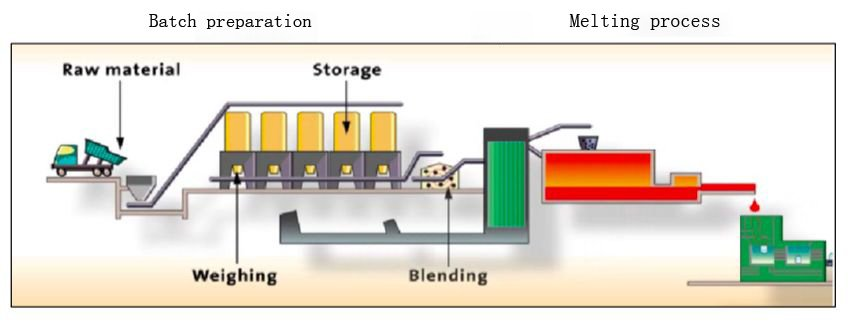
Manufactured using the float glass process, soda-lime glass provides excellent flatness, uniform thickness, and low surface roughness, making it highly suitable for thin/thick film deposition, coating processes, and MEMS-related research.
Due to its chemically stable and non-reactive surface, soda-lime glass wafers are commonly used as mechanical support substrates for conductive electrodes and functional thin films.
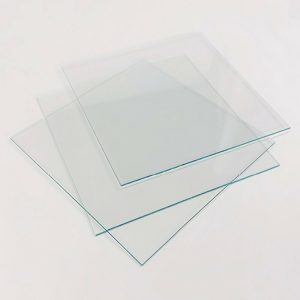
Key Features
- High Optical Transparency
Visible light transmission up to 88–92%, suitable for optical and display applications - Ultra-Flat Surface
Float process ensures smooth surface ideal for coating and lithography - Cost-Effective Alternative
Lower cost than quartz and borosilicate wafers, ideal for large-volume usage - Excellent Processability
Easy to cut, polish, dice, drill, and shape into custom wafers - Chemical Stability
Resistant to water and mild acids for general lab and industrial environments - Custom Strength Options
Can be chemically strengthened or thermally tempered
Typical Applications
- Thin / Thick Film Deposition
- MEMS & Microfabrication
- Microfluidic Devices
- Optical Coating Substrates
- Sensor & Detector Platforms
- Display & Touch Panel R&D
- Laboratory Test Wafers
Wafer Specifications
| Parameter | Value |
|---|---|
| Material | Soda-Lime Glass |
| Diameter | 2” / 3” / 4” / 6” (custom available) |
| Thickness | 0.5 mm – 3 mm (customizable) |
| Surface Finish | Polished / Double-side polished |
| Flatness | Available upon request |
| Edge Type | Rounded / Chamfered |
| Transparency | 88–92% |
| Refractive Index | 1.51–1.52 |
Physical & Thermal Properties
| Property | Value |
|---|---|
| Density | 2.5 g/cm³ |
| Young’s Modulus | 70–75 GPa |
| Hardness (Mohs) | ~6.5 |
| Thermal Conductivity | 0.95 W/m·K |
| CTE | ~9 × 10⁻⁶ /K |
| Strain Point | ~500°C |
| Annealing Range | 480–585°C |
| Softening Point | 585–740°C |
Processing & Customization
We support full wafer-level customization:
- Wafer Dicing & Resizing
- Double-Side Polishing (DSP)
- CNC Machining
- Laser Cutting
- Hole Drilling / Slotting
- Edge Polishing / Beveling
Available Coatings
- AR (Anti-Reflective)
- ITO Conductive Coating
- Metal Coatings (Au, Al, Cr)
- Dielectric & Optical Filters
Application Note
Soda-lime glass wafers are widely used as reference substrates in:
- Grinding & polishing process development
- Thin film adhesion testing
- Tool and slurry evaluation
Their consistent material properties and low cost make them ideal for process calibration and experimental validation.
Advantages vs Other Wafer Materials
| Property | Soda-Lime Wafer | Borosilicate Wafer | Quartz Wafer |
|---|---|---|---|
| Cost | ⭐ Low | Medium | High |
| Thermal Resistance | Moderate | High | Very High |
| Processability | Excellent | Good | Difficult |
| Optical Quality | Good | Very Good | Excellent |
Important Note
Due to its higher thermal expansion coefficient, soda-lime glass wafers are not suitable for high thermal shock or high-temperature semiconductor processes.
For high-temperature environments, borosilicate or quartz wafers are recommended.
Standard Supply
- Example: 100 pcs (25 × 25 × 1.1 mm)
- Wafer formats available (round / square / custom)
- Cleanroom packaging supported
FAQ – Soda-Lime Glass Wafers
Q1: Are soda-lime glass wafers suitable for MEMS processes?
A: Yes, soda-lime glass wafers are widely used in MEMS research and prototyping, particularly in cost-sensitive or low-temperature applications. Their smooth, flat surfaces make them suitable for thin film deposition, lithography, and microfabrication experiments. However, for high-temperature MEMS processes or applications requiring extreme thermal shock resistance, borosilicate or quartz wafers may be preferred due to their lower coefficient of thermal expansion and higher strain points.
Q2: Can you provide wafer-level polishing?
A: Yes, we offer both single-side and double-side polishing (SSP/DSP) for soda-lime wafers. Polishing ensures optical-grade flatness and low surface roughness, which is essential for precision thin film deposition and optical applications. Surface roughness and flatness can be customized according to your process requirements, and additional options such as edge polishing, chamfering, and beveling are available for handling and assembly in downstream processes.
Q3: Can coatings be applied on wafers?
A: Absolutely. Soda-lime wafers can receive a wide range of coatings, including:
- Anti-Reflective (AR) coatings for enhanced light transmission in optical and display applications
- ITO conductive coatings for electrodes or sensor applications
- Metal coatings (Au, Al, Cr, etc.) for electrical contacts or reflective surfaces
- Dielectric and optical filter coatings for wavelength-specific control
These coatings can be applied to single or double sides, and thicknesses or patterns can be customized according to the specific optical or electrical performance requirements of your project.
Q4: What is the main limitation of soda-lime glass wafers?
A: The primary limitation is lower thermal stability compared to borosilicate or quartz wafers. Soda-lime glass has a higher coefficient of thermal expansion (~9 × 10⁻⁶ /K) and a relatively low softening point. This makes it more susceptible to cracking or warping under rapid temperature changes or high-temperature processes. For applications involving thermal cycling, high-temperature bonding, or extreme thermal shock, alternative glass types such as borosilicate or quartz wafers are recommended. Despite this, soda-lime wafers remain highly reliable for room-temperature or low-temperature processes and provide an affordable, optically clear substrate for prototyping and research.

Reviews
There are no reviews yet.