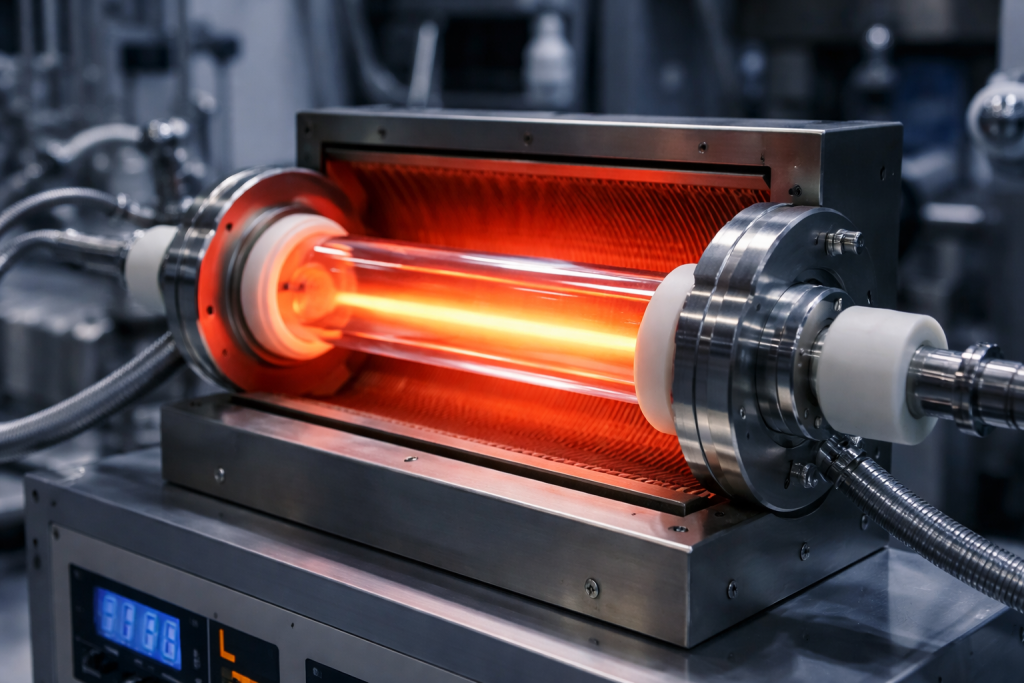
Sulakvartsi (tunnetaan myös nimellä sulatettu piidioksidi) on yksi kriittisimmistä korkean suorituskyvyn materiaaleista, joita käytetään nykyaikaisissa teollisissa, optisissa ja puolijohdeympäristöissä. Sen ainutlaatuinen yhdistelmä lämpöstabiilisuutta, optista läpinäkyvyyttä ja kemiallista kestävyyttä tekee siitä välttämättömän äärimmäisissä käyttöolosuhteissa, joissa tavanomainen lasi tai keramiikka epäonnistuu.
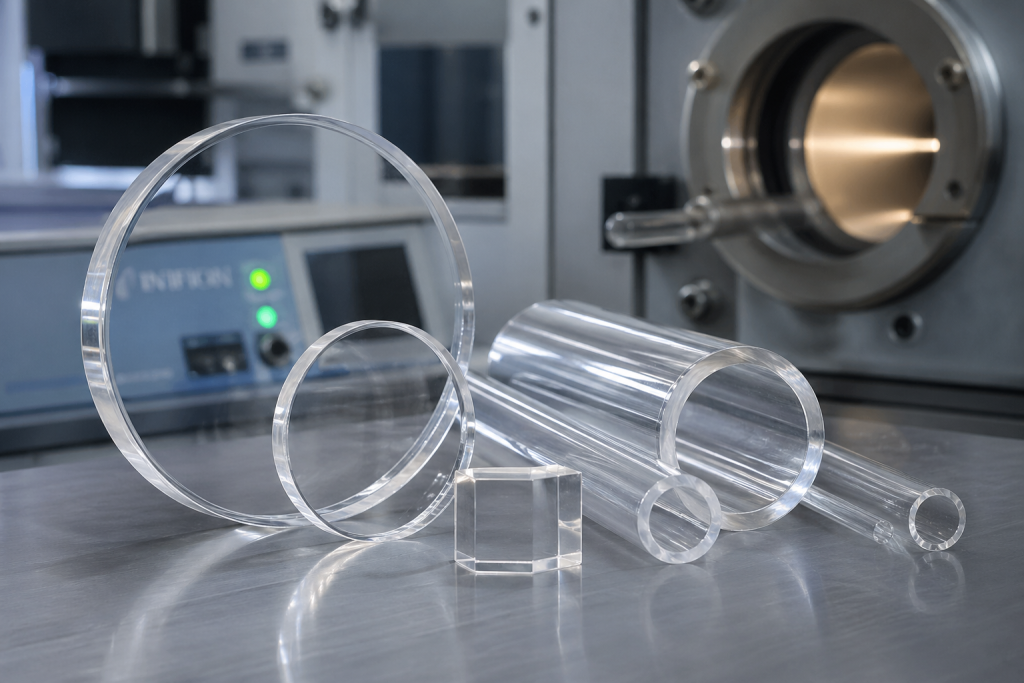
1. Mikä on sulatettu kvartsi?
Sulatettu kvartsi on erittäin puhdas piidioksidin (SiO₂) muoto, jota valmistetaan sulattamalla luonnon kvartsikristallia tai synteettistä piidioksidia erittäin korkeissa lämpötiloissa (tyypillisesti yli 1700 °C) ja jäähdyttämällä se nopeasti ei-kiteiseksi (amorfiseksi) rakenteeksi.
Toisin kuin tavallisessa lasissa, sulatetussa kvartsissa on:
- Erittäin alhainen lämpölaajeneminen
- Korkea optinen UV- ja IR-lähetys
- Erinomainen kemiallinen kestävyys
- Korkea pehmenemislämpötila (~1 660 °C)
Näiden ominaisuuksien ansiosta se on suosittu materiaali puolijohde-, laser-, ilmailu- ja avaruusteollisuudessa sekä kemianteollisuudessa.
2. Sulatetut kvartsi-ikkunat
2.1 Toiminta ja tarkoitus
Sulakekvartsiikkunat ovat läpinäkyviä optisia esteitä, joita käytetään eristämään ympäristöjä, mutta jotka päästävät valon tai säteilyn läpi minimaalisella vääristymällä.
Niitä käytetään laajalti:
- Puolijohdeprosessikammiot
- Korkean lämpötilan uunit
- UV-sterilointijärjestelmät
- Laser- ja fotoniikkalaitteet
- Tyhjiö- ja plasmajärjestelmät
2.2 Tärkeimmät suorituskykyyn liittyvät edut
| Kiinteistö | Etu teollisessa käytössä |
|---|---|
| Korkea optinen läpäisykyky (UV-IR-alue) | Mahdollistaa tarkan optisen tunnistuksen ja lasersyötön |
| Alhainen lämpölaajeneminen | Estää halkeilua nopeissa lämpötilan muutoksissa |
| Korkea puhtaus | Minimoi kontaminaation puolijohdeympäristöissä |
| Kemiallinen kestävyys | Pysyy vakaana happamissa ja hapettavissa ilmakehissä. |
2.3 Tekninen näkemys
Korkea-energisissä ympäristöissä, kuten plasmasyövytyskammioissa, sulakekvartsiikkunat säilyttävät rakenteellisen eheyden jopa lämpösyklien ja ionipommituksen aikana. Tämän vuoksi ne ovat parempia kuin borosilikaattilasi kehittyneissä valmistusjärjestelmissä.
3. Sulatetut kvartsiputket
3.1 Teollisuuden rooli
Sulakekvartsiputket ovat lieriömäisiä komponentteja, joita käytetään pääasiassa lämpö-, kemian- ja puolijohdeprosesseissa. Ne toimivat:
- Reaktiokammiot
- Uunin putket
- Diffuusio- ja hapetusputket
- Kemikaalien kuljetuskanavat
3.2 Miksi kvartsiputket ovat kriittisiä?
Kvartsin lämpölaajenemiskerroin≈0,55×10⁻⁶/K
Tämä erittäin alhainen lämpölaajeneminen on syy siihen, että kvartsiputket kestävät nopeita lämmitys- ja jäähdytysjaksoja ilman muodonmuutoksia tai halkeamia.
3.3 Sovellus puolijohdeteollisuudessa
Kiekkojen käsittelyssä kvartsiputkia käytetään:
- Termiset hapetusuunit
- LPCVD-järjestelmät (Low Pressure Chemical Vapor Deposition)
- Hehkutusprosessit
Niiden erittäin korkea puhtaus varmistaa, että mikään metallinen kontaminaatio ei vaikuta kiekon laatuun.
3.4 Tärkeimmät edut
- Korkea lämpötilankestävyys (>1200 °C jatkuva käyttö)
- Erinomainen lämpöshokkien kestävyys
- Korkea kemiallinen puhtaus
- Vakaa mekaaninen suorituskyky tyhjiössä
4. Optiset sulatetut kvartsijärjestelmät
4.1 Yleiskatsaus
Optisiin sulakekvartsijärjestelmiin kuuluvat linssit, prismat, säteenjakajat ja erikoistuneet optiset kokoonpanot, joita käytetään korkean tarkkuuden ympäristöissä.
Nämä järjestelmät on suunniteltu:
- Lasersäteen muotoilu
- UV-litografia
- Spektroskopia
- Avaruusoptiikka
- Tieteellinen instrumentointi
4.2 Optisen suorituskyvyn ominaisuudet
| Kiinteistö | Insinöörien etu |
|---|---|
| Laaja spektrinen läpäisykyky (syvältä UV:stä IR:ään) | Mahdollistaa monitaajuuksiset optiset järjestelmät |
| Alhainen kaksoiskatkonaisuus | Säilyttää säteen laadun lasersovelluksissa |
| Korkea säteilynkestävyys | Soveltuu avaruus- ja ydinympäristöihin |
| Matala fluoresenssi | Välttämätön korkean tarkkuuden spektroskopiassa |
4.3 Puolijohteiden ja fotoniikan käyttötapaus
Fotolitografiajärjestelmissä sulatettua kvartsioptikkaa käytetään UV-valon tarkkaan lähettämiseen piirien kuviointia varten nanometrin mittakaavassa. Kaikki materiaalin vääristymät vaikuttaisivat suoraan sirujen tuottoon, minkä vuoksi kvartsi on alan standardi.
5. Valmistukseen ja laatuun liittyvät näkökohdat
Suorituskykyiset sulakekvartsikomponentit edellyttävät tiukkaa valmistuksen valvontaa:
- Raaka-aineen puhtaus (SiO₂ ≥ 99,99%)
- Hallittu korkean lämpötilan sulatus
- Tarkkuuskoneistus ja kiillotus
- Pintavikojen tarkastus (naarmuuntumis- ja kaivautumisstandardit)
- Mittatoleranssin valvonta (erityisesti puolijohdekäytössä)
Edistyneet toimittajat tarjoavat myös:
- Mukautettu geometrian suunnittelu
- Pinnoite (heijastamaton / suojakerrokset)
- Puhdastilapakkaukset
- Jäljitettävyyden sertifiointi
6. Sulatettu kvartsi vs. vaihtoehtoiset materiaalit
| Materiaali | Lämpöstabiilisuus | Optinen laatu | Kemiallinen kestävyys | Teollinen käyttö |
|---|---|---|---|---|
| Sulatettu kvartsi | Erinomainen | Erinomainen (UV-IR) | Erinomainen | Puolijohteet, optiikka |
| Borosilikaattilasi | Medium | Hyvä | Medium | Laboratoriotarvikkeet, matalalämpöjärjestelmät |
| Sapphire | Erittäin korkea | Erinomainen | Erinomainen | Äärimmäinen optiikka, paineikkunat |
| Standardi lasi | Matala | Rajoitettu | Matala | Yleinen käyttö |
7. Miksi teollisuus suosii sulatettua kvartsia
Tekniikan näkökulmasta sulatettu kvartsi valitaan silloin, kun vaaditaan kolmea ehtoa samanaikaisesti:
- Korkean lämpötilan kestävyys
- Korkea optinen suorituskyky
- Kemiallinen ja ympäristönkestävyys
Tämä yhdistelmä on harvinainen teknisten materiaalien joukossa, mikä tekee kvartsista strategisen materiaalin kehittyneissä valmistusekosysteemeissä.
8. Päätelmät
Sulakekvartsikomponenteilla, kuten ikkunoilla, putkilla ja optisilla järjestelmillä, on perustavanlaatuinen rooli nykyaikaisessa korkean teknologian teollisuudessa. Niiden suorituskykyä määrittävät poikkeuksellinen lämpöstabiilisuus, optinen läpinäkyvyys ja kemiallinen kestävyys, mikä tekee niistä välttämättömiä puolijohdevalmistuksessa, fotoniikassa, ilmailu- ja avaruusalalla sekä kemikaalien käsittelyssä.
Teollisuuden vaatimusten kehittyessä kohti suurempaa tarkkuutta ja vaativampia ympäristöjä sulakekvartsiratkaisujen kysyntä kasvaa edelleen.