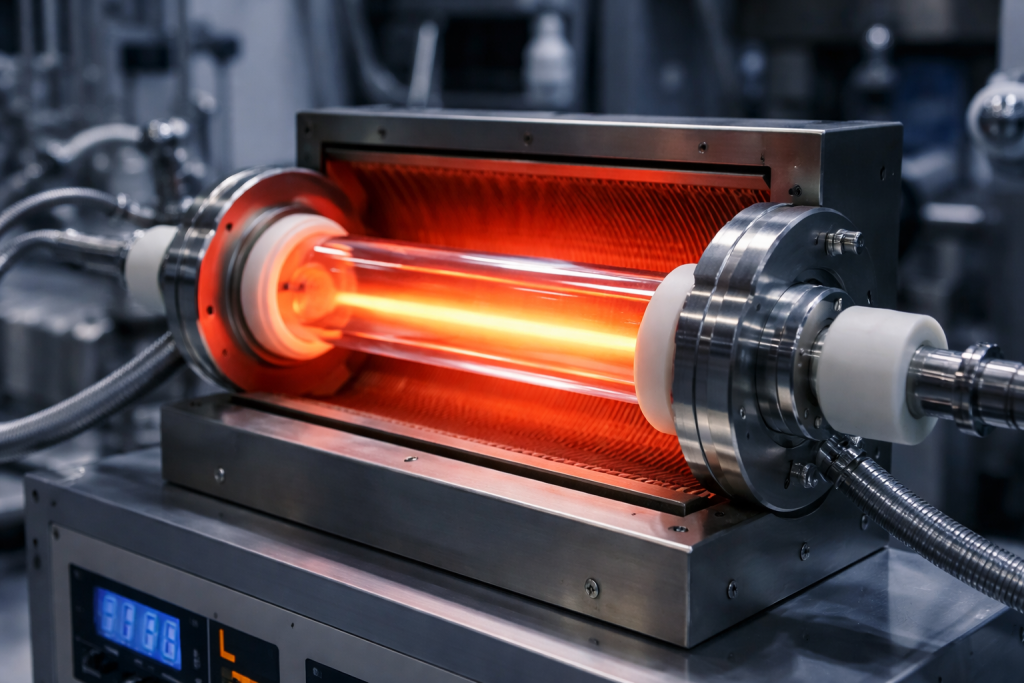
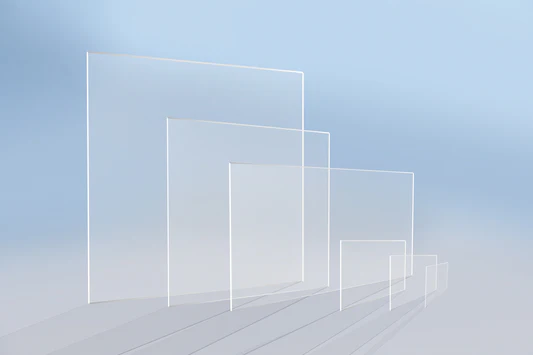
Glass materials play a critical role in industrial systems, laboratory equipment, semiconductor processing, thermal observation windows, and optical devices. However, in engineering applications, “glass” is far from being a single material category. Different glass types exhibit significantly different behavior under high-temperature environments.
One common question during material selection is:
What is the difference between Kuvars Cam and Tempered Glass, and which one should be selected for high-temperature industrial applications?
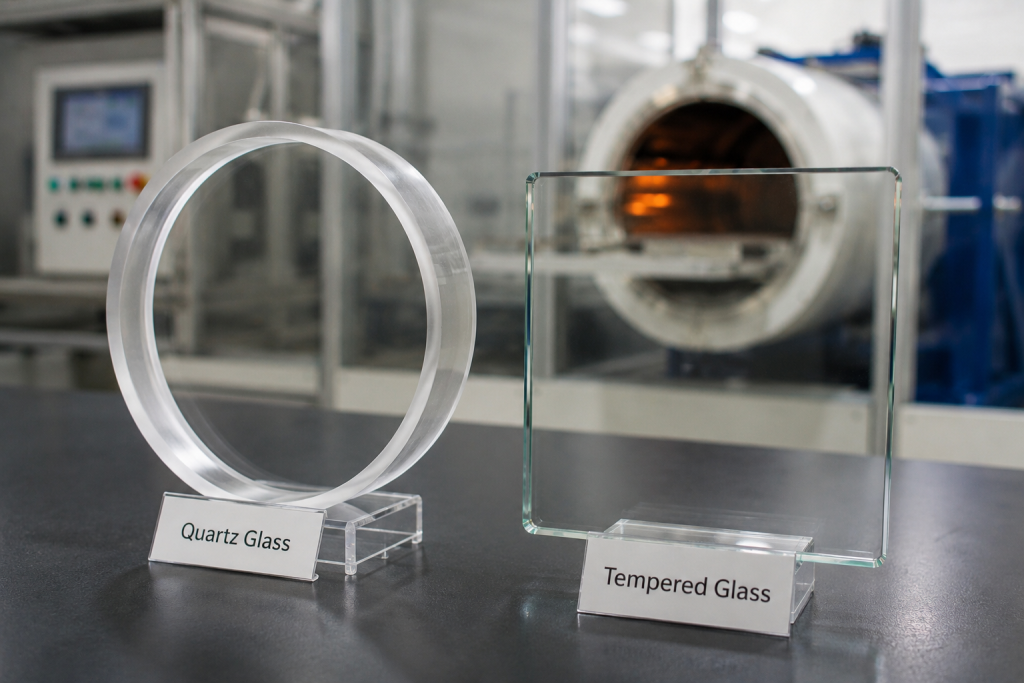
Although both materials may appear visually similar, their chemical composition, internal structure, thermal properties, and operational limits differ substantially. Tempered glass is widely used in architectural and consumer products, while quartz glass has become an essential material in semiconductor, furnace, optical, and scientific industries.
This article examines the differences between these two materials from a scientific and engineering perspective.
Understanding Quartz Glass
Quartz glass, also known as fused quartz or fused silica, is a non-crystalline material produced by melting high-purity silicon dioxide (SiO₂).
Key characteristics include:
- SiO₂ purity often exceeding 99.99%
- Son derece düşük termal genleşme
- Excellent high-temperature resistance
- Yüksek ultraviyole geçirgenliği
- Superior chemical stability
- Outstanding thermal shock resistance
Common industrial quartz materials include:
- Erimiş Kuvars
- Synthetic Fused Silica
- Optical Quartz
- High-Purity Semiconductor Quartz
Due to its exceptional thermal and optical properties, quartz glass is widely used in demanding industrial environments.
Tipik uygulamalar şunlardır:
- Semiconductor furnace tubes
- High-temperature sight windows
- UV optical systems
- Quartz tubes
- Laboratory instruments
- Lazer bileşenleri
Understanding Tempered Glass
Tempered glass is produced by heat-treating conventional glass and rapidly cooling its surface.
This process generates compressive stress layers on the outer surface, improving impact resistance and mechanical strength.
Key characteristics include:
- Higher mechanical strength than ordinary glass
- Better impact resistance
- Safe fragmentation behavior
- Cost-effective production
- Wide commercial availability
Common applications include:
- Building facades
- Automotive windows
- Consumer electronics
- Household appliances
- Protective panels
Unlike quartz glass, however, tempered glass derives its advantages mainly from stress engineering rather than intrinsic material properties.
Material Composition Differences
The fundamental distinction begins with chemistry.
| Mülkiyet | Kuvars Cam | Tempered Glass |
|---|---|---|
| Main Composition | High-purity SiO₂ | Soda-lime or borosilicate glass |
| Saflık | >99.99% | Daha düşük |
| Internal Structure | Amorphous SiO₂ network | Multi-component glass |
| Alkali İçeriği | Son derece düşük | Nispeten yüksek |
Tempered glass often contains sodium, calcium, and other modifiers that reduce melting temperature but also limit thermal performance.
Quartz glass maintains a highly pure silicon-oxygen structure, contributing to its superior thermal characteristics.
High-Temperature Performance Comparison
Temperature capability is often the primary factor in industrial material selection.
| Mülkiyet | Kuvars Cam | Tempered Glass |
|---|---|---|
| Continuous Service Temperature | ~1100°C | ~250–300°C |
| Softening Temperature | ~1650°C | ~700–750°C |
| Termal Kararlılık | Mükemmel | Orta düzeyde |
| Extreme Heat Resistance | Çok yüksek | Sınırlı |
Quartz glass can withstand temperatures above 1000°C for extended periods.
Tempered glass, despite increased strength, loses structural stability when exposed to prolonged high temperatures.
For industrial furnaces and thermal processing systems, ordinary tempered glass becomes unsuitable.
Thermal Expansion: A Critical Engineering Parameter
One of the most important properties in high-temperature environments is thermal expansion.
Quartz glass possesses one of the lowest thermal expansion coefficients among engineering materials.
Typical values:
Quartz glass:5.5×10⁻⁷/°C
Tempered glass:80–90×10−7/°C
The difference is substantial.
Low expansion minimizes:
- Thermal stress
- Shape distortion
- Crack formation
- Mechanical failure
This property explains why quartz glass performs exceptionally well during rapid temperature fluctuations.
Termal Şok Direnci
Industrial equipment often experiences rapid heating and cooling cycles.
Thermal shock occurs when temperature changes generate internal stress exceeding material strength.
Quartz glass exhibits extraordinary thermal shock resistance.
For example:
A heated quartz tube can often survive direct exposure to room-temperature environments without fracture.
Tempered glass performs better than ordinary glass but remains limited under severe thermal gradients.
Applications involving:
- Semiconductor diffusion
- Furnace observation windows
- Rapid heating systems
- Thermal processing equipment
typically require superior thermal shock performance.
Optical Performance Comparison
Optical behavior can also influence material selection.
| Mülkiyet | Kuvars Cam | Tempered Glass |
|---|---|---|
| UV İletimi | Mükemmel | Sınırlı |
| Visible Light Transmission | Yüksek | Yüksek |
| Infrared Transmission | İyi | Orta düzeyde |
| Optical Stability at High Temperature | Mükemmel | Sınırlı |
Quartz materials maintain optical clarity even during prolonged high-temperature exposure.
Tempered glass may gradually degrade or discolor under extreme conditions.
Kimyasal Stabilite
Industrial environments frequently expose materials to aggressive chemicals.
Quartz glass demonstrates excellent resistance to:
- Acids
- Solvents
- Corrosive gases
- High-temperature oxidation environments
Tempered glass can be more vulnerable to chemical attack due to alkali components within its structure.
This becomes particularly important in semiconductor and laboratory applications.
Typical Industrial Applications
Kuvars Cam Uygulamaları
- Semiconductor furnace tubes
- Diffusion systems
- UV sterilizasyon ekipmanları
- Optik pencereler
- Laser systems
- High-temperature process chambers
Tempered Glass Applications
- Building architecture
- Household appliances
- Protective covers
- Automotive glass
- Display systems
The overlap between the two materials is relatively small because they serve fundamentally different engineering purposes.
Selection Guidelines
Quartz glass should be considered when:
- Operating temperatures exceed 500°C
- Extreme thermal shock resistance is required
- UV transmission is important
- Chemical purity matters
- Long-term stability under heat is critical
Tempered glass may be suitable when:
- Cost reduction is important
- Mechanical impact resistance is needed
- Operating temperatures remain moderate
- General protective applications are involved
Material selection should always prioritize operating conditions rather than initial cost.
Son Düşünceler
Although quartz glass and tempered glass appear visually similar, they represent two fundamentally different engineering materials.
Tempered glass improves strength through processing methods, while quartz glass derives its performance from intrinsic material characteristics.
For demanding industrial environments involving high temperature, thermal cycling, contamination control, and optical performance, quartz glass often becomes the preferred solution.
Understanding these material differences helps engineers make more informed decisions and improve long-term system reliability.
SSS
Can tempered glass replace quartz glass in industrial furnaces?
Generally no. Tempered glass cannot withstand prolonged exposure above several hundred degrees Celsius and may fail under severe thermal conditions.
Why does quartz glass resist thermal shock better?
Quartz glass has an extremely low thermal expansion coefficient, which minimizes internal stress during rapid temperature changes.
Is quartz glass stronger than tempered glass?
Tempered glass usually has higher impact strength, but quartz glass offers much better thermal and chemical performance for industrial applications.