In semiconductor manufacturing, material selection directly impacts device performance, production efficiency, and yield. Quartz (SiO₂) materials, due to their exceptional physical and chemical properties, have become indispensable in the semiconductor industry. This article explores the relationship between quartz materials and semiconductor manufacturing from three perspectives: properties, key applications, and future trends.
Key Properties of Quartz Materials
Quartz exhibits several characteristics that make it highly suitable for semiconductor processes:
- High Purity and Low Impurities
High-purity quartz can achieve metal impurity levels at the parts-per-billion (ppb) level. This is critical in semiconductor production, as even trace metal ions can introduce defects and affect the electrical performance of wafers. - Excellent Thermal Stability
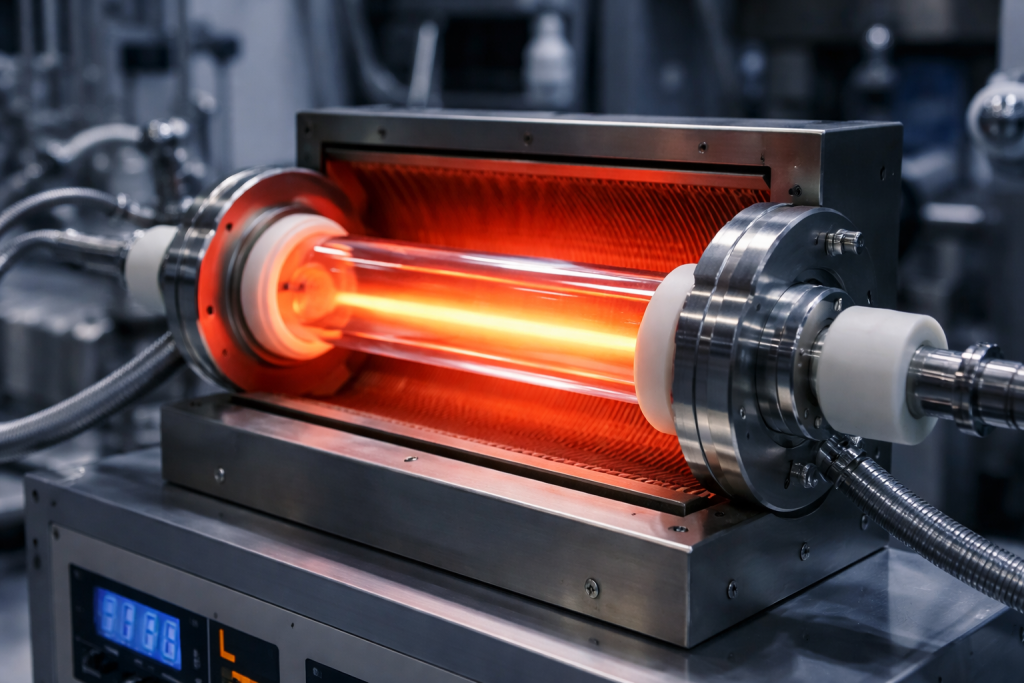
Quartz has a melting point of 1710 °C and does not decompose or deform significantly under high temperatures. It is suitable for high-temperature processes such as oxidation, annealing, and chemical vapor deposition (CVD). - Low Thermal Expansion Coefficient
With a linear thermal expansion coefficient of approximately 0.5×10⁻⁶/K, quartz maintains dimensional stability under thermal cycling, ensuring wafer precision and process consistency. - Outstanding Chemical Stability
Quartz resists most acids and bases, making it suitable for wet etching, cleaning, and other chemical processes, while minimizing material contamination.
Applications of Quartz in Semiconductor Manufacturing
- Quartz Crucibles
Used for high-temperature crystal growth, such as Czochralski single-crystal silicon pulling and polycrystalline silicon melting. High-purity quartz crucibles prevent contamination and ensure crystal integrity. - Quartz Tubes
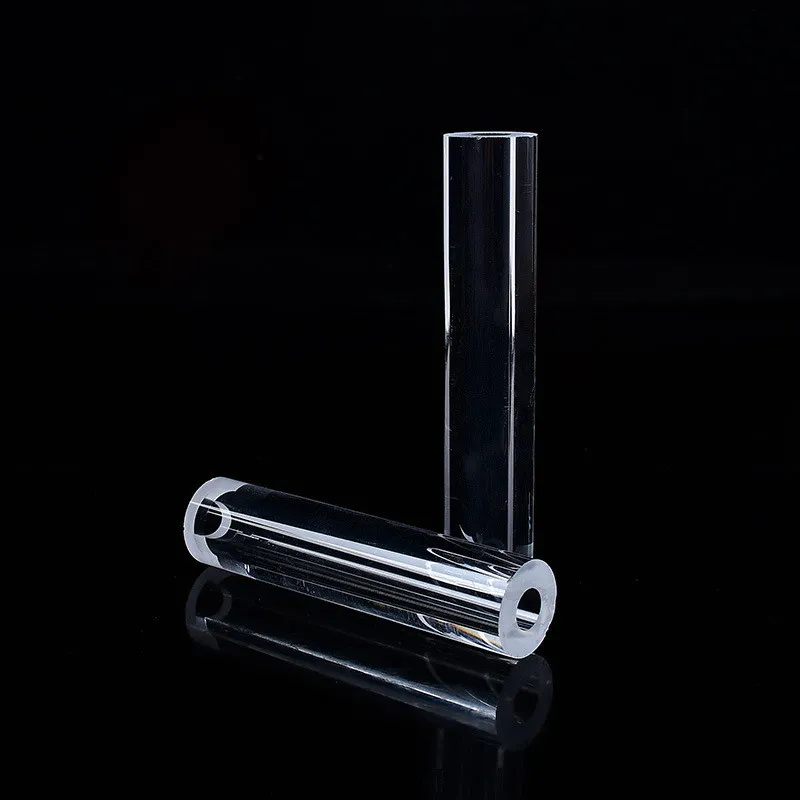
Serve as reaction tubes in CVD, oxidation, and annealing furnaces. Quartz tubes withstand high temperatures and react minimally with process gases, making them essential containment materials. - Quartz Plates and Substrates
Employed as carriers or protective plates in photolithography, etching, and thin-film deposition. Their transparency and heat resistance ensure process stability. - Optical-Grade Quartz Glass
Used in ultraviolet (UV) lithography systems and optical metrology instruments. High optical transparency and low light loss are critical for photolithography precision.
Impact of Quartz Materials on the Semiconductor Industry
As wafer sizes evolve from 6-inch and 8-inch to 12-inch and beyond, demand for high-purity quartz continues to rise. Advances in quartz materials not only improve wafer yield but also reduce production costs:
- Large Size and Uniformity: Supports uniform heating and handling of larger wafers.
- High Surface Cleanliness: Reduces particle contamination and chemical impurities, enhancing lithography and deposition success rates.
- Customizable Designs: Quartz can be fabricated with specific shapes and coatings to meet diverse process requirements.
Future Trends
- Ultra-High Purity Quartz: To meet the increasingly stringent defect tolerance of advanced semiconductor devices.
- Thin-Walled and Lightweight Designs: Adapted for high-throughput production and rapid temperature control.
- Functional Coated Quartz: Anti-contamination and stress-resistant coatings to extend service life.
Conclusion
Quartz materials play a foundational and critical role in semiconductor manufacturing. Their high purity, thermal stability, low thermal expansion, and chemical inertness make them indispensable in processes such as wafer growth, photolithography, and thin-film deposition. As semiconductor technology advances, innovations in high-performance quartz will further drive industry development and provide reliable support for next-generation chip manufacturing.