1. What Are Semiconductor Quartz Components?
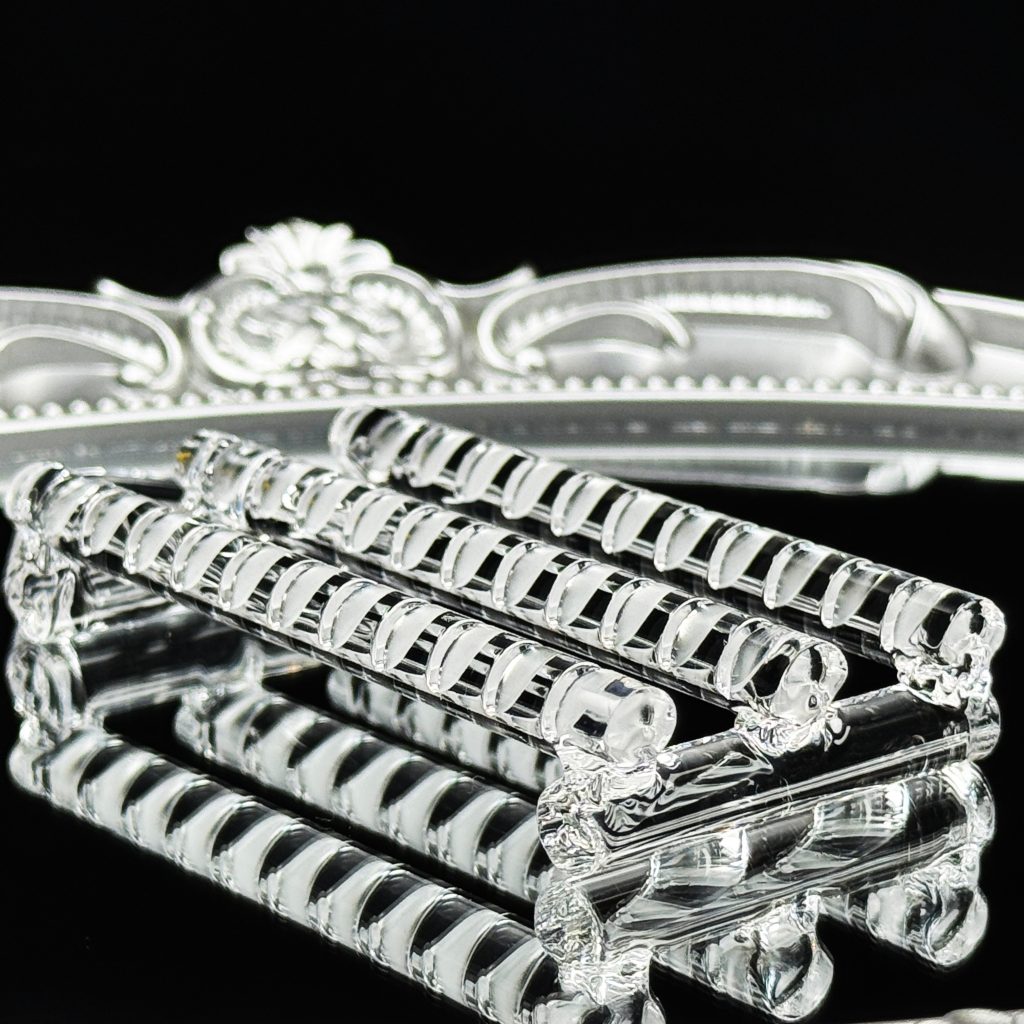
Semiconductor quartz components refer to precision parts made from high-purity fused silica (SiO₂), widely used in wafer fabrication equipment.
These components are critical consumables in semiconductor manufacturing tools and include:
- Quartz tubes (furnace tubes)
- Quartz wafer boats
- Quartz crucibles
- Quartz rods and plates
- Fused silica chamber liners
- Custom quartz process chambers
They are classified as key semiconductor equipment consumables (Semiconductor Consumables).
2. Applications of Quartz Components in Semiconductor Manufacturing
Quartz components are used throughout almost the entire wafer fabrication process, making them indispensable in advanced semiconductor production.
2.1 Diffusion and Oxidation Processes (High-Temperature Applications)
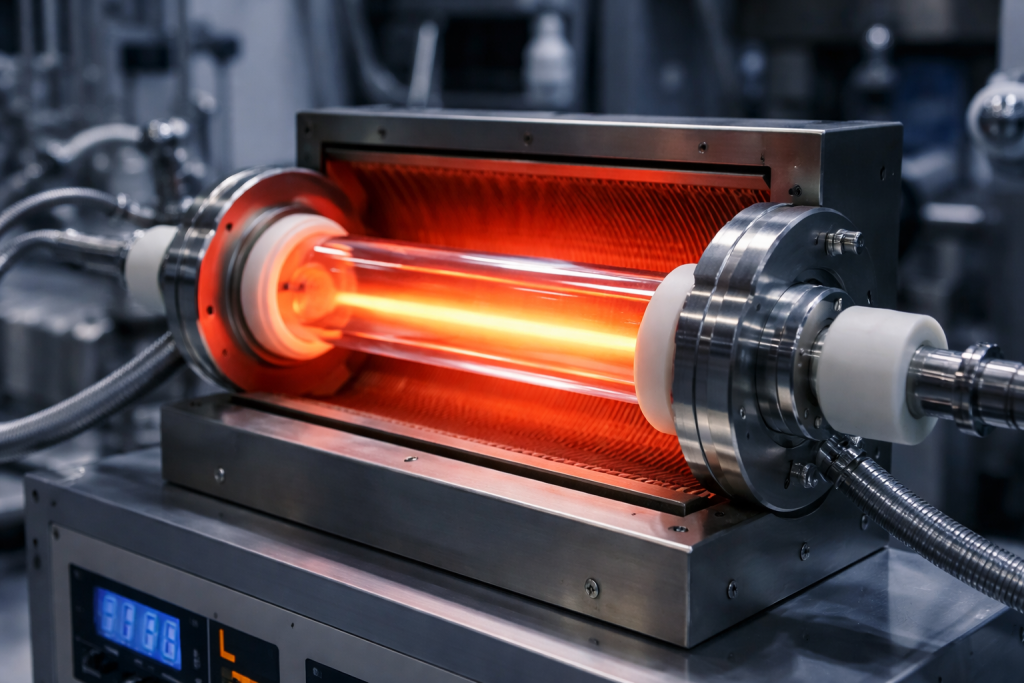
In high-temperature processes above 1000°C, quartz components are used in:
- Diffusion furnace tube systems
- Oxidation furnace chambers
- Wafer loading boats for high-temperature transport
Key Requirements:
- High thermal stability
- Excellent deformation resistance
- Ultra-low impurity release
- Long-term high-temperature endurance
This is one of the most critical application areas for semiconductor quartz components.
2.2 Plasma Etching Process Support
In plasma-based etching environments, quartz materials are used for:
- Etch chamber liners
- Gas flow distribution components
- Wafer support structures
Key Requirements:
- High plasma resistance
- Low particle generation
- Long operational lifetime
2.3 Lithography and Wet Cleaning Applications
In low-temperature processes, quartz components are used for:
- Optical windows and transparent structures
- Wet chemical cleaning tanks
- Wafer handling and transfer structures
Key Requirements:
- High optical transmission
- Strong chemical resistance (acid/alkali)
- Ultra-high cleanliness
2.4 Thin Film Deposition and Ion Implantation Support
Quartz components are also used in deposition and doping systems:
- Process chamber structural parts
- High-temperature reaction zone components
- Wafer positioning fixtures
2.5 Wafer Handling and Automation Systems (AMHS Support)
In modern fabs, quartz components play a key role in wafer logistics:
- Quartz wafer boats for batch transport
- High-purity handling fixtures
- Transfer and alignment structures
👉 Objective: reduce contamination and improve yield (Yield Enhancement)
3. High-Temperature vs Low-Temperature Quartz Components
3.1 High-Temperature Quartz Components (Thermal Grade)
Applications:
- Diffusion processes
- Oxidation processes
- High-temperature annealing
Characteristics:
- Continuous operation above 1000°C
- High thermal shock resistance
- Excellent dimensional stability
Key Technical Focus:
- Low hydroxyl (OH) content
- High thermal durability
- Anti-deformation performance
3.2 Low-Temperature Quartz Components (Chemical Process Grade)
Applications:
- Lithography support
- Etching processes
- Cleaning systems
- Pre- and post-processing steps
Characteristics:
- Strong chemical exposure resistance
- High purity requirements
- Surface stability under aggressive environments
Key Technical Focus:
- Ultra-low metallic contamination
- High chemical resistance
- Excellent surface smoothness
4. Technical Barriers of Semiconductor Quartz Components
Quartz components for semiconductor applications represent a high-entry-barrier precision consumables industry.
4.1 High Customization Requirements
- Tool-specific design requirements
- Process-dependent geometries
- Low standardization across applications
4.2 Long Qualification Cycle
- Must pass tool-level validation
- Long-term process stability testing required
- High switching cost once qualified
4.3 High-Purity Material and Precision Manufacturing
Key challenges include:
- Ultra-high purity silica processing
- Precision shaping and annealing control
- Micro-defect suppression
4.4 High Industry Concentration
The high-end quartz consumables market is characterized by:
- Limited global qualified suppliers
- High entry barriers
- Strong technology accumulation requirements
5. Market Trends and Growth Outlook (2026 Perspective)
5.1 Advanced Node Expansion Driving Demand
- Continued scaling to 3nm and below
- EUV-related process chain expansion
- Increased process complexity
5.2 12-Inch Wafer Capacity Expansion
- 12-inch wafer becomes mainstream standard
- Higher process step count per wafer
- Increased consumable consumption
5.3 Growth of Advanced Packaging
- 2.5D / 3D integration
- Chiplet-based architectures
- Higher interconnect density requirements
5.4 Localization of Semiconductor Supply Chain
Global trends (including 2026 outlook):
- Increasing localization of semiconductor materials
- Gradual substitution in mid-to-high-end consumables
- Stronger process validation capabilities in domestic ecosystems
However, advanced-grade quartz components still require high technical thresholds.
5.5 Market Expansion Drivers
The quartz consumables market is driven by:
- Semiconductor industry expansion
- Increasing process complexity
- Rising number of fabrication steps per chip
This makes quartz components a structurally growing consumables market.
6. Strategic Importance of Quartz Components in Semiconductor Manufacturing
Although quartz components do not directly form semiconductor circuits, they are critical for:
- Maintaining stable process environments
- Ensuring wafer yield and consistency
- Preventing contamination in high-purity systems
- Supporting high-temperature and plasma processes
They function as a hidden but essential foundation layer of semiconductor manufacturing.
Conclusion
As semiconductor manufacturing advances toward 3nm and beyond, quartz components will continue to play an increasingly important role.
They are no longer simple industrial consumables, but critical enabling components for advanced wafer fabrication systems, forming a fundamental part of the semiconductor equipment ecosystem.