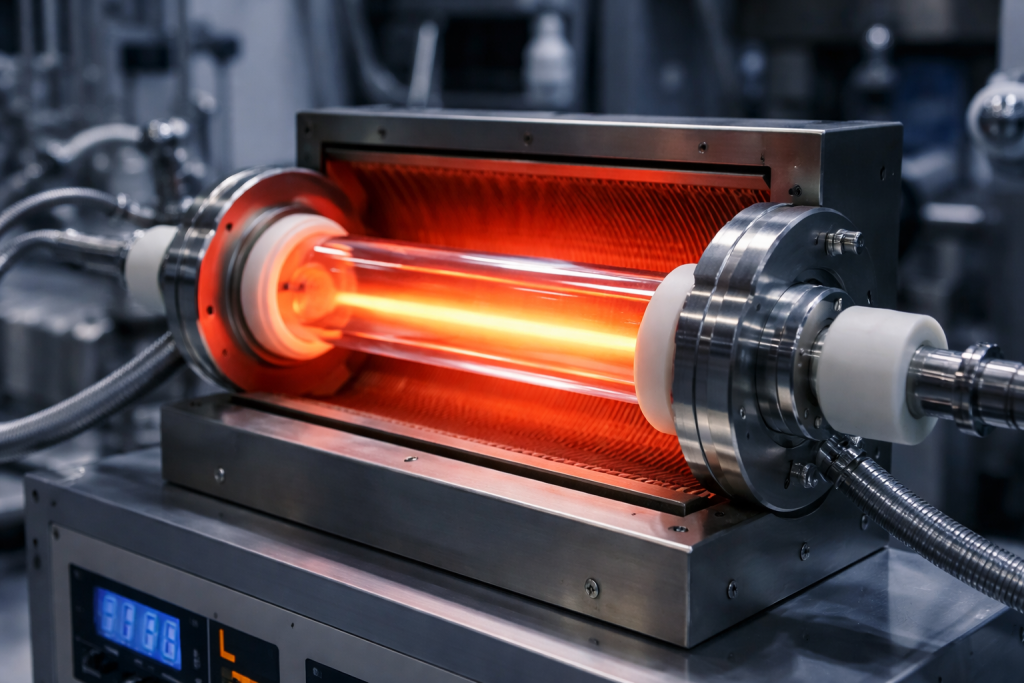
In optical, semiconductor, and photonic applications, selecting the right quartz material directly affects system performance, optical loss, and long-term stability.
JGS1, JGS2, and synthetic fused silica are three commonly used high-performance silica materials, but they differ significantly in transmission range, purity, and application focus.
This guide helps you quickly understand the differences and choose the most suitable material for your project.
1. Material Overview Comparison
JGS1 Quartz Glass
JGS1 is a UV-grade optical quartz glass with good transparency in the ultraviolet range. It is widely used in general optical systems where moderate UV performance is required.
- Good UV transmission
- Lower cost compared to high-purity fused silica
- Suitable for standard optical applications
- Slightly higher impurity level than JGS2
Typical use: optical windows, lighting systems, basic UV optics
JGS2 Quartz Glass
JGS2 is a higher purity UV-grade fused silica with improved optical and thermal stability compared to JGS1.
- Broader transmission range (UV to near IR)
- Lower hydroxyl and impurity content
- Better thermal shock resistance
- More stable in high-energy environments
Typical use: semiconductor lithography, precision optics, photonic devices
High Purity Fused Silica (Synthetic Silica)
This is the highest performance category among the three, offering ultra-low impurities and superior optical uniformity.
- Extremely high optical transmission (deep UV to IR)
- Ultra-low absorption and scattering
- Excellent dimensional stability
- Best performance in extreme environments
Typical use: advanced semiconductor, laser systems, quantum optics, high-end photonics
2. Technical Performance Comparison
| Property | JGS1 | JGS2 | High Purity Fused Silica |
|---|---|---|---|
| UV Transmission | Good | Very Good | Excellent |
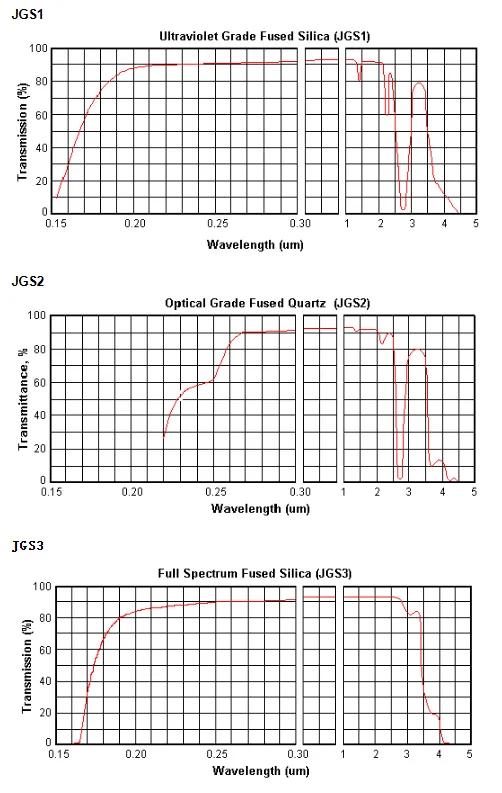
| IR Transmission | Limited | Wide (up to 2500 nm) | Very Wide (up to 3500 nm) |
| Purity Level | Medium | High | Ultra High |
| Thermal Expansion | Moderate | Low | Very Low |
| Optical Homogeneity | Medium | High | Very High |
| Cost Level | Low | Medium | High |
3. Optical Transmission Behavior
5
- JGS1 performs well in basic UV ranges but shows limitations in deep UV and infrared stability
- JGS2 significantly improves transmission consistency across UV–NIR spectrum
- High purity fused silica provides the widest and most stable optical transmission window
For high-power laser or lithography systems, material selection directly affects optical loss and system stability.
4. Application Selection Guide
When to choose JGS1
- General optical windows
- Low-cost UV systems
- Lighting and industrial optics
- Non-critical imaging systems
When to choose JGS2
- Semiconductor lithography
- UV laser optics
- Photonic communication devices
- Precision optical instruments
When to choose High Purity Fused Silica
- Deep UV laser systems
- Advanced semiconductor processes
- Quantum optical research
- High-end photonics and metrology
5. Engineering Insight
Material selection is not only about transparency. It directly affects:
- Signal loss in optical systems
- Thermal deformation under laser exposure
- Long-term stability in vacuum or high temperature environments
- Yield rate in semiconductor manufacturing
In many high-precision systems, upgrading from JGS1 → JGS2 → fused silica can significantly improve performance stability and reduce system failure rate.
6. How to Choose the Right Material
If your application is cost-sensitive and non-critical → JGS1 is sufficient
If you need balance between cost and performance → JGS2 is recommended
If your system requires maximum precision and stability → High purity fused silica is the best choice
7. Conclusion
JGS1, JGS2, and fused silica are not interchangeable materials.
They represent different levels of optical performance, thermal stability, and purity.
For modern semiconductor, photonics, and UV laser applications, JGS2 and high purity fused silica are increasingly becoming the industry standard due to their superior stability and transmission performance.
Choosing the right material at the early design stage can significantly improve device reliability and reduce long-term production costs.