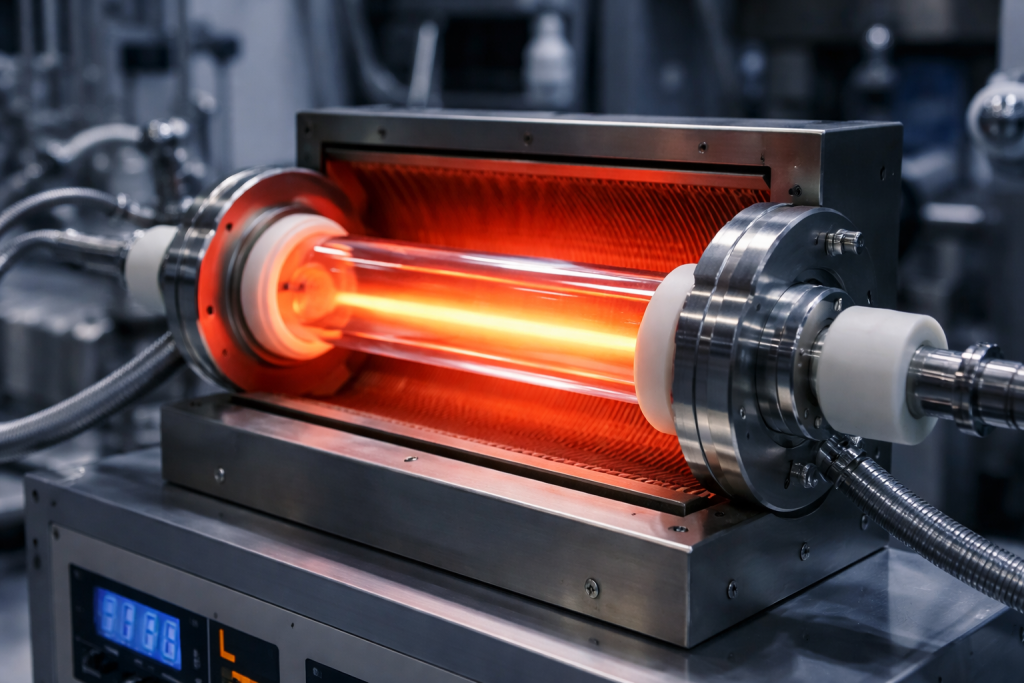
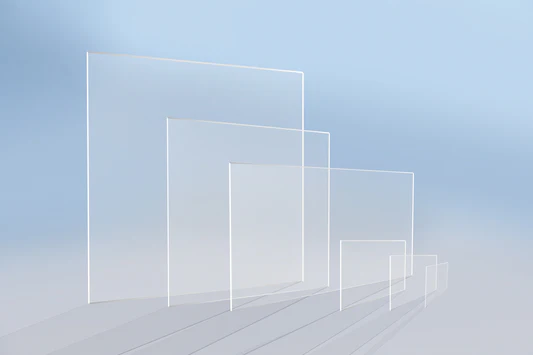
A mérnöki, optikai és magas hőmérsékletű ipari rendszerekben a kvarcüveg és a hagyományos (szódabikarbónás) üveg közötti választás közvetlenül befolyásolja a rendszer stabilitását, teljesítményét és élettartamát. Bár mindkettő szilícium-dioxid alapú átlátszó anyag, szerkezetük, összetételük és terhelés alatti viselkedésük alapvetően különbözik.
Ez az útmutató gyakorlati mérnöki összehasonlítást nyújt a tervezők, beszerző mérnökök és ipari felhasználók számára.
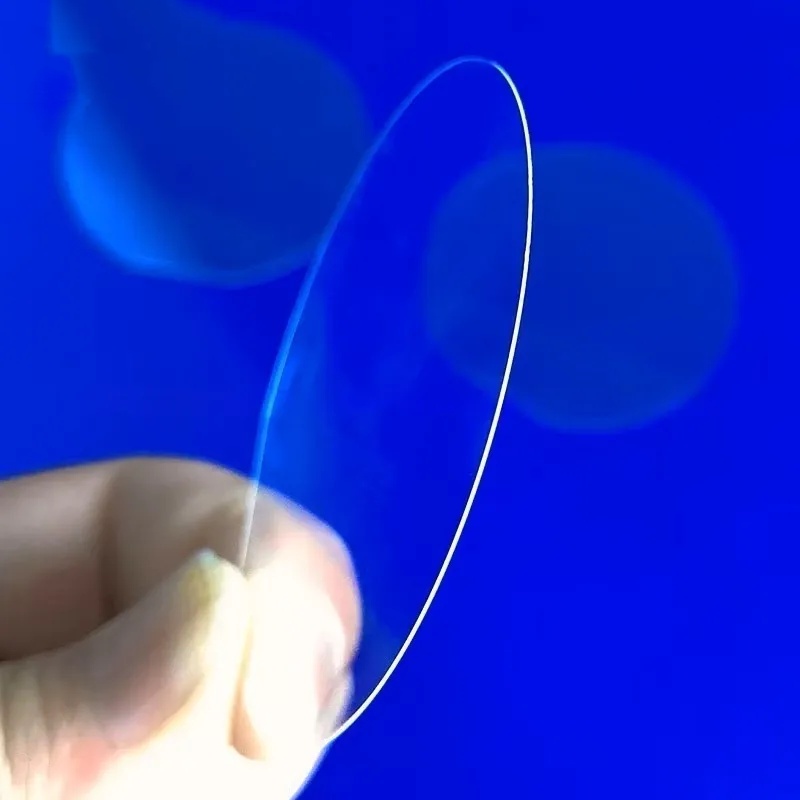
1. Anyag meghatározása
Kvarc üveg (olvasztott szilícium-dioxid)
A kvarcüveg rendkívül nagy tisztaságú szilícium-dioxidból (SiO₂) áll. Természetes kvarc vagy szintetikus szilícium-dioxid rendkívül magas hőmérsékleten történő megolvasztásával állítják elő, amorf (nem kristályos) szerkezetet képezve.
Gyakori ipari elnevezések:
- Olvasztott szilícium-dioxid
- Olvasztott kvarc
Tipikus alkalmazások:
- Félvezetőgyártó rendszerek
- UV és IR optikai rendszerek
- Magas hőmérsékletű kemence alkatrészek
- Precíziós lézer- és fotonikai rendszerek
Normál üveg (szóda-lime üveg)
A közönséges üveg főként a következőkből áll:
- Szilícium-dioxid (SiO₂)
- Nátrium-oxid (Na₂O)
- Kalcium-oxid (CaO)
Költséghatékony, nagyméretű alkalmazásokhoz tervezték.
Tipikus alkalmazások:
- Épület ablakok
- Palackok és tartályok
- Általános célú laboratóriumi üvegáruk
2. Fő mérnöki tulajdonságok összehasonlítása
| Ingatlan | Kvarcüveg (olvasztott szilícium-dioxid) | Normál pohár (szóda-mész) |
|---|---|---|
| Lágyulási pont | ~1660°C | ~720°C |
| Hőtágulás | Rendkívül alacsony | Viszonylag magas |
| UV áteresztés | Kiváló (mély UV) | Szegény |
| Kémiai ellenállás | Kiváló | Mérsékelt |
| Hősokk-ellenállás | Nagyon magas | Alacsony |
| Költségek | Magas | Alacsony |
| Alkalmazási szint | High-end mérnöki rendszerek | Általános alkalmazások |
3. Hőteljesítmény (kritikus tényező)
A kvarcüvegnek rendkívül alacsony a hőtágulási együtthatója:
αquartz≈5,5×10⁻⁷/K
Ez a következőket eredményezi:
- Kiváló ellenállás a gyors hőmérsékletváltozásokkal szemben
- Minimális belső feszültség a fűtési/hűtési ciklusok során
- Stabil teljesítmény plazma- és kemence környezetben
Ezzel szemben a szódabikarbónás üveg hő hatására lényegesen jobban kitágul, így termikus sokkhatások esetén hajlamos a repedésre.
4. Optikai teljesítmény összehasonlítása
Kvarc üveg
- Mély ultraibolya fényt bocsát ki (~180 nm-ig)
- Nagyon alacsony optikai abszorpció
- Nagy stabilitás lézersugárzás alatt
- Széles körben használják a fotonikai és UV rendszerekben
Normál üveg
- Blokkolja a legtöbb UV sugárzást ~350 nm alatt
- Korlátozott infravörös átvitel
- Nagyobb optikai torzítás a kvarchoz képest
Mérnöki következtetés:
UV-átvitelhez, lézerrendszerekhez vagy precíziós optikához kvarcüvegre van szükség.
5. Kémiai ellenállás
Kvarc üveg
- Rendkívül ellenálló a legtöbb savval szemben
- Csak a hidrogén-fluorsav (HF) támadja meg jelentős mértékben
- Plazmában és oxidáló környezetben stabil
- Alkalmas félvezető nedves és száraz folyamatokhoz
Normál üveg
- Erős savak és lúgok idővel lebontják.
- Felületi korrózió agresszív kémiai környezetben
- Vegyipari feldolgozórendszerekben korlátozottan használható
6. Mechanikai viselkedés és hibamódok
Kvarc üveg
- Nagy belső szilárdság, de rideg viselkedés
- Hirtelen meghibásodik a túlzott mechanikai terhelés hatására
- Kiváló hosszú távú méretstabilitás
Normál üveg
- Alacsonyabb mechanikai szilárdság
- Érzékenyebb a hő- és mechanikai igénybevételre
- Fokozatos romlás zord környezetben
7. Ipari alkalmazások
Kvarcüveg alkalmazások
- Plazmakamra megfigyelő ablakok
- Kemencés csövek és diffúziós rendszerek
- UV sterilizáló berendezés
- Félvezető ostyafeldolgozó alkatrészek
- High-end optikai rendszerek
Rendszeres üveg alkalmazások
- Építészeti üvegezés
- Csomagolás és tartályok
- Háztartási és alapvető laboratóriumi használat
8. Költség vs. teljesítmény megfontolás
A kvarcüveg jelentősen drágább a következők miatt:
- Nagy tisztaságú nyersanyagok
- Magas hőmérsékletű gyártási folyamatok
- Precíziós megmunkálási és befejezési követelmények
Az ipari rendszerekben azonban gyakran jobb hosszú távú értéket biztosít a következők miatt:
- Hosszabb élettartam
- Csökkentett csere gyakoriság
- Alacsonyabb leállási kockázat
- Jobb folyamatstabilitás (különösen a félvezető és optikai rendszereknél)
9. Mérnöki kiválasztási útmutató
Válassza a Quartz Glass-t, ha:
- Az üzemi hőmérséklet meghaladja a 300°C-ot
- UV vagy lézer átvitelre van szükség
- Erős kémiai expozíció létezik
- Nagy pontosságú optikai teljesítményre van szükség
- Vákuum- vagy félvezető eljárásokkal kapcsolatosak
Válassza a normál üveget, ha:
- A költség az elsődleges korlát
- Enyhe üzemi körülmények
- Nem léteznek termikus sokkra vagy optikai követelmények
10. Következtetés
A kvarcüveg és a hagyományos üveg alapvetően különböző műszaki anyagok.
- A normál üveg a költségek és az általános célú felhasználás szempontjából optimalizált.
- A kvarcüveget szélsőséges termikus, optikai és kémiai környezetre tervezték.
Mérnöki szempontból a kvarcüveg nem a hagyományos üveg továbbfejlesztett változata, hanem egy teljesen más anyagosztály, amelyet nagy teljesítményű ipari alkalmazásokra terveztek.