1. Introduction
Quartz glass, also referred to as fused silica, is a high-purity, single-phase material renowned for its exceptional chemical resistance, thermal stability, and optical clarity. Unlike conventional glass, quartz glass can withstand extremely high temperatures—up to 1,100°C—without deformation or crystallization. Its inert chemical properties make it highly resistant to acids, alkalis, and corrosive gases, while its low thermal expansion ensures dimensional stability under thermal cycling.
In industrial environments, equipment often requires components that can endure harsh conditions while maintaining precision performance. Custom-shaped quartz glass meets these demands, offering tailored solutions for applications ranging from semiconductor manufacturing to chemical processing and laser systems. Suppliers such as Shanghai Fuyao Optoelectronics Tech Co., Ltd. provide bespoke quartz components that integrate seamlessly into industrial systems, enhancing both durability and operational efficiency.
2. Advantages of Custom-Shaped Quartz Glass
2.1 Precision Fit
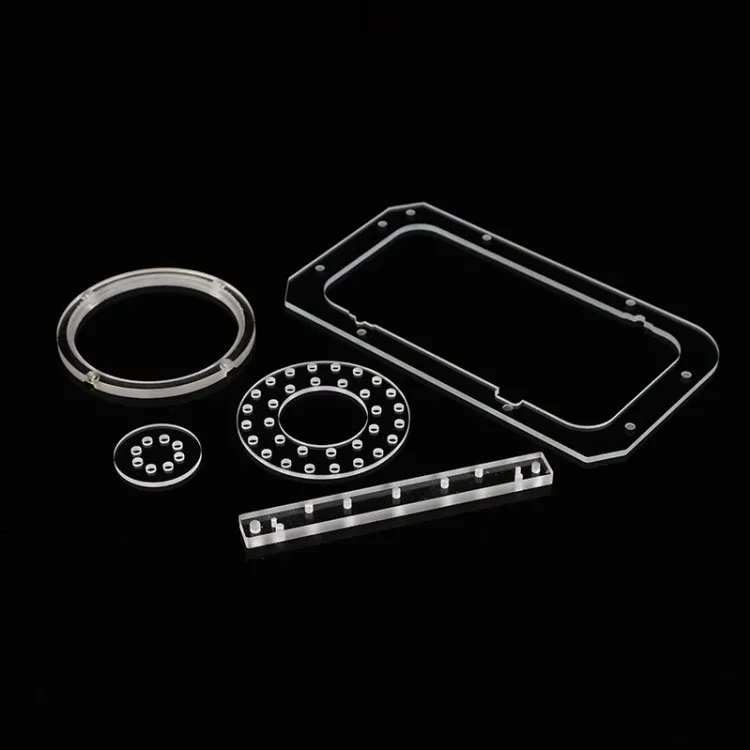
Custom shaping allows engineers to design quartz components that fit exact specifications, ensuring reliable integration with industrial machinery. Complex geometries—including tubes, rods, plates, and observation windows—can be tailored to specific process requirements. This precision minimizes stress points, reduces leakage risks, and ensures optimal thermal and chemical performance.
2.2 Thermal Resistance
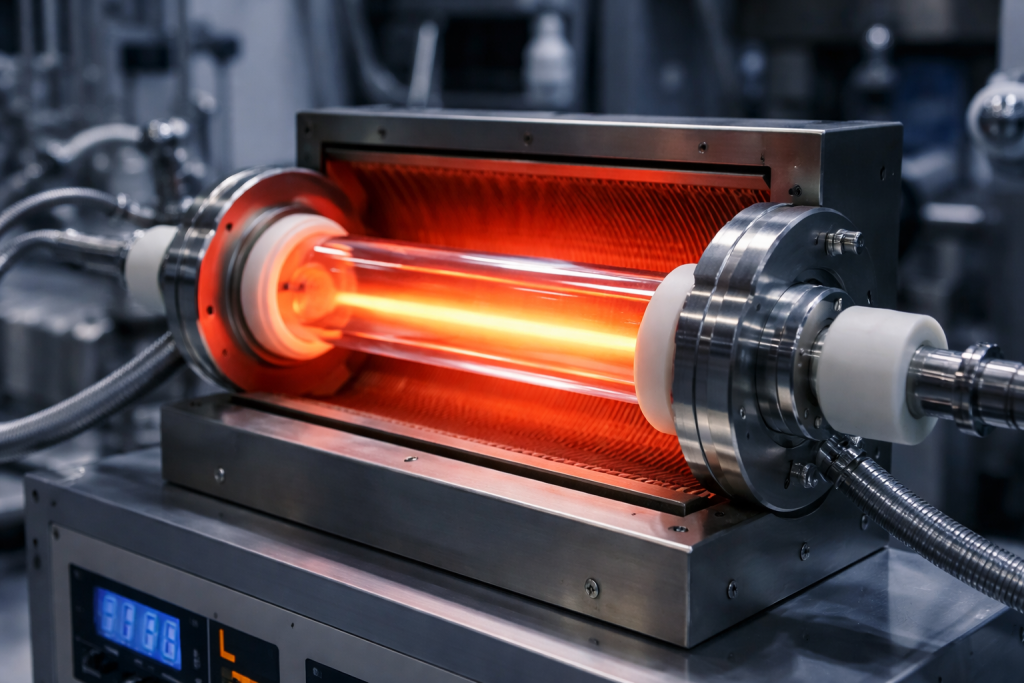
One of quartz glass’s most critical properties is its ability to withstand high temperatures without losing mechanical or optical integrity. In industrial furnaces, reactors, and high-temperature chemical processes, custom-shaped quartz components maintain their shape and transparency, enabling accurate monitoring and process control.
2.3 Chemical Durability
Quartz glass exhibits excellent resistance to aggressive chemical environments, including concentrated acids and bases. Customized shapes allow for protective linings, observation windows, or tubing that can be tailored to minimize chemical attack while providing optical access or fluid transport.
2.4 Optical Clarity
For processes requiring visual inspection or laser-based instrumentation, quartz glass provides unmatched transparency from ultraviolet (UV) to near-infrared (NIR) wavelengths. Custom shapes can accommodate optical paths, laser windows, or sensor housings, ensuring minimal distortion and high signal fidelity.
3. Manufacturing Considerations
Producing high-quality custom-shaped quartz glass requires specialized techniques and careful quality control:
- Cutting and Shaping: Modern CNC machining, water jet cutting, and laser techniques allow intricate shapes and precise dimensions.
- Polishing: Polished surfaces enhance chemical resistance and optical clarity, critical for high-performance applications.
- Annealing: Controlled thermal treatment reduces internal stresses, preventing cracks and improving long-term durability.
- Inspection: Each component undergoes rigorous dimensional, optical, and stress inspections to ensure it meets industrial standards.
Working with experienced suppliers like Shanghai Fuyao Optoelectronics Tech Co., Ltd. guarantees components are manufactured to strict tolerances, reducing risk of failure in demanding environments.
4. Industrial Applications
Custom-shaped quartz glass finds applications across multiple industries:
- Semiconductor Manufacturing: Quartz tubes, rods, and wafers are essential in high-temperature furnaces and chemical vapor deposition (CVD) systems.
- Chemical Processing: Observation windows, piping components, and protective covers require chemical resistance and dimensional stability.
- Laser and Optical Systems: Quartz windows and mounts provide high transparency and thermal stability for high-power laser systems.
- Scientific Instrumentation: Laboratory reactors, vacuum chambers, and analytical instruments benefit from customized quartz components.
- Medical Equipment: Sterilizable, corrosion-resistant quartz components are used in precision diagnostic and sterilization devices.
5. Design Considerations for Custom Components
When specifying custom quartz glass, engineers should consider:
- Thickness and Shape: Thicker components resist thermal shock, while shapes should minimize stress concentrations.
- Surface Finish: Polished or ground surfaces reduce micro-cracks that could lead to failure.
- Mounting Method: Proper clamping and edge support prevent bending or tensile stress during operation.
- Optical Requirements: For laser or visual inspection applications, surface flatness and optical quality are critical.
These considerations ensure safe, long-lasting performance in demanding industrial processes.
6. Choosing Reliable Suppliers
Working with reputable suppliers is crucial for achieving both performance and reliability. Key factors include:
- Technical Expertise: Knowledge of quartz machining, shaping, polishing, and coating technologies.
- Quality Assurance: Optical and mechanical testing reports, including stress, flatness, and chemical resistance.
- Customization Capability: Ability to manufacture complex shapes, varying thicknesses, and specialized coatings.
- Industry Experience: Proven track record in semiconductor, chemical, aerospace, and laser industries.
Suppliers likeShanghai Fuyao Optoelectronics Tech Co., Ltd. end-to-end solutions for custom-shaped quartz components, from design consultation to final inspection, ensuring components meet exacting industrial requirements.
7. Conclusion
Custom-shaped quartz glass is a versatile and highly reliable material for industrial equipment. Its combination of thermal stability, chemical resistance, mechanical strength, and optical clarity makes it indispensable in high-performance systems.
By leveraging expert suppliers and precise manufacturing techniques, engineers can design quartz components that enhance durability, optimize operational efficiency, and maintain consistent performance in even the most demanding industrial environments. Custom-shaped quartz glass from trusted suppliers ensures industrial equipment operates safely and efficiently over its service life.