
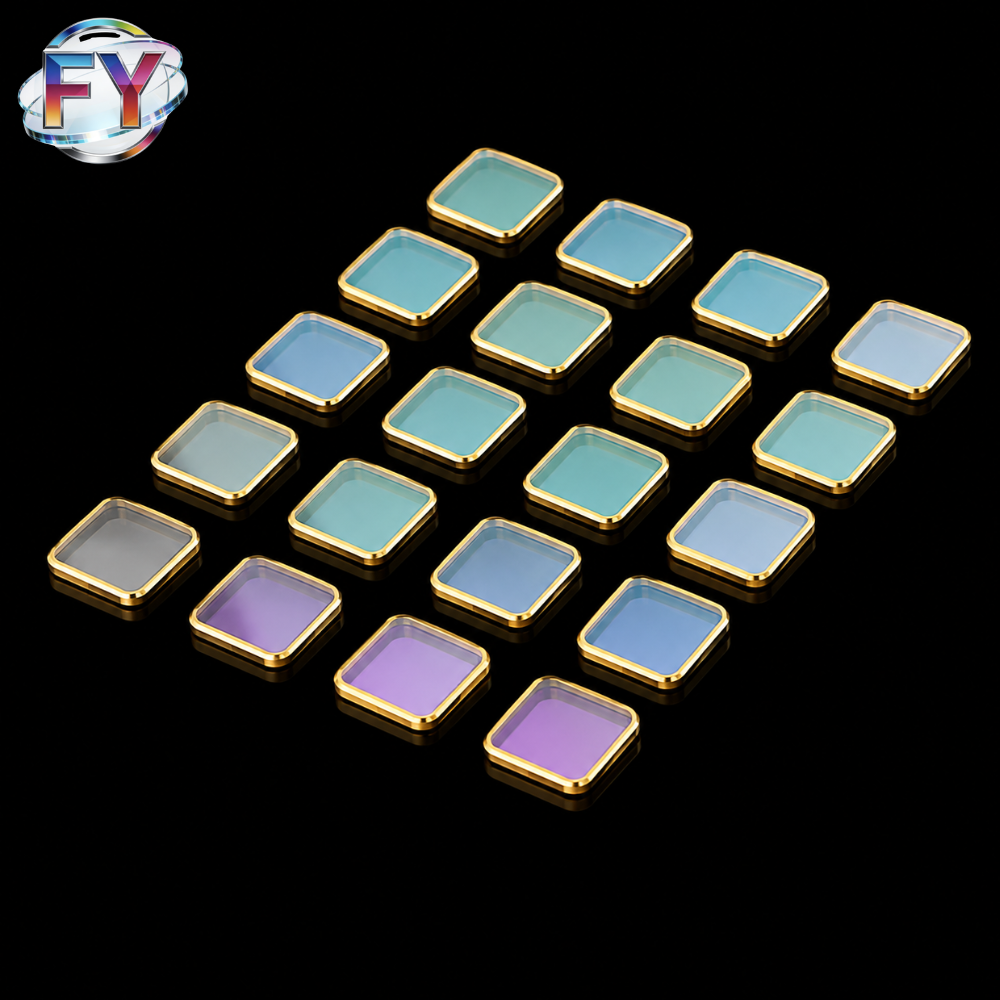
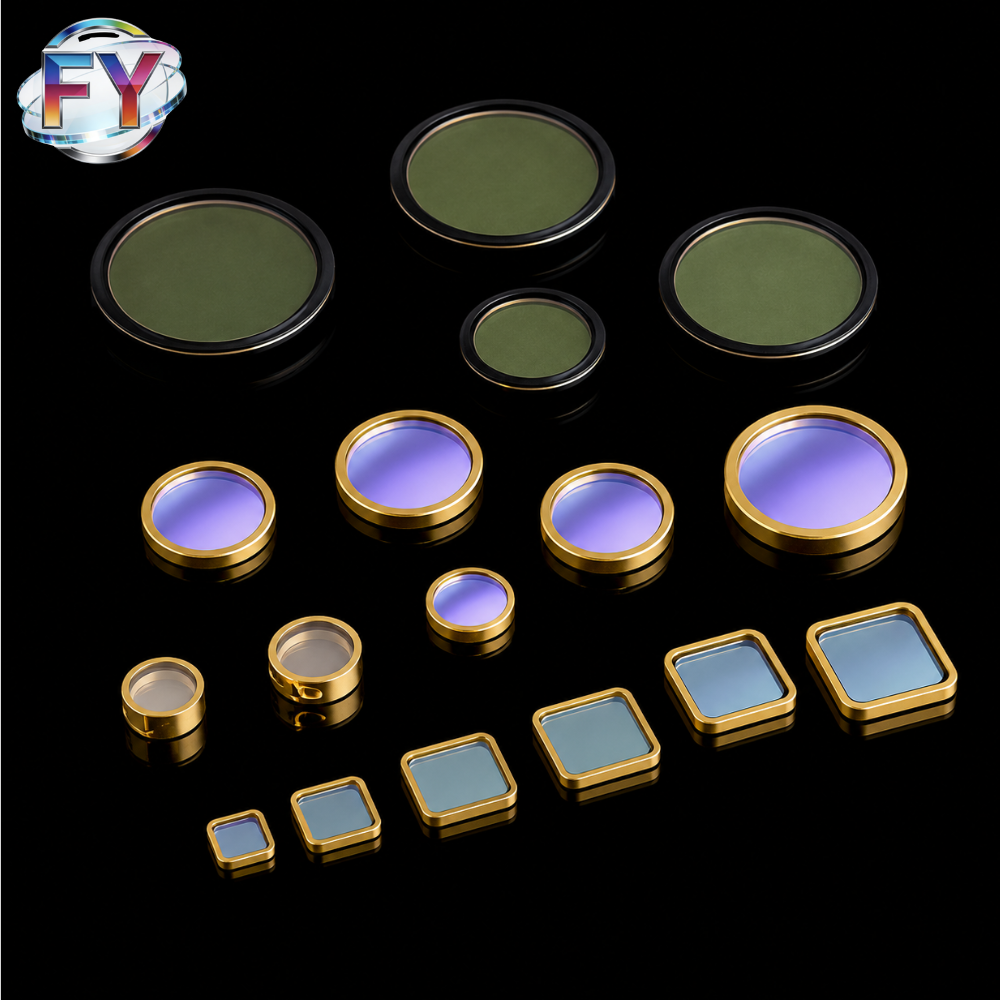
We manufacture custom gold metallized sapphire windows, substrates and precision sapphire components for customers requiring localized metallic patterns on sapphire surfaces.
Gold metallization can be applied to selected areas such as the perimeter, frame, ring, bonding area or customer-defined pattern while maintaining the required optical or functional area of the sapphire component.
Our service is suitable for prototype development, engineering verification and batch production.
Customers can submit drawings for complete manufacturing including sapphire machining, polishing, cleaning, metallization and final inspection.
What Is Gold Metallized Sapphire?
Gold metallized sapphire combines the mechanical, optical and thermal properties of sapphire with a precisely defined metallic region.
 Instead of coating the entire sapphire surface, metallization is commonly deposited only where it is required.
Typical designs include:
- Gold-coated outer edges
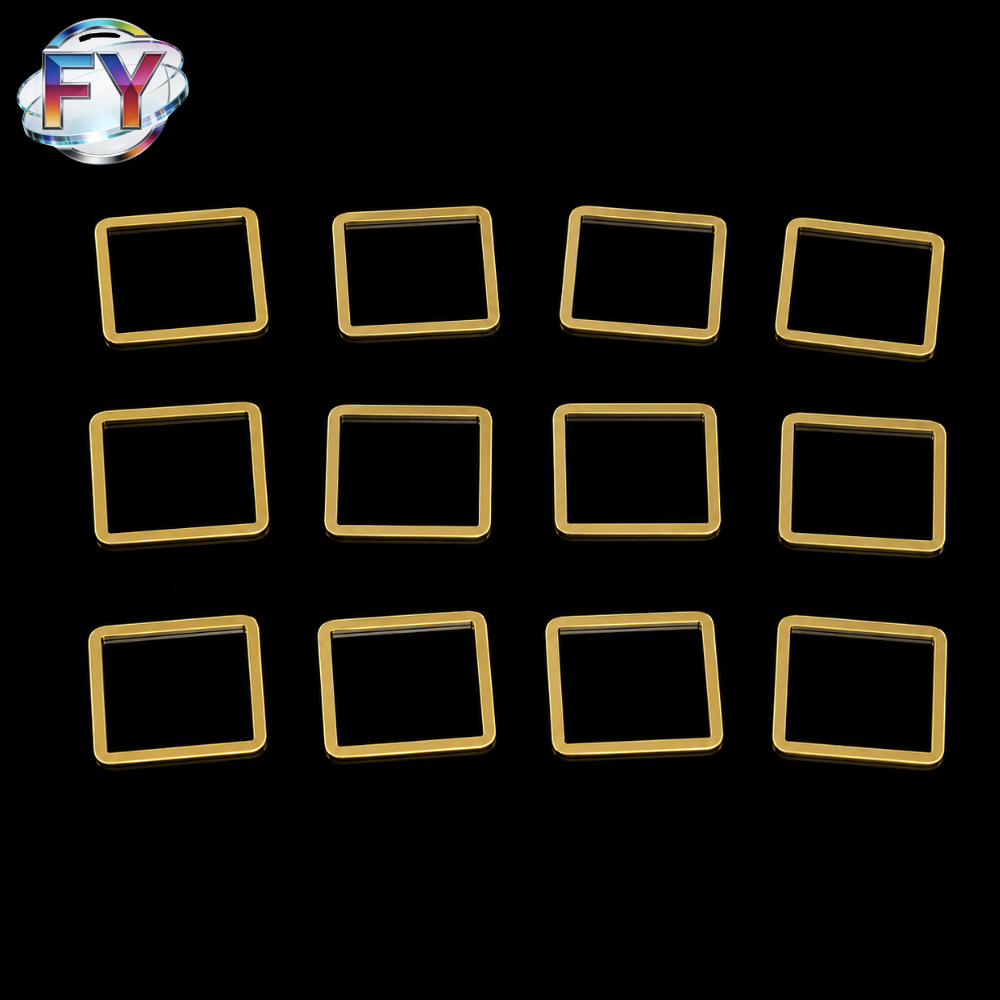
- Rectangular metallized frames
- Circular gold rings
- Localized contact areas
- Peripheral metallization
- Custom geometric patterns
- Single-side metallization
- Double-side metallization
- Partial surface metallization
This allows the sapphire component to maintain a transparent or functional central area while creating a metallic interface around designated regions.
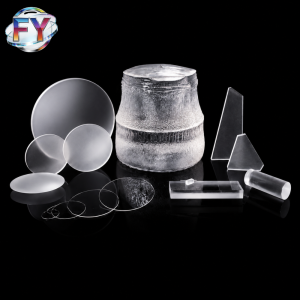
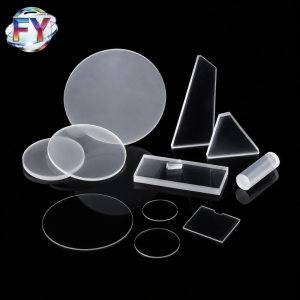
Sapphire Parts We Can Process
Round Sapphire Windows
Round sapphire windows can be manufactured with a circular gold metallized area around the outer diameter.
The center area can remain transparent according to the required clear aperture.
Available configurations include:
- Round windows
- Sapphire discs
- Small-diameter sapphire windows
- Circular optical components
- Ring-pattern metallization
- Customized OD and ID structures
Square and Rectangular Sapphire Windows
 Square and rectangular components are widely used in optical modules, sensors and electronic assemblies.
We can manufacture gold metallized borders around the sapphire window according to customer drawings.
Typical requirements include:
- Square metallized frames
- Rectangular metallized frames
- Rounded-corner sapphire windows
- Different frame widths
- Customized clear aperture
- Precision pattern positioning
Custom-Shaped Sapphire Components
Metallization is not limited to standard round or rectangular components.
Custom geometries can also be evaluated, including:
- Triangular sapphire parts
- Rings
- Frames
- Irregular optical windows
- Small precision substrates
- Special sapphire components
This provides greater flexibility for customers developing customized assemblies.
Custom Metallization Capability
Our production is primarily based on customer drawings.
The metallized area can be customized according to the final component structure rather than relying on standard coating dimensions.
Key customizable parameters include:
| Parameter | Available Options |
|---|---|
| Sapphire Shape | Round, square, rectangular, triangular or custom |
| Sapphire Size | Custom |
| Thickness | Custom |
| Surface | Polished according to application |
| Metallization Position | Edge, frame, ring, local area or custom pattern |
| Pattern Width | Drawing-based |
| Clear Aperture | Custom |
| Metallized Side | Single side or double side |
| Surface Finish | According to drawing |
| Quantity | Prototype to batch production |
| Inspection | Custom inspection requirements available |
Metal layer configuration and thickness should be confirmed according to the customer’s actual application.
Why Use Sapphire as the Base Material?
Sapphire is frequently selected for demanding components because it provides a unique combination of optical, mechanical and environmental properties.
High Hardness
Sapphire provides excellent scratch and wear resistance, making it suitable for optical windows exposed to mechanical contact or harsh environments.
Excellent Chemical Stability
Sapphire can withstand many aggressive processing and operating environments.
High Temperature Resistance
Its thermal stability makes sapphire suitable for applications where ordinary optical glass may not provide sufficient performance.
Electrical Insulation
Sapphire is an electrically insulating material, making localized metallization useful when conductive regions need to be selectively introduced.
Optical Performance
Depending on the grade, surface finish and application, sapphire can be used for optical transmission while the surrounding metallized region serves a separate mechanical or electrical function.
Why Add Gold Metallization?
Gold is commonly used as an exposed metallic layer where oxidation resistance and stable surface properties are important.
A gold metallized sapphire component may provide:
- Defined conductive areas
- Bonding interfaces
- Contact surfaces
- Assembly interfaces
- Oxidation-resistant metallic regions
- Controlled metal patterns
- Integration with surrounding package structures
The exact purpose depends on the final device design.
For this reason, we recommend that customers provide not only the sapphire drawing but also information about the assembly or bonding method whenever possible.
Precision Pattern Manufacturing
For custom sapphire metallization, pattern accuracy is often more important than simply applying a metal coating.
Important manufacturing considerations include:
Pattern Position
The metallized region must be correctly aligned with the sapphire geometry.
Metallization Width
Frame and ring widths can be controlled according to drawing requirements.
Clear Aperture
For optical components, the usable optical area must remain free of unwanted metallization.
Edge Definition
The boundary between the metallized and non-metallized areas should be clearly controlled.
Surface Cleanliness
Sapphire surfaces require appropriate cleaning before and after processing to minimize contamination.
Batch Consistency
For production projects, pattern dimensions and appearance should remain consistent from batch to batch.
Small Sapphire Components and Precision Handling
Many metallized sapphire components are relatively small, making handling and processing an important part of production.
We can evaluate small-size parts requiring:
- Precision positioning
- Customized fixtures
- Repeated pattern consistency
- Careful surface protection
- Batch processing
This capability is particularly useful for sensor, optical and electronic component manufacturers.
Typical Applications
Custom gold metallized sapphire components may be used in:
- Optical sensors
- Photonic modules
- Detector assemblies
- Semiconductor devices
- Electronic packaging
- Laser systems
- Precision optical assemblies
- Vacuum equipment
- Scientific instruments
- High-temperature sensing systems
- Aerospace optical components
- Customized electronic modules
Application requirements vary significantly, so final specifications should be confirmed according to each project.
One-Stop Sapphire Processing
Instead of purchasing sapphire parts from one supplier and sending them to another company for metallization, customers can work with us for an integrated manufacturing process.
Depending on the project, the production process may include:
Raw Sapphire → Cutting → Precision Machining → Grinding → Polishing → Cleaning → Metallization → Inspection → Packaging
This can simplify supplier coordination and reduce handling between different processing stages.
Prototype and Volume Manufacturing
We support both development projects and repeat production.
For new components, customers can begin with prototype quantities for:
- Dimensional verification
- Assembly testing
- Optical evaluation
- Metallization evaluation
- Bonding tests
- Process qualification
After the design is confirmed, production can be scaled according to the customer’s purchasing schedule.
Quality Inspection
Inspection can be performed according to drawing requirements.
Typical inspection items include:
- Outer dimensions
- Thickness
- Metallization width
- Pattern position
- Clear aperture dimensions
- Surface condition
- Edge quality
- Visual appearance
- Metallization uniformity
- Quantity and batch identification
Additional inspection criteria can be discussed before production.
What to Send for a Quotation
To evaluate your sapphire metallization project efficiently, please provide:
- 2D drawing or 3D model
- Sapphire dimensions
- Sapphire thickness
- Required quantity
- Surface polishing requirements
- Metallized area
- Metallization pattern dimensions
- Required metal layer structure, if specified
- Dimensional tolerances
- Optical clear aperture requirements
- Application
- Bonding or assembly method, if applicable
If the design is still under development, preliminary drawings can also be submitted for engineering review.
Why Work With Us?
Our service is suitable for companies looking for a supplier capable of combining precision sapphire manufacturing with customized metallization processing.
We support:
- Custom dimensions
- Custom metallization patterns
- Round and rectangular components
- Irregular sapphire geometries
- Small precision parts
- Prototype manufacturing
- Batch production
- Drawing-based OEM projects
- Integrated sapphire processing
Whether you require several prototype pieces or a repeat-production sapphire component, specifications can be evaluated according to your actual application.
Frequently Asked Questions
Can you manufacture the sapphire and perform metallization together?
Yes. Sapphire cutting, machining, polishing and metallization can be evaluated as one integrated project.
Can only the outer edge be gold metallized?
Yes. Peripheral metallization and frame-style metallization are common custom structures.
Can the center of the sapphire window remain transparent?
Yes. The clear aperture can remain uncoated while the surrounding area is metallized according to the drawing.
Do you support square and round sapphire parts?
Yes. Round, square, rectangular and other customized shapes can be processed.
Can you produce unusual metallization patterns?
Yes. Customer-defined local patterns can be evaluated based on dimensions, tolerance and process requirements.
Do you accept small prototype orders?
Yes. Prototype quantities can be produced for testing and qualification before volume manufacturing.

Reviews
There are no reviews yet.