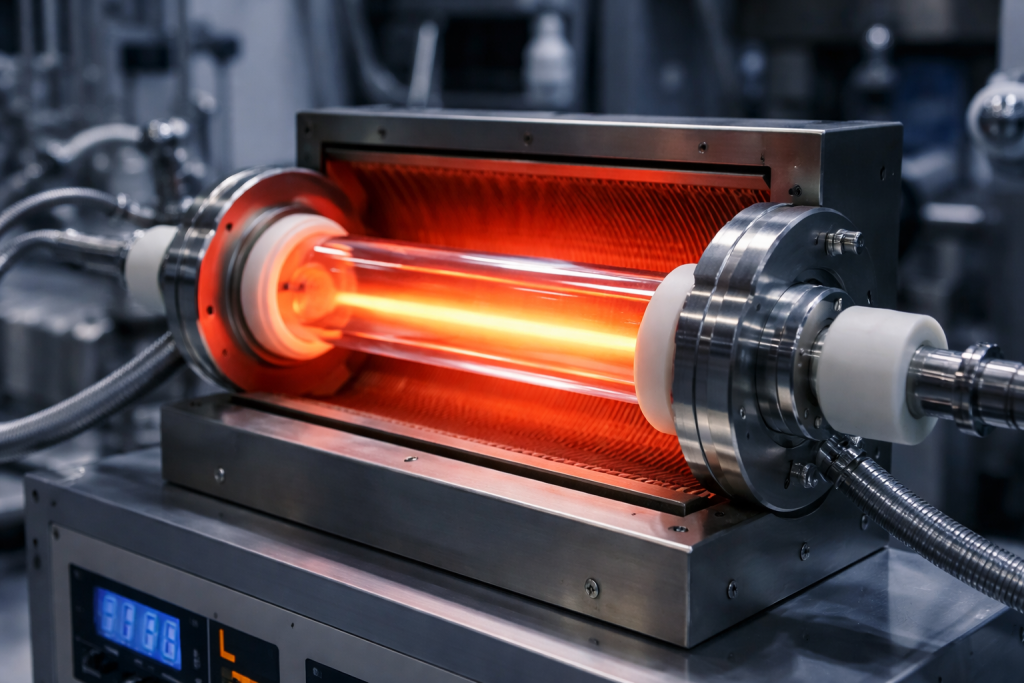
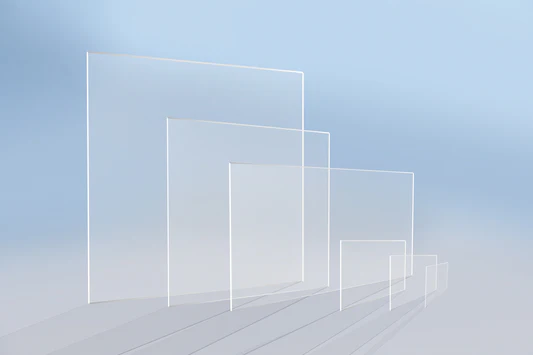
In laser processing systems, optical components such as protective windows, focusing lenses, beam expanders, scanners, and high-power optical assemblies rely heavily on one critical material: fused quartz glass (Fused Silica / Fused Quartz). Compared with conventional optical glass, fused quartz offers superior optical transmission, exceptional thermal stability, extremely low thermal expansion, and excellent chemical resistance, making it indispensable in laser processing, precision optics, semiconductor manufacturing, aerospace, and scientific applications.
However, many engineers face the same challenge during material selection: Why are there large cost differences among quartz grades? What do low-OH, high-OH, laser-grade, and DUV-grade actually mean? Which materials are suitable for 1030 nm, 1064 nm, or 193 nm laser systems?
This article explains the key properties, performance parameters, and practical selection principles for quartz glass in laser processing applications.
Why 石英玻璃 Is Essential in Laser Processing
Fused quartz is an amorphous material made from ultra-high-purity silicon dioxide (SiO₂). Compared with standard optical glass, it provides several significant advantages:
- Wide transmission spectrum (approximately 180–3500 nm)
- Extremely low thermal expansion coefficient
- Excellent high-temperature resistance
- High laser damage resistance
- Superior chemical stability
- Outstanding corrosion resistance
In high-power laser environments, materials must not only transmit light efficiently but also withstand thermal loads and intense pulse energy.
Manufacturing methods—including electric fusion, flame hydrolysis, and plasma chemical vapor deposition (PCVD)—directly affect hydroxyl (OH) concentration and metallic impurity levels. These trace components strongly influence optical performance across different wavelengths.
Therefore, quartz glass selection is not simply determined by SiO₂ purity; impurity control is often the decisive factor.
Four Critical Parameters of Quartz Glass for Laser Applications
1. Optical Transmission
Transmission determines how much laser energy passes through the material.
Manufacturers generally specify two transmission values:
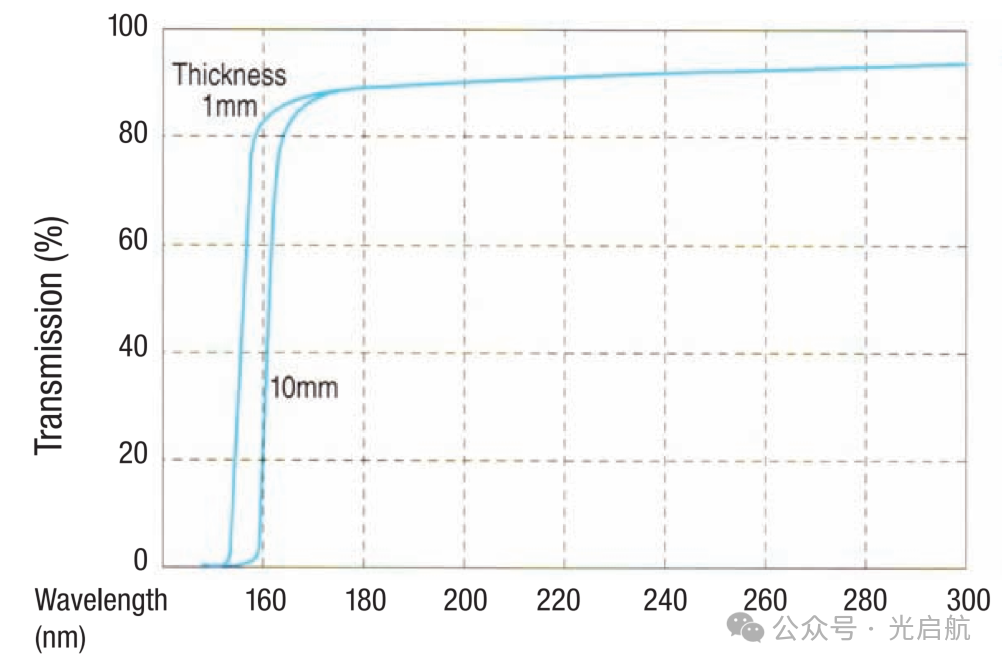
Total Transmission
Includes reflection losses at air-glass interfaces.
Typical value:
92–93%
Coating quality significantly affects this value.
Internal Transmission
Measures only material absorption, excluding surface reflections.
Typical value:
Greater than 99.95%
Internal transmission better reflects the intrinsic purity of quartz glass.
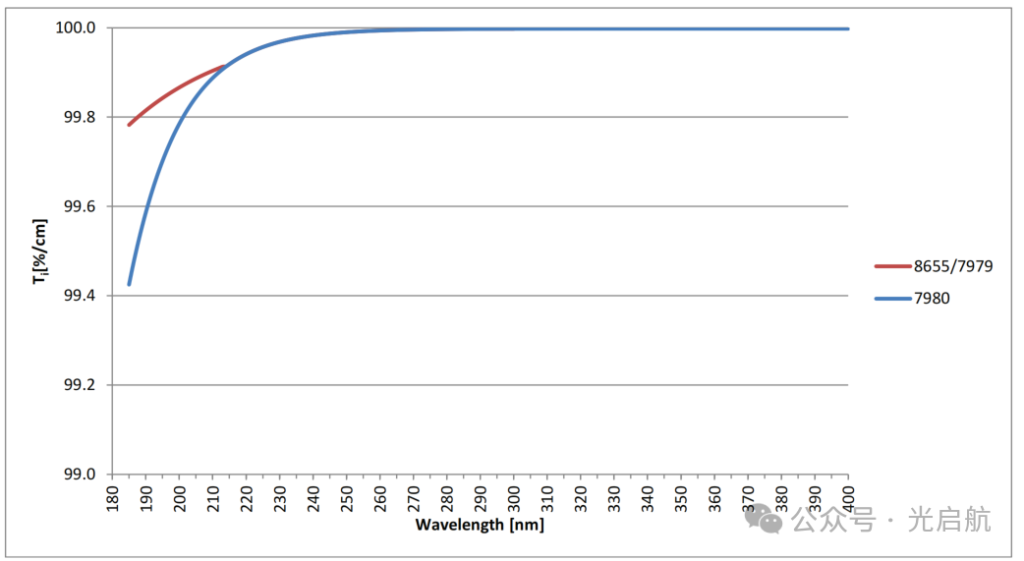
For common infrared laser wavelengths such as 1064 nm, standard grades often provide sufficient performance. However, deep ultraviolet applications require extremely high-purity materials.
2. Optical Homogeneity
An ideal optical material should maintain a uniform refractive index throughout its volume.
In practice, variations can arise from:
- Uneven melting processes
- Cooling rate fluctuations
- Impurity distribution
- Internal stress
These factors produce refractive index variations that affect optical quality.
For applications including:
- Laser scanning systems
- Semiconductor lithography optics
- High-precision focusing systems
Optical homogeneity directly impacts beam quality and machining accuracy.
3. Striae
Striae are localized refractive index variations within glass.
They usually result from uneven flow behavior during melting.
Under optical inspection, they often appear as thread-like patterns.
For high-power laser systems, striae can cause:
- Wavefront distortion
- Beam deviation
- Focus instability
As a result, high-end laser optics impose strict requirements on striae quality.
4. Coefficient of Thermal Expansion (CTE)
Laser operation inevitably generates heat.
Thermal expansion determines dimensional stability under temperature changes.
The relationship can be expressed as:
Where:
- ΔL = dimensional change
- α = thermal expansion coefficient
- L = original length
- ΔT = temperature change
A lower α indicates greater dimensional stability.
Typical fused silica value:
~0.5 × 10⁻⁶ /K
This is significantly lower than conventional optical glass, making quartz highly suitable for precision and high-power laser systems.
Laser Wavelength Determines Material Selection
Different wavelengths require dramatically different material characteristics.
Deep Ultraviolet (DUV) Applications
Typical wavelengths:
193 nm, 248 nm
應用:
- Semiconductor lithography
- Precision micromachining
- Advanced optical systems
Requirements:
- Ultra-low metallic impurities
- Extremely low fluorescence
- Exceptional homogeneity
- 高雷射損害閾值
Even trace levels of Fe, Cu, and Cr can create absorption centers and degrade DUV performance.
Recommended materials:
- Corning 8655
- Corning 7979
- High-end DUV-grade fused silica
UV–Visible Applications
Typical wavelength range:
250–800 nm
應用:
- UV optics
- Precision lenses
- 光學窗
- 影像系統
Requirements:
- High transmission
- Stable optical properties
- Good homogeneity
High-OH materials often exhibit better short-wavelength UV transmission performance.
Recommended materials:
- Corning 7980
- Ohara SK1310
- General-purpose synthetic fused silica
Infrared Laser Applications
Typical wavelengths:
1030 nm, 1064 nm, 1070 nm
應用:
- Fiber laser cutting
- Laser welding
- Beam delivery systems
- Protective windows
Requirements:
- Low absorption
- Thermal stability
- High laser resistance
OH groups produce infrared absorption peaks near:
- 945 nm
- 1245 nm
- 1385 nm
- 2210 nm
- 2700–2800 nm
For high-power infrared systems, low-OH grades are preferred.
Recommended materials:
- Corning 7980
- Corning 7979
- Ohara SK1300
Mainstream Quartz Glass Grades and Their Characteristics
Corning 7980
Type:
Standard synthetic fused silica
Features:
- Low impurity concentration
- Excellent UV to IR transmission
- Broad application range
- Cost-effective performance
應用:
- General laser processing
- 光學窗
- Medium-power systems
- Semiconductor equipment
Corning 7979
Type:
Ultra-low thermal expansion fused silica
Features:
- Extremely low OH content
- Outstanding thermal stability
- Superior infrared performance
應用:
- High-power laser systems
- Precision optical assemblies
- 科學儀器
Corning 8655
Type:
DUV / Laser-grade fused silica
Features:
- Ultra-low metallic impurities
- Extremely high laser damage threshold
- Optimized for deep UV wavelengths
應用:
- ArF 193 nm lithography
- KrF 248 nm optical systems
- High-end semiconductor optics
Practical Quartz Glass Selection Workflow
A simple selection process can significantly reduce engineering risks:
Step 1: Identify Laser Wavelength
- DUV (<250 nm): choose DUV-grade materials
- UV–Visible (250–800 nm): standard synthetic grades are sufficient
- Infrared (>800 nm): prioritize low-OH materials
Step 2: Evaluate Transmission Requirements
For standard laser processing applications, transmission differences often originate from coating quality rather than substrate materials.
For ultra-high-power or DUV applications, substrate purity becomes critical.
Step 3: Consider Laser Power Conditions
For pulsed and high-energy laser systems:
Laser-Induced Damage Threshold (LIDT) becomes a key factor.
Special laser-grade materials should always be considered.
Step 4: Assess Thermal Stability Requirements
Applications with severe thermal cycling or extreme dimensional stability requirements should prioritize:
- Ultra-low expansion fused silica
- Low-absorption grades
- Precision optical materials
總結
Selecting quartz glass for laser processing is not simply a matter of choosing the highest purity material. The optimal choice depends on laser wavelength, power density, thermal conditions, and optical performance requirements.
For standard fiber laser systems, materials equivalent to Corning 7980 are often sufficient. However, for high-power infrared lasers, DUV systems, and precision optical applications, premium grades such as Corning 7979 or 8655 become essential.
Understanding the relationship between OH content, impurities, wavelength, and optical performance can significantly improve system reliability and reduce long-term operational costs.
常見問題
What is the difference between high-OH and low-OH fused quartz glass?
The primary difference lies in hydroxyl (OH) content, which significantly affects infrared and ultraviolet performance. High-OH fused silica generally offers better ultraviolet transmission and improved resistance to certain structural defects, making it suitable for UV optical applications. Low-OH quartz, on the other hand, exhibits lower absorption in the infrared region and is preferred for high-power infrared laser systems, especially around 1030–1080 nm and 1064 nm wavelengths.
Can standard fused quartz glass be used in high-power laser systems?
Not always. Standard fused silica grades can perform well in medium-power laser applications. However, in high-energy pulsed or high-power continuous-wave systems, materials with higher laser-induced damage thresholds (LIDT), lower impurity concentrations, and superior thermal stability are recommended. Selecting dedicated laser-grade quartz can reduce thermal lensing, optical distortion, and premature component failure.
How does quartz glass affect laser processing quality?
Quartz glass directly influences beam transmission, focus stability, and optical efficiency. Poor optical homogeneity, high impurity content, or excessive thermal expansion can cause beam distortion, power loss, and inconsistent processing performance. High-quality fused silica helps maintain beam quality and ensures stable operation in demanding laser applications.