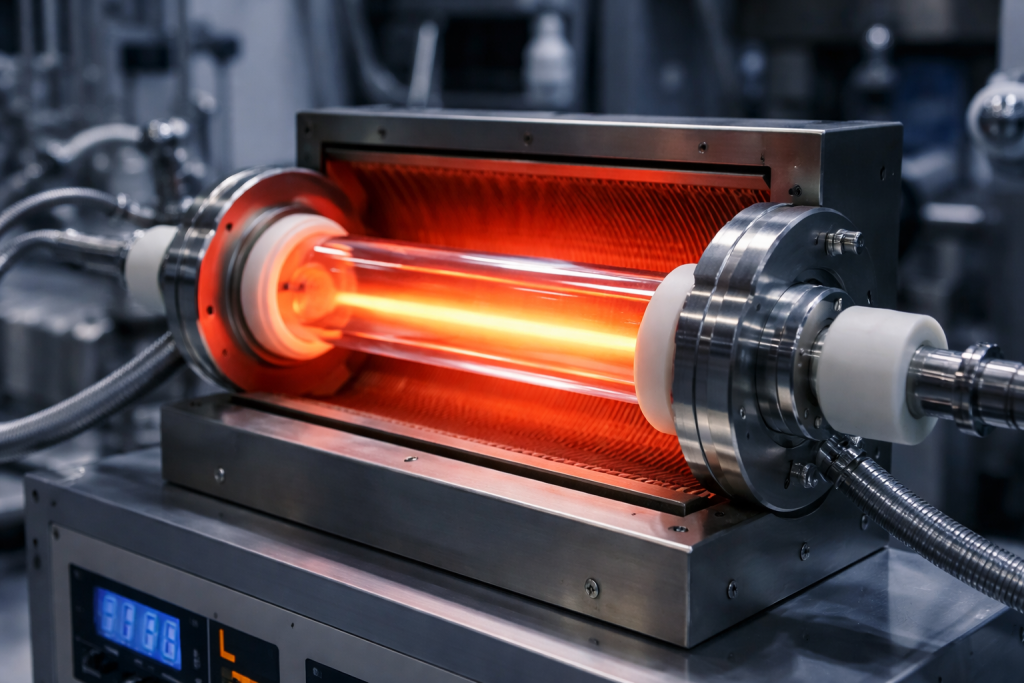
Fused silica optics are widely used in high-precision optical systems where stability, transmission performance, and environmental resistance are critical. From semiconductor lithography to aerospace imaging and laser systems, fused silica has become one of the most trusted optical materials in advanced engineering applications.
This article explains what fused silica optics are, why they are preferred, and where they are used in B2B industrial systems.
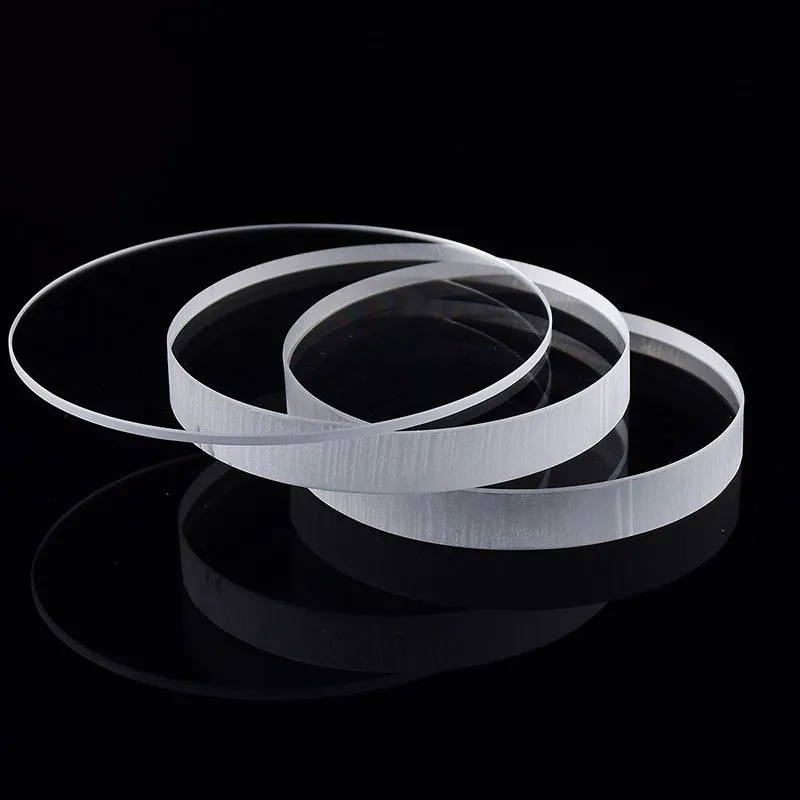
What Is Fused Silica?
熔融石英 is a high-purity, non-crystalline form of silicon dioxide (SiO₂). Unlike conventional glass, it is produced by melting pure quartz crystal or synthetic silica at extremely high temperatures and then cooling it into an amorphous structure.
Because of its ultra-high purity and uniform structure, fused silica exhibits exceptional optical and thermal properties compared with standard optical glass.
Key Properties of Fused Silica Optics
Fused silica is chosen in precision optical systems because of its unique combination of properties:
1. Extremely Low Thermal Expansion
Fused silica has one of the lowest thermal expansion coefficients among optical materials. This means it maintains dimensional stability even under rapid temperature changes.
This is critical in systems like laser optics and semiconductor lithography where nanometer-level accuracy is required.
2. High Optical Transmission Range
Fused silica provides excellent transmission from deep ultraviolet (DUV) to near-infrared (NIR) wavelengths.
- UV range: ~180 nm
- Visible range: 400–700 nm
- IR range: up to ~2500 nm
This wide transmission band makes it suitable for multi-spectrum optical systems.
3. Superior Laser Damage Resistance
Compared to standard optical glass, fused silica can withstand higher laser energy densities without damage or degradation.
This is essential for:
- High-power laser systems
- Laser cutting and welding optics
- Lithography light sources
4. High Chemical Purity and Stability
Fused silica is highly resistant to acids, salts, and most chemical environments. It does not easily react or degrade, ensuring long-term optical stability.
5. Excellent Homogeneity
Its uniform internal structure reduces scattering and distortion, ensuring high imaging precision in demanding optical systems.
Why Fused Silica Is Used in Precision Optical Systems
Precision optical systems require materials that remain stable under extreme operating conditions. Fused silica meets these requirements better than most alternatives.
1. Semiconductor Lithography Systems
Fused silica is widely used in photomask substrates, lenses, and projection optics due to its UV transparency and thermal stability.
Even slight distortions in optics can affect chip pattern accuracy at the nanometer scale.
2. High-End Laser Systems
In industrial lasers, fused silica is used for:
- Lenses
- Windows
- Beam splitters
- Protective covers
Its ability to resist laser-induced damage ensures system reliability and long service life.
3. Aerospace and Space Optics
In space environments, temperature fluctuations are extreme. Fused silica optics maintain dimensional stability and optical clarity, making them ideal for:
- Satellite imaging systems
- Telescope components
- Spaceborne sensors
4. Medical and Scientific Instruments
Fused silica is also used in:
- Spectrometers
- Microscopy systems
- 紫外線殺菌設備
- Analytical instruments
Its UV transparency is especially important for scientific analysis.
Fused Silica vs Standard Optical Glass
| 財產 | Fused Silica | Optical Glass |
|---|---|---|
| Thermal expansion | 極低 | 中度 |
| 紫外線穿透率 | 極佳 | 有限責任 |
| Laser resistance | 非常高 | 中型 |
| 耐化學性 | 極佳 | 中度 |
| 成本 | 更高 | 較低 |
While optical glass is sufficient for general applications, fused silica is preferred when performance and precision are critical.
Manufacturing Considerations
Producing fused silica optics requires advanced processing techniques:
- Ultra-high purity raw materials
- Controlled melting or chemical vapor deposition (CVD)
- Precision annealing
- CNC polishing and surface finishing
- Strict surface quality control (scratch/dig standards)
Even minor contamination or internal stress can affect optical performance, so manufacturing precision is essential.
Common Product Forms
Fused silica is available in multiple optical component formats:
- 光學窗
- Lenses
- Mirrors
- Prisms
- Laser protection plates
- Custom-shaped optical components
Custom machining is often required for B2B industrial applications.
總結
Fused silica optics are a cornerstone of modern precision optical engineering. Their combination of thermal stability, UV transparency, laser resistance, and chemical durability makes them indispensable in semiconductor, laser, aerospace, and scientific systems.
For B2B manufacturers and system integrators, fused silica is not just a material choice—it is a performance requirement for high-end optical reliability.