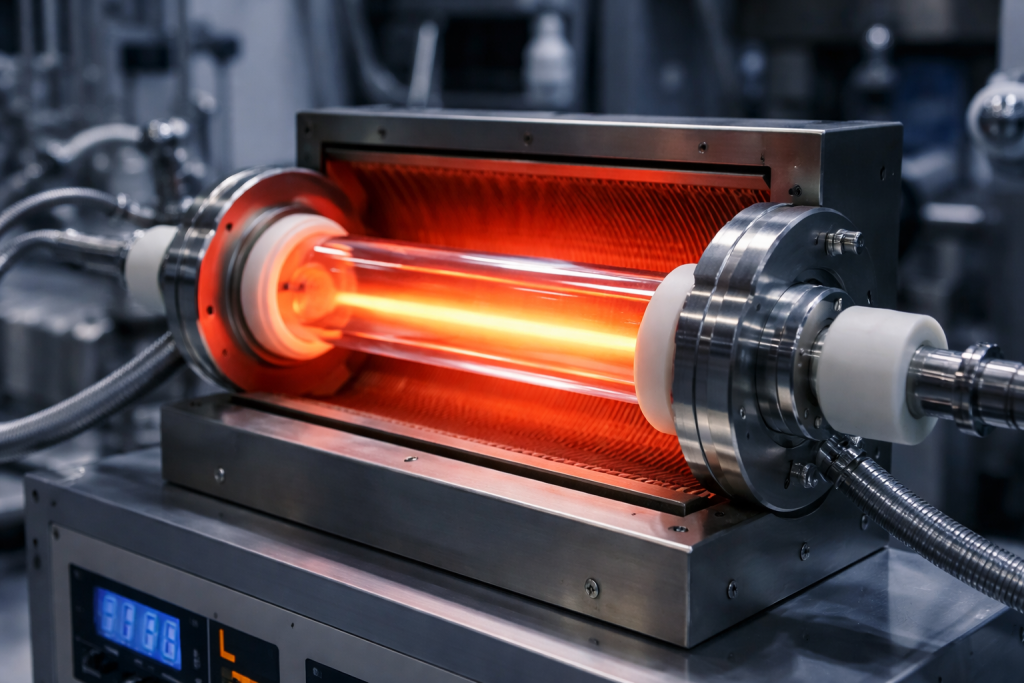
As semiconductor technology advances toward smaller process nodes, higher integration, and greater performance, the requirements placed on manufacturing equipment become increasingly demanding. While much attention is focused on silicon wafers, lithography systems, and chip designs, another critical material quietly supports nearly every stage of semiconductor production: high-purity quartz.
Quartz components, primarily made from ultra-pure silicon dioxide (SiO₂), play a vital role in wafer fabrication due to their exceptional purity, thermal stability, chemical resistance, electrical insulation, and optical transparency. From crystal growth to photolithography, quartz parts are indispensable in maintaining process stability and product yield.
This article explores the major applications of quartz components throughout the semiconductor manufacturing process.
Why Quartz Is Widely Used in Semiconductor Equipment
Semiconductor manufacturing environments are extremely sensitive to contamination and process variation. Materials used inside fabrication equipment must withstand high temperatures, corrosive chemicals, plasma exposure, and strict cleanliness requirements.
High-purity quartz offers several unique advantages:
- Ultra-low impurity levels to minimize contamination
- 優異的熱穩定性 at temperatures exceeding 1000°C
- 熱膨脹係數低
- Strong resistance to most acids and process gases
- Outstanding electrical insulation
- High optical transmission from UV to infrared wavelengths
- Excellent plasma resistance in many semiconductor processes
Because of these characteristics, quartz has become one of the most important materials used inside semiconductor fabrication equipment.
1. Quartz Crucibles for Silicon Crystal Growth
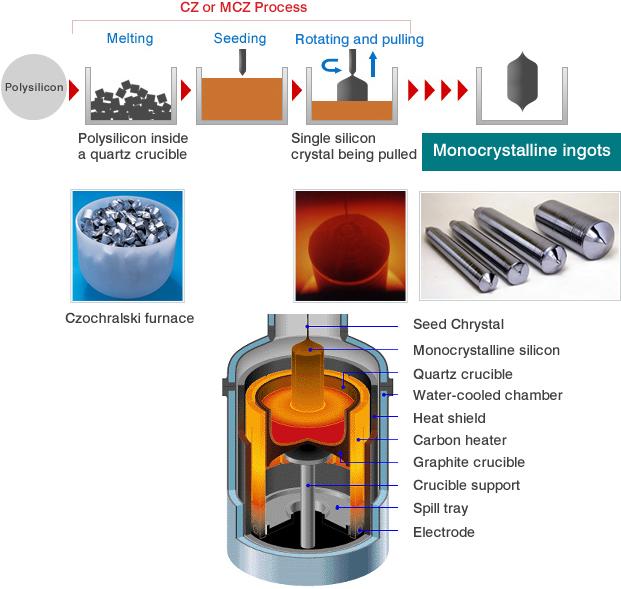
The semiconductor manufacturing journey begins with the production of single-crystal silicon ingots.
In the Czochralski (CZ) crystal growth process, polysilicon is melted at temperatures above 1420°C inside a quartz crucible. A seed crystal is then slowly pulled upward to form a large single-crystal silicon ingot.
Key Quartz Component
- 石英坩鍋
Functions
- Holds molten silicon safely at extreme temperatures
- Maintains high purity throughout crystal growth
- Minimizes contamination from metallic impurities
Requirements
- 超高純度
- 優異的抗熱震性
- High-temperature dimensional stability
- Minimal impurity diffusion into molten silicon
The quality of the quartz crucible directly impacts wafer quality and crystal defect density.
2. Quartz Components for Diffusion, Oxidation, and Annealing
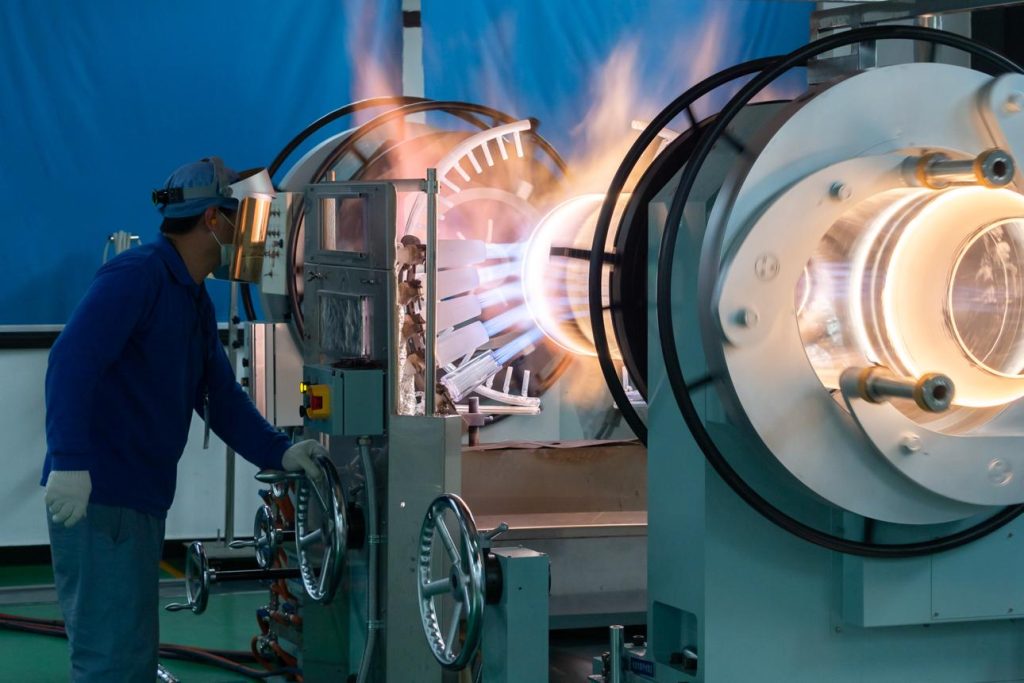
After crystal growth and wafer preparation, semiconductor wafers undergo various thermal processes such as oxidation, diffusion, and annealing.
These processes typically operate at temperatures ranging from 800°C to 1200°C.
Key Quartz Components
- 石英爐管
- Quartz Boats
- Quartz Pedestals
- Quartz Baffles
Functions
石英爐管
Provide a clean reaction chamber where thermal processing occurs.
Quartz Boats
Support and transport multiple wafers through high-temperature furnaces.
Quartz Baffles
Control airflow and temperature distribution inside the furnace.
Requirements
- 高熱穩定性
- 微粒生成量低
- Resistance to deformation under long-term heating
- Excellent cleanliness
Even microscopic particles generated by furnace components can result in costly wafer defects.
3. Quartz Parts Used in Plasma Etching Equipment
Dry etching is one of the most critical steps in semiconductor fabrication. It uses highly reactive plasma to selectively remove material and create nanoscale circuit patterns.
Inside plasma etching systems, quartz components help maintain plasma stability and process uniformity.
Key Quartz Components
- Quartz Focus Rings
- 石英窗口片
- Quartz Electrodes
- Quartz Chamber Liners
Functions
Quartz Focus Rings
Improve plasma distribution and edge uniformity across the wafer.
石英窗口片
Allow RF or microwave energy to enter the reaction chamber.
Quartz Electrodes
Assist in generating and sustaining plasma.
Quartz Liners
Protect chamber walls from chemical attack and particle contamination.
Requirements
- Excellent plasma resistance
- High dimensional precision
- Smooth surface finish
- 最小粒子生成
In advanced semiconductor processes, even slight component wear can negatively impact device yield.
4. Quartz Components in Chemical Vapor Deposition (CVD)
Chemical Vapor Deposition (CVD) is widely used to deposit dielectric, semiconductor, and protective thin films onto wafers.
The process often involves elevated temperatures and reactive gases.
Key Quartz Components
- 石英鐘形罐
- Quartz Process Tubes
- Quartz Gas Distribution Systems
- Quartz Injectors
Functions
- Create controlled deposition environments
- Transport reactive process gases
- Ensure uniform gas flow across wafers
Requirements
- High material purity
- Low internal defects
- Excellent thermal performance
- Smooth internal surfaces
High-quality quartz helps reduce particle contamination and improves film uniformity throughout the deposition process.
5. Synthetic Quartz for Photomasks and Lithography
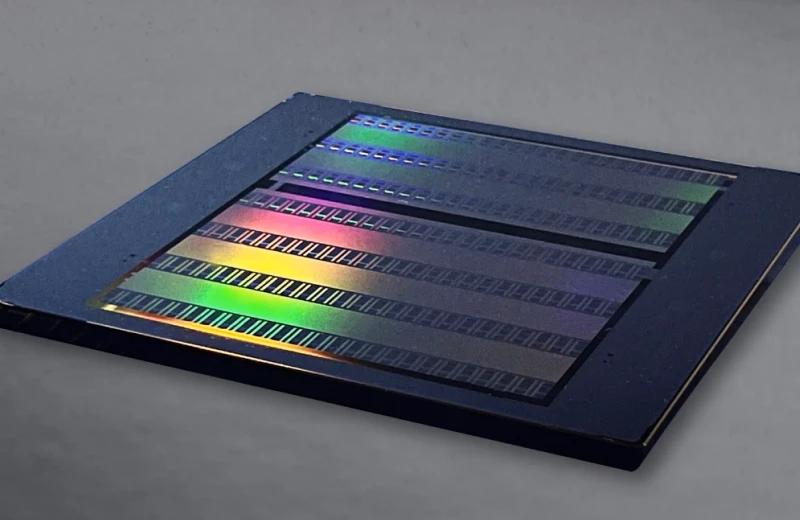
Photolithography transfers integrated circuit patterns onto semiconductor wafers.
At the heart of every photomask lies an ultra-flat synthetic quartz substrate.
Key Quartz Component
- Synthetic Fused Silica Mask Blank
Functions
- Supports photomask patterns
- Transmits ultraviolet light with minimal distortion
- Maintains imaging accuracy during exposure
Requirements
- Exceptional optical transparency
- Extremely low defect density
- Outstanding optical homogeneity
- Ultra-low thermal expansion
As semiconductor feature sizes continue shrinking, photomask substrate quality becomes increasingly important.
The Growing Demand for High-Purity Quartz Components
The transition toward advanced process nodes, AI chips, power semiconductors, and high-performance computing is driving stronger demand for precision quartz components.
Modern semiconductor equipment manufacturers require quartz products with:
- Higher purity levels
- Better dimensional accuracy
- Lower particle generation
- Improved plasma durability
- Enhanced thermal stability
As fabrication technologies evolve, quartz component manufacturers are continuously improving production techniques, inspection standards, and material quality to meet increasingly stringent semiconductor requirements.
總結
Although quartz components are rarely visible in finished electronic products, they are essential throughout semiconductor manufacturing.
From silicon crystal growth and thermal processing to plasma etching, thin-film deposition, and photolithography, quartz parts provide the purity, stability, and reliability required for advanced chip production.
As the semiconductor industry continues pushing technological boundaries, high-purity quartz components will remain one of the foundational materials enabling next-generation electronics.