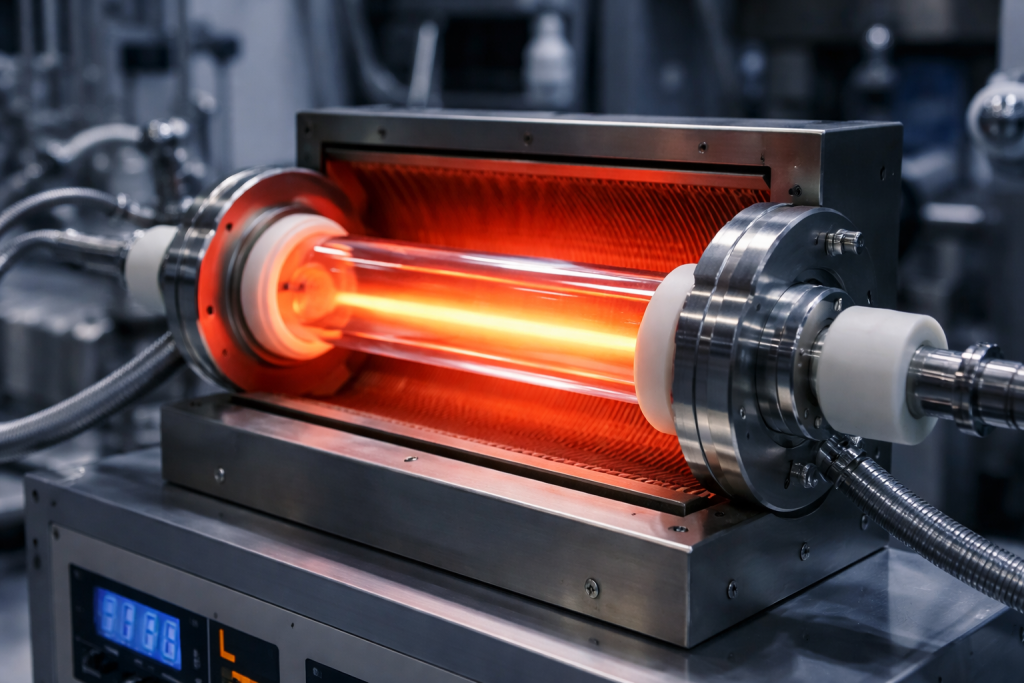
Custom fused quartz tubes are widely used in semiconductor processing, laboratory furnaces, optical instruments, chemical reactors, UV systems, and high-temperature industrial equipment. Compared with standard glass tubes, fused quartz tubes provide excellent thermal stability, high purity, low thermal expansion, chemical resistance, and broad optical transmission. However, these advantages can only be fully achieved when the tube is specified correctly.
In many engineering projects, problems do not come from the material itself, but from incomplete or unclear specifications. A drawing that only states “quartz tube” and a rough size may not be enough for manufacturing, inspection, or application reliability. For custom fused quartz tubes, key parameters such as outer diameter, inner diameter, wall thickness, length, dimensional tolerance, end finish, surface quality, and cleaning requirements should be clearly defined.
This article explains how to specify custom fused quartz tubes from an engineering perspective.
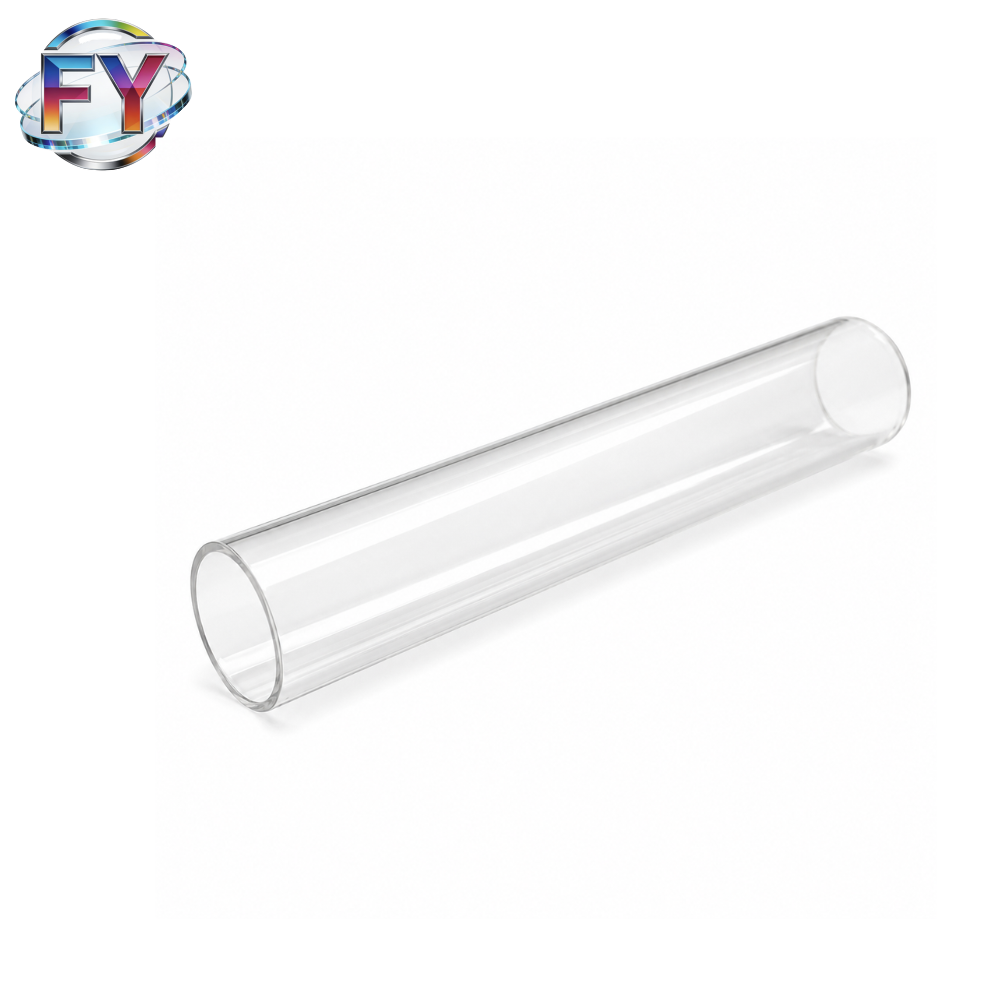
1. Why Specification Matters for Fused Quartz Tubes
Fused quartz is a high-purity amorphous silica material. It has a very low coefficient of thermal expansion, excellent thermal shock resistance, and strong resistance to many chemical environments. These properties make it suitable for demanding applications where ordinary borosilicate or soda-lime glass is not reliable enough.
However, fused quartz is still a brittle material. Its performance is strongly influenced by geometry, wall thickness, surface defects, thermal gradients, and mechanical constraints. Therefore, specifying a custom quartz tube is not simply a matter of choosing a diameter and length. The specification should reflect the actual working environment.
A complete specification helps ensure:
- Correct installation fit
- Stable thermal performance
- Reduced risk of cracking
- Better optical or process performance
- Consistent batch-to-batch manufacturing
- Easier inspection and quality control
- Lower communication cost between customer and supplier
For high-temperature, semiconductor, optical, or chemical applications, proper specification is especially important.
2. Outer Diameter: The Primary Installation Dimension
The outer diameter, often written as OD, is one of the most important dimensions of a fused quartz tube. It determines how the tube fits into holders, furnace openings, sealing systems, clamps, sleeves, or other mechanical assemblies.
When specifying OD, it is important to provide both the nominal value and the tolerance. For example, instead of writing only “OD 50 mm,” a more useful specification would be:
OD: 50.00 mm ± 0.20 mm
The required OD tolerance depends on the application. If the tube is used as a simple furnace liner, the tolerance may be relatively loose. If it must fit into a precision sealing structure or optical alignment system, tighter tolerance may be necessary.
Several factors should be considered when specifying OD:
| Factor | Why It Matters |
|---|---|
| Installation space | Determines whether the tube can fit into equipment |
| Sealing design | Affects gasket, O-ring, or flange compatibility |
| Thermal expansion clearance | Prevents stress during heating |
| Mechanical support | Influences stability and vibration resistance |
| Manufacturing method | Affects achievable dimensional accuracy |
Because fused quartz expands very little when heated, it is often used in precision thermal systems. However, surrounding metal parts usually expand much more than quartz. Therefore, the tube should not be tightly constrained by metal fixtures at high temperature. Sufficient clearance should be designed to avoid mechanical stress.
3. Inner Diameter: Flow, Process Space and Functional Volume
The inner diameter, or ID, defines the internal passage of the tube. It is especially important when the quartz tube is used for gas flow, sample loading, chemical reaction, fluid transport, optical path protection, or wafer processing.
The ID affects:
- Gas or liquid flow rate
- Internal process volume
- Sample loading capacity
- Pressure drop
- Thermal distribution
- Cleaning accessibility
- Mechanical strength through wall thickness
For example, in a tube furnace, the ID determines the usable chamber space. In a chemical reactor, it influences reaction volume and flow behavior. In a UV flow tube, it affects light exposure and fluid residence time.
A typical specification may look like:
ID: 44.00 mm ± 0.30 mm
If both OD and ID are specified, wall thickness can be calculated. However, for critical applications, wall thickness should also be stated directly to avoid ambiguity.
4. Wall Thickness: Strength, Heat Transfer and Thermal Stress
Wall thickness is determined by the relationship between OD and ID. It plays a central role in mechanical strength, thermal behavior, and manufacturing feasibility.
A thicker wall can improve mechanical robustness, but it may also increase thermal stress during rapid heating or cooling. A thinner wall can improve heat transfer and reduce thermal gradients, but it may be more fragile and difficult to handle.
Wall thickness selection should consider:
| Application Condition | Preferred Consideration |
| High mechanical support requirement | Moderate or thicker wall |
| Rapid thermal cycling | Avoid overly thick walls |
| Optical transmission | Uniform wall thickness is important |
| Gas flow tube | Balance ID and strength |
| Furnace process tube | Consider loading, length and support points |
| Precision instrument | Control roundness and wall uniformity |
For high-temperature applications, wall thickness should not be selected only based on strength. Thermal gradients, support method, tube length, and heating uniformity are equally important. A tube that is too thick may be more vulnerable to thermal stress if one area heats faster than another.
5. Length: Total Length, Effective Length and Cutting Tolerance
Tube length is another key specification. In practice, it is useful to distinguish between total length and effective working length.
Total length refers to the complete physical length of the tube from one end to the other. Effective length refers to the usable section inside the equipment or process area.
For example:
Total length: 1,000 mm ± 1.0 mm
Effective heating zone: 600 mm
Both ends: fire-polished
Length tolerance depends on the manufacturing process and application. A quartz tube used in a general laboratory setup may accept a wider tolerance. A tube used in a precise assembly may require tighter length control.
Long quartz tubes require special attention because straightness, sagging risk, thermal support, packaging, and transportation all become more important as length increases. For large-diameter or long tubes, support design should be discussed early in the engineering stage.
6. Dimensional Tolerance: Avoiding Over-Specification
Tolerance defines the acceptable deviation from the nominal dimension. It is necessary for quality control, but excessive tolerance requirements may increase cost and manufacturing difficulty.
Common tolerance items include:
- OD tolerance
- ID tolerance
- Wall thickness tolerance
- Length tolerance
- Độ tròn
- Straightness
- End perpendicularity
- Độ đồng tâm
- Flange or joint dimensions
Not every project requires tight tolerance on every dimension. The correct approach is to identify which dimensions are function-critical.
For example, if the tube is inserted into a furnace with enough clearance, OD tolerance may not need to be extremely tight. But if the tube is sealed by a precision-machined component, OD and roundness may be critical. If the tube is used in an optical path, wall thickness uniformity and straightness may be more important than length tolerance.
A practical specification should separate critical dimensions from general dimensions. This helps the supplier focus inspection and manufacturing control on the most important features.
7. Surface Finish: Optical, Thermal and Cleanliness Performance
Surface finish is often overlooked, but it can strongly affect the performance of fused quartz tubes. Surface defects such as scratches, chips, pits, rough grinding marks, or contamination can reduce mechanical reliability, optical quality, and cleanliness.
Different applications require different surface finish levels.
7.1 Standard Surface
A standard transparent fused quartz tube may be suitable for general laboratory, furnace, or industrial use. Minor visual imperfections may be acceptable if they do not affect performance.
7.2 Fire-Polished Surface
Fire polishing is commonly used to smooth tube ends and reduce sharp edges. It can improve handling safety and reduce the risk of crack initiation at cut edges. Fire-polished ends are often preferred for laboratory and furnace tubes.
7.3 Mechanically Polished Surface
Mechanical polishing may be required when surface flatness, transparency, or dimensional control is important. It is more common for quartz windows, plates, flanges, or precision components, but may also be applied to tube ends or special tube sections.
7.4 Optical Surface Quality
For optical and UV applications, the tube should have good transparency, low bubble content, low inclusion level, and uniform wall thickness. Surface scratches and internal defects may influence light transmission and optical uniformity.
7.5 Semiconductor Clean Surface
For semiconductor use, cleanliness is as important as geometry. Quartz tubes may require high-purity cleaning, particle control, and clean packaging. Surface roughness, residues, metallic contamination, and handling conditions should be carefully controlled.
8. End Finish: Cut, Ground, Polished or Fire-Polished
The end finish of a fused quartz tube should be specified according to how the tube will be installed or used.
Common end finish options include:
| End Finish | Cách sử dụng thông thường |
| Cut end | Basic applications with low edge requirement |
| Ground end | Improved dimensional control and flatness |
| Fire-polished end | Smooth edge, safer handling, reduced chipping risk |
| Mechanically polished end | Precision sealing or optical use |
| Flanged end | Connection to equipment or process systems |
| Sealed end | Closed tube, ampoule, or special chamber application |
For many custom quartz tubes, fire-polished ends are recommended because they reduce sharp edges and improve handling safety. However, if the end must be perfectly flat or perpendicular, grinding or polishing may be required instead.
9. Additional Processing Features
Custom fused quartz tubes often require more than a simple straight tube geometry. Additional processing may include:
- Holes
- Slots
- Side arms
- Bends
- Tapers
- Flanges
- Ground joints
- Sealed ends
- Quartz-to-quartz welding
- Custom openings
- Thread-like structures
- Special end shapes
When these features are required, a technical drawing is strongly recommended. The drawing should include dimensions, tolerances, angles, hole positions, surface requirements, and any assembly-related information.
For complex quartz tube components, manufacturing feasibility should be evaluated before finalizing the design. Some geometries may require flame working, CNC machining, grinding, or multiple joining processes.
10. Application-Based Specification Examples
Different industries prioritize different parameters.
10.1 Furnace Quartz Tube
For a furnace tube, key parameters may include:
- OD and ID
- Wall thickness
- Total length
- Straightness
- End finish
- Maximum working temperature
- Thermal cycling condition
- Support method
- Atmosphere or gas environment
10.2 Semiconductor Quartz Process Tube
For semiconductor processing, key parameters may include:
- High-purity material grade
- Metallic impurity control
- OD, ID and wall thickness
- Surface cleanliness
- Particle control
- Cleaning and packaging method
- Thermal process compatibility
- Drawing-based inspection
10.3 Optical Quartz Tube
For optical applications, key parameters may include:
- Transmission wavelength range
- UV or IR grade material
- Bubble and inclusion level
- Độ đồng đều của độ dày thành
- Surface quality
- Straightness
- Optical inspection requirements
10.4 Chemical Reaction Tube
For chemical applications, key parameters may include:
- Chemical compatibility
- Temperature range
- ID and reaction volume
- Wall thickness
- End connection design
- Cleaning method
- Pressure or vacuum condition, if applicable
11. Recommended Information for Inquiry
When requesting a quotation for custom fused quartz tubes, the following information is useful:
| Specification Item | Example |
| Chất liệu | Fused quartz, fused silica, UV-grade, semiconductor-grade |
| Outer diameter | 50.00 mm ± 0.20 mm |
| Inner diameter | 44.00 mm ± 0.30 mm |
| Wall thickness | 3.00 mm nominal |
| Chiều dài | 1,000 mm ± 1.0 mm |
| End finish | Fire-polished both ends |
| Surface requirement | Transparent, low bubble, no visible cracks |
| Working temperature | Continuous or peak temperature |
| Đơn đăng ký | Furnace, optical, chemical, semiconductor |
| Drawing | Required for holes, bends, flanges or special shape |
| Cleaning | Standard cleaning or high-purity cleaning |
| Quantity | Prototype or batch production |
Providing complete information at the beginning can significantly reduce communication time and improve manufacturing accuracy.
12. Common Mistakes in Specifying Quartz Tubes
Several specification mistakes are common in custom fused quartz tube projects.
First, only providing the outer diameter without inner diameter or wall thickness may create uncertainty. Second, using extremely tight tolerances without functional need can increase cost and lead time. Third, ignoring thermal expansion clearance may cause cracking during operation. Fourth, failing to specify end finish may result in edges that are unsuitable for handling or sealing. Finally, for optical or semiconductor applications, neglecting surface quality and cleaning requirements can lead to poor performance even if the dimensions are correct.
A good specification should be clear, practical, and connected to the actual application.
13. Conclusion
Custom fused quartz tubes are high-performance components used in demanding thermal, optical, chemical, laboratory, and semiconductor environments. To specify them correctly, engineers should define not only OD, ID and length, but also wall thickness, tolerance, surface finish, end finish, material grade, cleanliness, and application conditions.
A well-prepared specification improves manufacturing reliability, reduces communication errors, and helps ensure that the final quartz tube performs properly in its intended environment. For simple applications, standard dimensional information may be sufficient. For precision, optical, semiconductor, or high-temperature systems, detailed drawings and application-based requirements are strongly recommended.
When selecting a custom fused quartz tube, the best approach is to combine material knowledge with practical engineering requirements. This ensures that the tube is not only made from the right material, but also designed and processed for the right operating conditions.