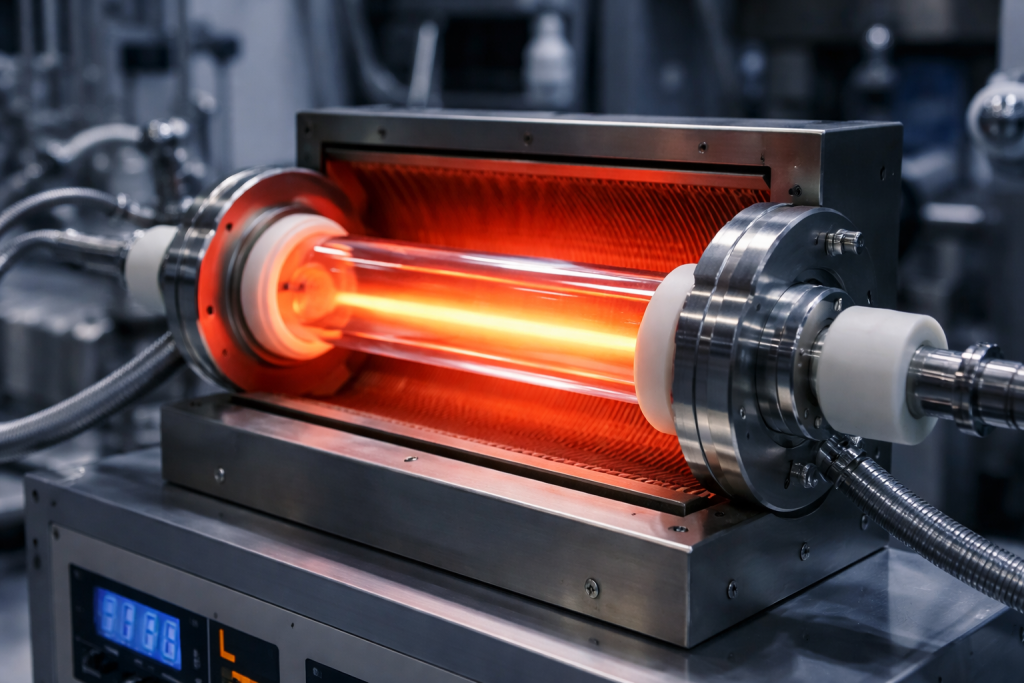
Optical systems, laser equipment, and scientific research instruments often operate under demanding conditions that require exceptional material performance. Components used in these systems must provide high dimensional stability, chemical purity, thermal resistance, and long-term reliability.
Among the various engineering materials available today, fused quartz has become one of the most widely used materials for precision optical and scientific applications. In particular, quartz flanges play a critical role in connecting and sealing optical chambers, vacuum systems, laser assemblies, and laboratory equipment.
This article explores the advantages of quartz flanges and explains why they are essential components in optical, laser, and scientific research environments.
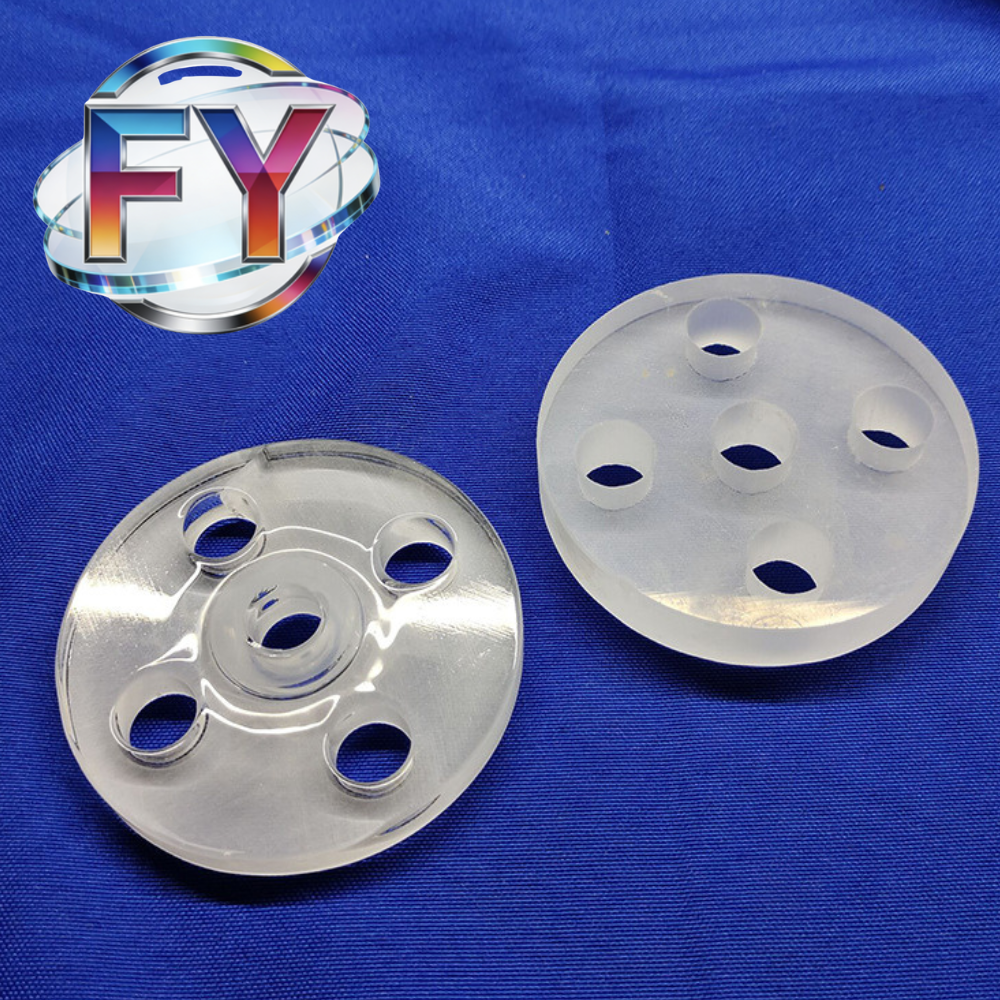
What Is a Quartz Flange?
A quartz flange is a connecting component manufactured from high-purity fused quartz or fused silica. It is designed to provide reliable mechanical connections and sealing performance while maintaining excellent resistance to heat, chemicals, and contamination.
Because quartz possesses unique physical and optical properties, quartz flanges are often preferred over metal or ceramic alternatives in precision scientific systems.
Excellent Optical Compatibility
One of the primary reasons quartz is widely used in optical equipment is its outstanding optical transmission properties.
Fused quartz exhibits high transparency across a broad wavelength range, from ultraviolet (UV) to visible and infrared (IR) regions. Even when the flange itself is not part of the optical path, using quartz components throughout the system helps maintain material compatibility and minimizes contamination risks.
This makes quartz flanges an ideal choice for optical instruments, spectroscopy equipment, and photonics systems.
Superior Performance in Laser Systems
Laser systems frequently generate significant heat and require highly stable components to maintain alignment and performance.
Quartz flanges offer several advantages in laser applications:
- ความเสถียรทางความร้อนที่ยอดเยี่ยม
- Low thermal expansion coefficient
- Resistance to laser-induced heating
- High purity and low contamination risk
- Long service life in demanding environments
These characteristics help maintain optical alignment and system accuracy during prolonged operation.
Outstanding Thermal Stability
Temperature fluctuations can significantly affect the accuracy of optical and scientific equipment.
Fused quartz has one of the lowest thermal expansion coefficients among engineering materials. As a result, quartz flanges experience minimal dimensional change when exposed to temperature variations.
This stability is particularly important for:
- Laser cavities
- Vacuum optical systems
- Precision measurement equipment
- Scientific testing instruments
Maintaining dimensional accuracy helps ensure reliable experimental and operational results.
Low Contamination for Research Applications
Many scientific experiments require extremely clean environments.
Metal components may release particles, oxides, or trace contaminants that interfere with sensitive measurements. High-purity quartz contains very low impurity levels and generates minimal contamination during use.
For this reason, quartz flanges are frequently used in:
- Research laboratories
- Semiconductor development facilities
- Vacuum science applications
- Analytical instruments
- Particle physics experiments
Their cleanliness contributes to higher experimental accuracy and repeatability.
Chemical Resistance and Durability
Research and industrial systems often involve corrosive gases, chemicals, and cleaning agents.
Quartz provides excellent resistance to many acids and chemical compounds, helping extend component life and reduce maintenance requirements.
This durability makes quartz flanges suitable for long-term operation in laboratory and industrial environments.
Common Applications
Quartz flanges are commonly found in:
- อุปกรณ์การประมวลผลด้วยเลเซอร์
- Optical testing systems
- Spectroscopy instruments
- ห้องสุญญากาศ
- Scientific research equipment
- Semiconductor research systems
- Photonics devices
- High-energy physics laboratories
- เครื่องมือออปติคัลสำหรับอากาศยานและอวกาศ
In these applications, quartz flanges contribute to system reliability, cleanliness, and performance stability.
Custom Manufacturing Solutions
Because optical and scientific equipment often requires specialized designs, quartz flanges can be custom manufactured according to specific technical requirements.
Customization options include:
- Diameter and thickness
- Bolt-hole patterns
- Precision sealing surfaces
- Optical-grade finishing
- Vacuum-compatible structures
These capabilities ensure compatibility with a wide variety of research and industrial systems.
สรุป
Quartz flanges have become essential components in modern optical, laser, and scientific research equipment. Their unique combination of thermal stability, chemical resistance, low contamination, and material purity makes them ideal for high-precision applications.
As research technologies continue to advance, the demand for high-performance quartz components is expected to grow, further expanding the role of quartz flanges in scientific and industrial innovation.
Why are quartz flanges preferred in optical systems?
Quartz offers excellent thermal stability, low contamination, and compatibility with optical-grade materials, making it ideal for precision optical applications.
Can quartz flanges withstand laser-generated heat?
Yes. Fused quartz has excellent thermal resistance and a very low thermal expansion coefficient, allowing it to perform reliably in laser systems.
Are quartz flanges suitable for vacuum research equipment?
Absolutely. Quartz flanges provide stable sealing performance, low outgassing characteristics, and high purity, making them widely used in vacuum chambers and scientific research systems.