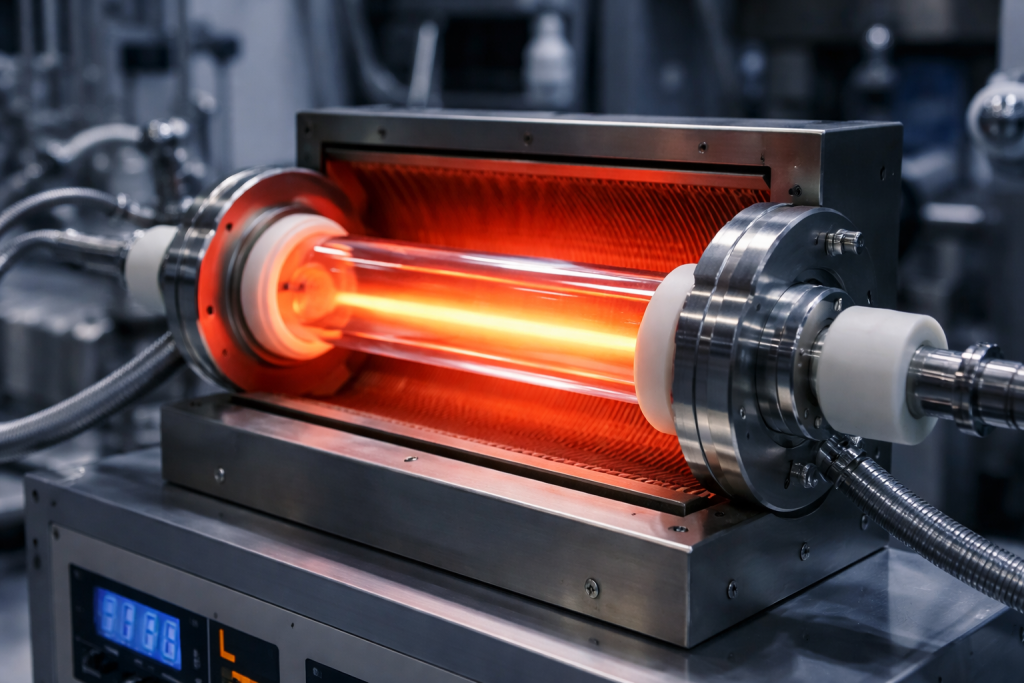
หน้าแปลนเป็นองค์ประกอบที่สำคัญในระบบท่ออุตสาหกรรม ระบบสุญญากาศ และเครื่องมือวัดที่มีความแม่นยำสูง โดยทั่วไปหน้าแปลนที่ทำจากโลหะ เช่น สแตนเลสหรืออลูมิเนียม ถูกใช้อย่างแพร่หลายเนื่องจากความแข็งแรงทางกลและหาได้ง่าย อย่างไรก็ตาม ในสภาพแวดล้อมที่ต้องการความบริสุทธิ์สูง อุณหภูมิสูง หรือมีความกัดกร่อนทางเคมี หน้าแปลนที่ทำจากควอตซ์กำลังได้รับความนิยมมากขึ้นควอตซ์ (SiO₂) มีคุณสมบัติเฉพาะตัวที่ทำให้เหมาะสำหรับการใช้งานทางวิทยาศาสตร์และอุตสาหกรรมเฉพาะทาง บทความนี้นำเสนอการเปรียบเทียบอย่างละเอียดระหว่างหน้าแปลนควอตซ์และหน้าแปลนโลหะทั่วไปในแง่ของคุณสมบัติของวัสดุ ประสิทธิภาพ และสถานการณ์การใช้งาน.
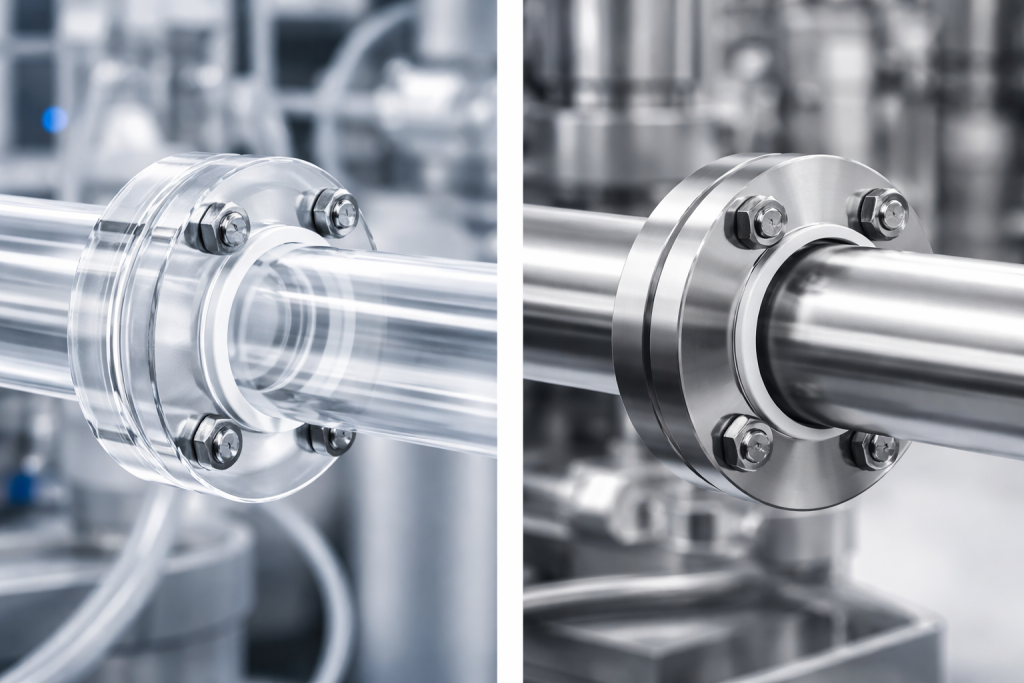
1. คุณสมบัติของวัสดุ
1.1 หน้าแปลนควอตซ์
ควอตซ์คือ รูปแบบผลึกของซิลิกอนไดออกไซด์ ด้วยคุณสมบัติทางความร้อน, เคมี, และแสงที่ยอดเยี่ยม:
- ความต้านทานความร้อนสูง: ควอตซ์สามารถทนต่ออุณหภูมิที่สูงกว่า 1000°C ได้โดยไม่เกิดการเสียรูป ทำให้เหมาะสำหรับกระบวนการที่มีอุณหภูมิสูง.
- ความเฉื่อยทางเคมี: ควอตซ์มีความทนทานสูงต่อกรด, ด่าง, และตัวทำละลายอินทรีย์, ทำให้มีความเสถียรในสภาพแวดล้อมที่มีการกัดกร่อน.
- การขยายตัวทางความร้อนต่ำ: ด้วยค่าสัมประสิทธิ์การขยายตัวทางความร้อนประมาณ 0.55 × 10⁻⁶ /°C ควอตซ์จึงรักษาความเสถียรของขนาดได้ดีภายใต้การเปลี่ยนแปลงอุณหภูมิอย่างรวดเร็ว.
- ฉนวนไฟฟ้า: ควอตซ์เป็นวัสดุไดอิเล็กทริกที่ยอดเยี่ยม ทำให้เหมาะสำหรับการใช้งานที่เกี่ยวข้องกับระบบไฟฟ้าแรงสูงหรือระบบอิเล็กทรอนิกส์ที่ไวต่อสัญญาณรบกวน.
1.2 หน้าแปลนโลหะ
หน้าแปลนโลหะ เช่น สแตนเลสหรืออะลูมิเนียม, มีคุณสมบัติทางกลที่แข็งแรง:
- ความแข็งแรงสูงและความแข็งแรงในการยืดตัว: เหมาะสำหรับระบบความดันสูง.
- ความต้านทานความร้อนปานกลาง: โดยทั่วไปมีความเสถียรถึง 500–800°C ขึ้นอยู่กับองค์ประกอบของโลหะผสม.
- ความไวต่อการกัดกร่อน: โลหะสามารถเกิดการออกซิไดซ์หรือกัดกร่อนในสภาพแวดล้อมทางเคมีที่รุนแรงได้ ซึ่งจำเป็นต้องมีการเคลือบหรือมาตรการป้องกัน.
- การนำความร้อนที่ดี: ช่วยกระจายความร้อน มีประโยชน์ในบางการใช้งาน.
2. ประสิทธิภาพทางความร้อน
หน้าแปลนควอตซ์มีความโดดเด่นในการใช้งานที่อุณหภูมิสูง สามารถรักษาความแข็งแรงของโครงสร้างในระบบเตาหลอม ห้องปฏิบัติการเซมิคอนดักเตอร์ และการติดตั้งเลนส์เลเซอร์ได้ การขยายตัวทางความร้อนที่ต่ำช่วยลดแรงกดดันต่อชิ้นส่วนที่เชื่อมต่อ ลดความเสี่ยงของการแตกร้าวหรือการรั่วไหล.
หน้าแปลนโลหะ แม้จะมีความแข็งแรงทางกลสูง แต่จะขยายตัวอย่างมากเมื่อได้รับความร้อน การขยายตัวนี้อาจทำให้ซีลในระบบที่มีความแม่นยำสูงหรือระบบสุญญากาศเสียหายได้ โดยเฉพาะอย่างยิ่งในกรณีที่ต้องการความแม่นยำสูง หน้าแปลนสแตนเลสอาจต้องใช้ท่อเบลโลว์หรือข้อต่อขยายตัวเพื่อรองรับการเปลี่ยนรูปจากความร้อน.
3. ความต้านทานต่อสารเคมี
ความเสถียรทางเคมีเป็นปัจจัยสำคัญสำหรับหน้าแปลนในอุตสาหกรรมและห้องปฏิบัติการ:
- หน้าแปลนควอตซ์ remain chemically inert in highly corrosive environments, such as hydrofluoric acid etching or strong alkaline processes.
- Metal flanges can corrode unless specifically treated or alloyed (e.g., 316L stainless steel). Prolonged exposure may lead to contamination or failure in sensitive systems.
This property makes quartz flanges particularly suitable for semiconductor fabrication, chemical vapor deposition (CVD) systems, and pharmaceutical reactors.
4. Mechanical Strength and Durability
Metal flanges naturally exhibit superior mechanical strength, handling high pressure and mechanical stress efficiently. Quartz, while brittle compared to metals, can be engineered with reinforced designs, thicker sections, or protective coatings to achieve sufficient durability in specialized applications.
Quartz flanges are particularly advantageous when weight reduction, dimensional stability, and chemical purity outweigh the need for extreme mechanical load-bearing capability. For example, in vacuum chambers or optical systems, quartz flanges provide long-term stability without introducing metal contamination.
5. Optical and Electrical Considerations
Quartz flanges are transparent to UV, visible, and IR light, allowing their integration into optical systems where in-situ observation or laser access is required. Additionally, their dielectric properties prevent electrical interference in sensitive experimental setups. Metal flanges, being opaque and conductive, cannot serve this purpose without additional optical windows or insulating layers.
6. Application Scenarios
| คุณสมบัติ | Quartz Flanges | Metal Flanges |
|---|---|---|
| ความต้านทานต่ออุณหภูมิ | >1000°C | 500–800°C |
| ความต้านทานต่อสารเคมี | ยอดเยี่ยม | Moderate (requires coatings) |
| การขยายตัวทางความร้อน | Very Low | Moderate to High |
| ความแข็งแรงเชิงกล | Moderate (brittle) | สูง |
| ความโปร่งใสทางแสง | ใช่ | ไม่ |
| Electrical Conductivity | Insulator | Conductor |
Quartz flanges are ideal for:
- Semiconductor processing equipment
- High-purity chemical reactors
- Optical and laser systems
- High-temperature vacuum chambers
Metal flanges are preferred for:
- High-pressure piping
- Mechanical assemblies requiring robust load-bearing
- General industrial applications where chemical exposure is limited
7. บทสรุป
Quartz flanges and conventional metal flanges each have distinct advantages. Quartz flanges excel in high-temperature, chemically aggressive, and optical or vacuum-sensitive environments, offering superior chemical stability, low thermal expansion, and transparency. Metal flanges provide mechanical strength and pressure tolerance, making them suitable for standard industrial pipelines and structural assemblies.
Selecting the appropriate flange material requires careful consideration of operating conditions, chemical exposure, thermal load, and optical or electrical requirements. In specialized industrial or scientific applications, quartz flanges offer a unique combination of properties that cannot be matched by conventional metals, ensuring reliability, purity, and long-term performance.