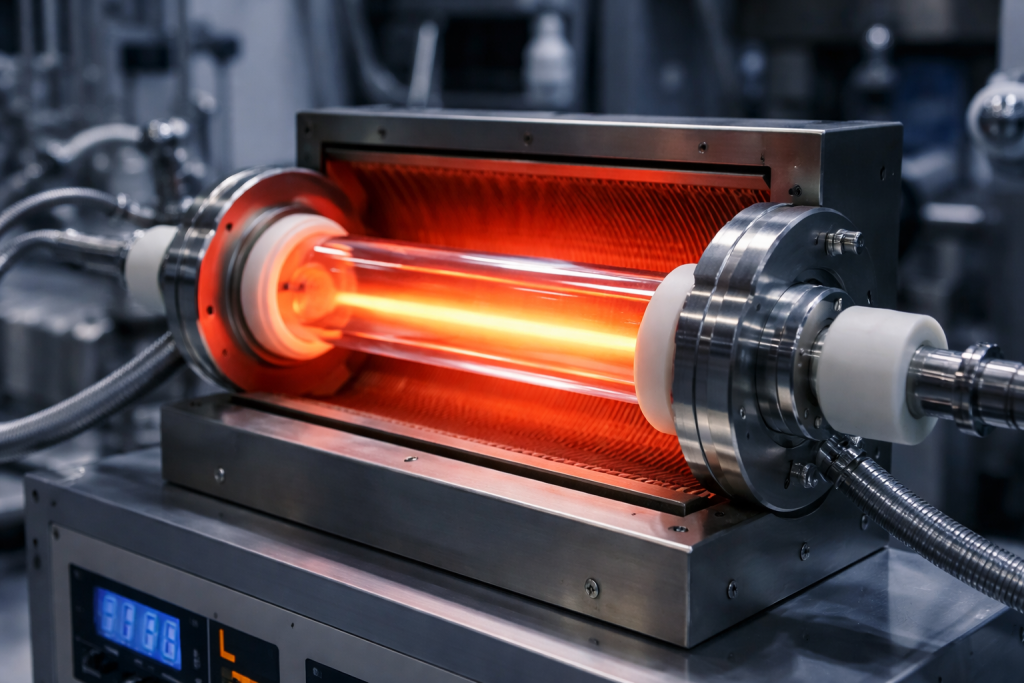
Plasma processing technology plays a critical role in modern industries, particularly in semiconductor manufacturing, photovoltaic production, surface treatment, and advanced materials processing. In these demanding environments, every component must withstand extreme temperatures, reactive gases, and plasma exposure while maintaining process stability and cleanliness.
Among these components, high-purity quartz flanges have become indispensable. Their unique combination of thermal stability, chemical resistance, and contamination-free performance makes them an ideal choice for plasma processing systems.
This article explores why high-purity quartz flanges are essential and how they contribute to reliable plasma processing operations.
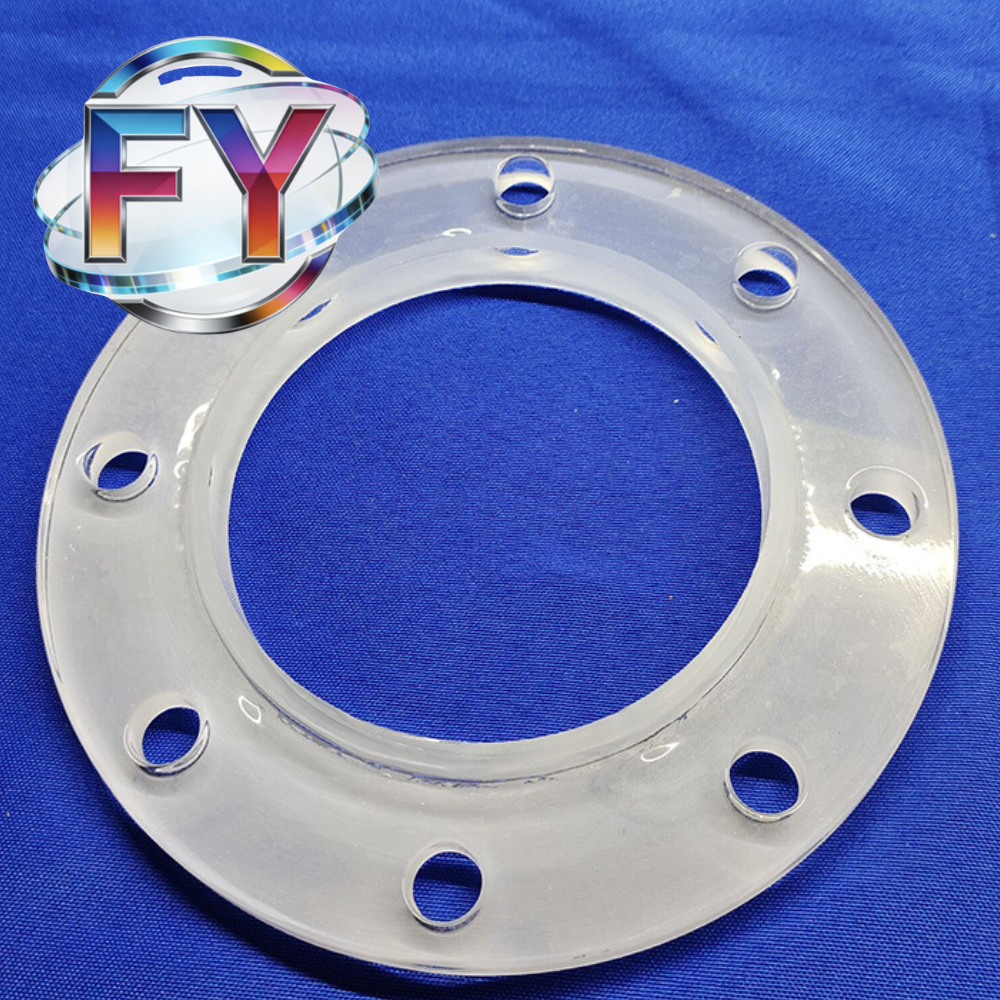
What Is a Quartz Flange?
A quartz flange is a precision-engineered component manufactured from high-purity fused quartz or fused silica. It is used to connect chambers, tubes, windows, and other system components while providing a secure and reliable seal.
Unlike conventional metal flanges, quartz flanges are specifically designed for environments where contamination control, thermal stability, and resistance to aggressive plasma conditions are critical.
High-purity quartz typically contains more than 99.99% SiO₂, ensuring exceptional material performance in advanced industrial applications.
Outstanding Resistance to Plasma Environments
Plasma processing systems generate highly reactive ions, radicals, and energetic particles that can rapidly degrade conventional materials.
Quartz exhibits excellent resistance to plasma-induced erosion and chemical attack. This allows quartz flanges to maintain their structural integrity even after prolonged exposure to harsh processing conditions.
Because quartz is chemically inert to many process gases used in plasma etching and deposition systems, it helps maintain stable operating conditions and reduces maintenance requirements.
Uitstekende thermische stabiliteit
One of the most important characteristics of fused quartz is its extremely low coefficient of thermal expansion.
During plasma processing, equipment often experiences rapid temperature fluctuations. Materials with high thermal expansion rates may deform, crack, or lose sealing performance under these conditions.
Quartz flanges remain dimensionally stable during repeated heating and cooling cycles, ensuring reliable sealing performance and reducing the risk of equipment downtime.
High Purity for Contamination Control
Contamination control is a major concern in semiconductor and electronics manufacturing.
Metal components can release particles or metallic contaminants that negatively affect product yield and process quality. High-purity quartz contains very low levels of impurities and generates minimal contamination during operation.
As a result, quartz flanges help maintain clean process environments, making them particularly valuable in semiconductor fabrication facilities and advanced research laboratories.
Superior Chemical Resistance
Plasma processing frequently involves corrosive gases such as fluorine-containing compounds, chlorine-based gases, and other reactive chemicals.
Quartz provides excellent resistance to many of these aggressive substances, making it suitable for long-term use in challenging chemical environments.
Its corrosion resistance contributes to longer component life and lower replacement costs compared with many alternative materials.
Applications of Quartz Flanges in Plasma Processing Equipment
High-purity quartz flanges are widely used in:
- Plasma etching systems
- Plasma-enhanced chemical vapor deposition (PECVD) equipment
- Reactive ion etching (RIE) systems
- Semiconductor wafer processing tools
- Vacuümkamers
- Thin-film deposition equipment
- Research and laboratory plasma systems
In these applications, quartz flanges help ensure stable process conditions, reliable sealing performance, and reduced contamination risks.
Aanpassingsopties
Modern plasma processing equipment often requires customized quartz components.
Quartz flanges can be manufactured in various sizes, thicknesses, and configurations to meet specific equipment requirements. Custom machining allows precise control of dimensions, bolt patterns, and sealing surfaces, ensuring compatibility with different plasma processing systems.
Conclusie
As plasma processing technologies continue to evolve, the demand for high-performance materials is increasing. High-purity quartz flanges provide a unique combination of thermal stability, chemical resistance, contamination control, and mechanical reliability.
These advantages make them essential components in plasma processing systems used across semiconductor manufacturing, advanced electronics, and scientific research industries.
By choosing high-quality fused quartz flanges, equipment manufacturers and end users can improve process stability, reduce maintenance costs, and achieve higher operational efficiency.
Why is quartz preferred over metal for plasma processing applications?
Quartz offers superior chemical resistance, lower contamination risk, and better thermal stability than many metal materials. These properties make it more suitable for plasma environments where cleanliness and process consistency are critical.
What purity level is typically required for plasma processing quartz flanges?
Most plasma processing applications require high-purity fused quartz with a SiO₂ content of 99.99% or higher to minimize contamination and ensure stable performance.
Can quartz flanges be customized for specific plasma equipment?
Yes. Quartz flanges can be custom-manufactured according to technical drawings, including dimensions, thickness, hole patterns, and sealing surface requirements.