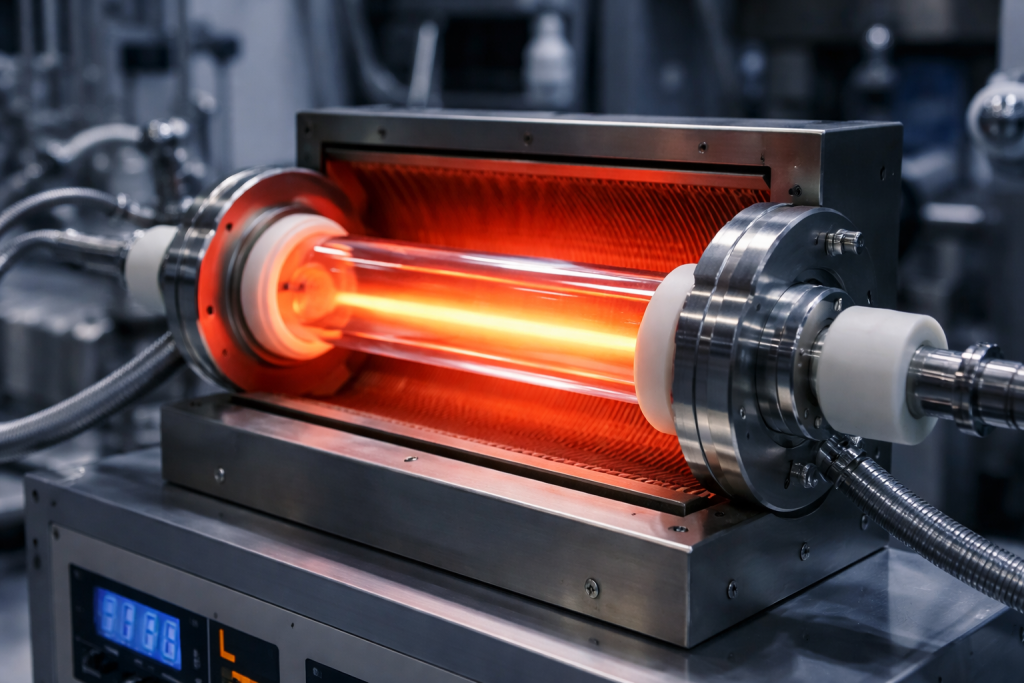
석영 플랜지 are widely used in semiconductor furnaces, vacuum chambers, chemical-processing equipment, laboratory reactors and high-temperature quartz tube assemblies. Fused quartz offers excellent thermal stability, chemical resistance and low contamination, but it is also a brittle material that does not tolerate concentrated mechanical stress.
A quartz flange that has passed dimensional and visual inspection can still crack during installation if it is misaligned, unevenly clamped or placed in direct contact with rigid metal hardware. Understanding these risks is essential for preventing damage during assembly and operation.
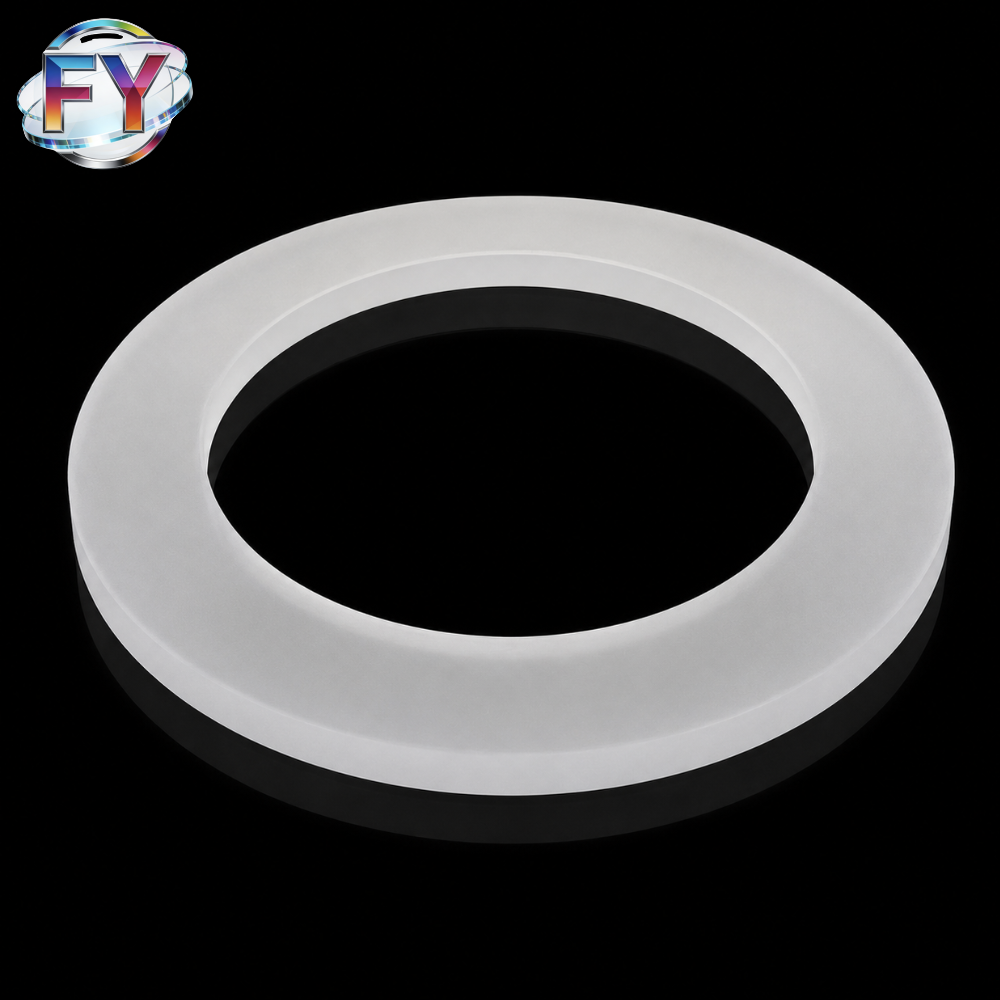
Why Quartz Flanges Are Vulnerable to Installation Damage
Fused quartz has a very low coefficient of thermal expansion and performs well under high-temperature conditions. However, its mechanical behavior differs significantly from that of stainless steel or aluminum.
Metal flanges can deform slightly under bolt load and redistribute local stress. Quartz has much less ability to deform plastically. When excessive force is concentrated around a bolt hole, flange edge or sealing surface, a small chip or microscopic crack can quickly develop into a complete fracture.
For this reason, a quartz flange should not be installed using the same procedures and torque values applied to metal flanges.
Common Causes of Quartz Flange Cracking
1. Excessive Bolt Torque
Overtightening bolts is one of the most common causes of quartz flange failure.
When bolts are tightened too strongly, the clamping force may concentrate around the bolt holes or washers. The quartz cannot deform to absorb this load, so tensile stress develops within the flange.
The risk becomes greater when:
- Metal washers contact the quartz directly
- Bolts are tightened without torque control
- One bolt is fully tightened before the others
- The flange is relatively thin
- Bolt holes have insufficient clearance
- The sealing gasket is too hard
Using greater bolt torque does not always create a better seal. In many cases, it increases the possibility of cracking without significantly improving sealing performance.
2. Uneven Bolt Tightening
Even when the total clamping force is not excessive, an incorrect tightening sequence can bend the flange.
If the bolts on one side are tightened first, that section of the flange is pulled toward the mating surface while the opposite side remains unsupported. This creates an uneven bending load.
For circular flanges, bolts should generally be tightened gradually in a crosswise or star pattern. Each bolt should be tightened in several small stages until the required gasket compression is achieved.
3. Misalignment Between Connected Components
A quartz flange should align naturally with the mating component before the fasteners are tightened.
Installers should not use bolts to pull a misaligned quartz tube or flange into position. This can introduce permanent bending stress into the quartz assembly.
Common alignment problems include:
- Offset flange centers
- Incorrect bolt-hole positions
- A quartz tube installed at an angle
- Insufficient pipe support
- Rigid gas lines pulling on a port
- Inaccurate equipment mounting surfaces
- Poor perpendicularity between the tube and flange
If force is required to insert the bolts or close the gap between the flanges, the assembly should be realigned before tightening.
4. Direct Contact with Metal Components
Quartz and metal should not normally be allowed to make hard, concentrated contact during installation.
A metal washer, bolt or mounting bracket can create a small contact area that produces very high local stress. Contact may also cause scratches and edge chips that later develop into cracks.
Suitable load-distribution materials may include:
- High-temperature elastomer washers
- PTFE or other compatible polymer pads
- Soft gasket materials
- Engineered spacer rings
- Load-spreading plates
The selected material must be compatible with the operating temperature, vacuum level and process chemistry.
5. Incorrect or Damaged Gaskets
A gasket should compensate for small surface variations and distribute sealing pressure evenly. An unsuitable gasket can have the opposite effect.
Potential gasket-related problems include:
- Excessive hardness
- Uneven thickness
- Incorrect dimensions
- Contamination or embedded particles
- Reuse of a permanently compressed gasket
- Incorrect positioning
- Incompatible thermal expansion
- Excessive compression
A gasket that is too narrow may concentrate the load near the flange opening. A gasket that extends too close to bolt holes may interfere with uniform tightening.
The gasket should match the flange design and process conditions rather than being selected only according to nominal flange diameter.
6. Surface Particles and Debris
Even a small particle trapped between the quartz flange and gasket can act as a point load.
As the flange is tightened, the particle presses into the quartz surface and creates localized stress. Hard contamination such as metal fragments, ceramic particles or quartz chips is particularly dangerous.
Before assembly, inspect and clean:
- Both flange surfaces
- The gasket
- O-ring grooves
- Bolt holes
- Washers and spacers
- The surrounding installation area
Cleaning materials and procedures should be suitable for the required purity level.
7. Scratches, Chips and Edge Damage
Quartz components can contain small defects that are difficult to see without careful inspection. Damage often begins during transportation, unpacking or handling rather than during actual installation.
Critical defects include:
- Chips around bolt holes
- Scratches across the sealing surface
- Cracks near welded areas
- Sharp edge damage
- Impact marks
- Deep grinding traces
- Localized devitrification
These defects act as stress concentrators. A flange with a small edge chip may appear usable at room temperature but fail when clamping pressure or thermal stress is applied.
Damaged quartz should be evaluated before installation. Attempting to hide or mechanically force a damaged area into the assembly can lead to sudden failure.
8. Poor Flange Flatness or Mating-Surface Quality
If either mating surface is not sufficiently flat, the flange may contact only at several high points. Tightening the bolts then forces the quartz to bend until it matches the opposing surface.
Possible causes include:
- Inadequate quartz flange flatness
- A warped metal mounting plate
- Residue on the sealing surface
- Weld distortion in the quartz assembly
- Incorrect gasket thickness
- Inconsistent bolt support
Flatness requirements should be determined according to the flange diameter, sealing method and vacuum requirements. Precision sealing faces may require controlled grinding or mechanical polishing.
9. Unsupported Quartz Tubes and Components
Large quartz tubes and chambers can place considerable bending load on a flange. If the assembly is supported only by the flange, the weight of the connected quartz component may cause cracking near the flange-to-tube joint.
Additional stresses may be introduced by:
- Long horizontal quartz tubes
- Heavy attached chambers
- Unsupported gas connections
- Vibration from pumps or equipment
- Movement during maintenance
- Incorrect lifting procedures
Quartz tubes and assemblies should be independently supported where necessary. The flange should primarily provide connection and sealing rather than act as the only structural support.
10. Thermal Expansion Mismatch
Quartz has a much lower coefficient of thermal expansion than common metals. When a quartz flange is rigidly attached to a metal structure, the two materials expand by different amounts as the temperature changes.
This difference can generate significant stress, particularly when:
- The mounting system does not allow movement
- The flange is heated unevenly
- Bolts are tightened at room temperature without considering operating temperature
- One side of the flange is cooled
- The metal frame expands toward the quartz component
- The system experiences repeated thermal cycling
Flexible seals, slotted mounting features or suitable clearances may be required to accommodate differential expansion.
11. Rapid or Uneven Temperature Changes
Fused quartz has excellent resistance to thermal shock, but it is not immune to damage. Large temperature differences across a thick flange or welded section can generate thermal stress.
Common risks include:
- Direct flame impingement on one area
- Sudden contact with a cold surface
- Cooling one side while the other remains hot
- Rapid furnace start-up or shutdown
- Uneven heating around a metal connection
- Airflow directed at a hot flange
The allowable heating and cooling rate depends on the flange geometry, thickness, weld structure and existing mechanical load.
Installation Risk Summary
| Risk factor | How it causes damage | Preventive action |
|---|---|---|
| Excessive bolt torque | Concentrates stress around holes | Use controlled, minimal torque |
| Uneven tightening | Bends or twists the flange | Follow a crosswise tightening sequence |
| Poor alignment | Introduces permanent bending load | Align components before installing bolts |
| Metal-to-quartz contact | Creates concentrated point loads | Use compatible soft washers or spacers |
| Incorrect gasket | Produces uneven compression | Select the correct material and dimensions |
| Surface particles | Create localized pressure points | Clean and inspect all contact surfaces |
| Existing chips or scratches | Act as fracture initiation sites | Inspect the flange before installation |
| Unsupported components | Load the flange and welded joint | Support long or heavy quartz assemblies |
| Thermal expansion mismatch | Generates stress during heating | Allow controlled movement and clearance |
| Uneven temperature | Creates thermal gradients | Heat and cool the assembly uniformly |
Recommended Installation Procedure
Step 1: Inspect the Quartz Flange
Examine the sealing face, bolt holes, edges and welded areas under good lighting. Do not install a flange with visible cracks or significant chips.
Step 2: Clean All Contact Surfaces
Remove particles, packaging residue and old gasket material. Use cleaning procedures compatible with the required process cleanliness.
Step 3: Confirm Component Alignment
Place the quartz flange against the mating component without applying force. The faces and bolt holes should align naturally.
Step 4: Install the Correct Gasket
Use a clean, undamaged gasket with suitable dimensions, hardness and chemical resistance. Make sure it is centered correctly.
Step 5: Insert Bolts Without Forcing Them
Bolts should pass through the mounting holes without pressing against the quartz. Verify that there is adequate clearance for assembly and thermal movement.
Step 6: Tighten Gradually in a Crosswise Pattern
Apply clamping force in several stages. Do not fully tighten one bolt at a time. Recheck gasket position and flange alignment throughout the process.
Step 7: Avoid Unnecessary Torque
Use only enough force to achieve uniform gasket compression and the required seal. The suitable torque depends on the flange design, gasket and mounting system; there is no universal value for all quartz flanges.
Step 8: Support the Quartz Assembly
Make sure long tubes, chambers and connected lines are independently supported. No external pipe or fitting should pull on the quartz flange.
Step 9: Perform a Controlled Leak Test
Increase vacuum or test pressure gradually. If leakage occurs, check alignment, gasket condition and surface cleanliness before applying additional bolt torque.
Step 10: Monitor the First Thermal Cycle
During initial heating and cooling, observe the assembly for movement, unusual sounds, leakage or changing alignment. Stop the process if a potential mechanical problem is detected.
Design Improvements That Reduce Cracking Risk
Installation reliability begins with the flange design. Useful design improvements may include:
- Rounded or chamfered hole edges
- Adequate clearance around fasteners
- Sufficient flange thickness
- Smooth transitions between the flange and tube
- Suitable corner radii
- Controlled sealing-face flatness
- Proper bolt-circle diameter
- Flexible mounting structures
- Load-distributing washers
- Independent supports for heavy assemblies
The design should also avoid sudden thickness changes and sharp internal corners, especially near welded joints.
자주 묻는 질문
Can metal washers be used directly against a quartz flange?
Direct metal-to-quartz contact should generally be avoided because it can create concentrated stress and surface damage. A compatible load-distributing washer or pad is normally preferable.
How tight should quartz flange bolts be?
There is no single bolt-torque value suitable for every quartz flange. The correct force depends on flange diameter, thickness, hole design, gasket type and mounting structure. Use the minimum controlled force required to compress the gasket uniformly and achieve the necessary seal.
Can bolts be used to correct flange misalignment?
No. Using bolts to pull a misaligned quartz flange into position creates bending stress and can cause immediate or delayed fracture. The connected components should be aligned and supported before tightening.
Can a quartz flange with a small chip still be installed?
It depends on the chip location, depth and relationship to the stressed or sealing areas. Chips near bolt holes, edges, welds and sealing surfaces present higher risks. The component should be inspected before use.
Why does a quartz flange crack after installation rather than immediately?
Residual mechanical stress, thermal cycling, vibration or gradual crack growth can cause delayed failure. A microscopic defect may grow after repeated heating and cooling until the flange fractures.
Can a cracked quartz flange be repaired?
Some quartz components can be repaired by an experienced quartz fabricator, but repair feasibility depends on the crack location, component dimensions, contamination requirements and service conditions. Critical semiconductor or vacuum components may need to be replaced.
결론
Quartz flange cracking is usually not caused by a single factor. It often results from a combination of misalignment, uneven clamping, unsuitable gaskets, point contact, inadequate support or thermal expansion mismatch.
The most effective prevention method is to treat the quartz flange as a precision brittle component throughout transportation, handling and installation. Careful inspection, clean sealing surfaces, controlled tightening and proper mechanical support can significantly reduce the risk of damage.
For custom quartz flanges, quartz tube assemblies and other precision fused quartz components, provide your drawings, mounting method and operating conditions. A technical review before manufacturing can help identify potential stress and installation risks before the component enters service.