유리는 과학, 산업 및 소비재 분야에서 가장 널리 사용되는 소재 중 하나입니다. 하지만 모든 유리가 똑같이 만들어지는 것은 아닙니다. 석영 유리 (용융 실리카라고도 함)와 일반 유리(일반적으로 소다석회 또는 붕규산 유리)는 화학 성분, 광학적 특성, 열적 거동 및 기계적 성능에서 큰 차이가 있습니다. 이러한 차이점을 이해하는 것은 정밀 애플리케이션에서 유리를 사용하는 엔지니어, 연구원 및 디자이너에게 필수적입니다.
1. 구성 차이점
일반 유리
소다 석회 유리와 같은 일반 유리는 주로 다음과 같은 성분으로 구성됩니다:
- 이산화규소(SiO2): ~70-75%
- 산화나트륨(Na2O) 및 산화칼슘(CaO): 플럭스 및 안정제 역할을 합니다.
- 미량 첨가제: 마그네슘, 알루미늄 또는 기타 산화물로 내구성 향상
일반 유리의 고급 변형인 붕규산 유리는 산화붕소(B2O3)를 함유하고 있어 내열성과 내화학성을 강화합니다.
석영 유리
석영 유리는 거의 전적으로 고순도 이산화규소(SiO2)로 만들어지며, 보통 99.9% 이상입니다. 다음에서 생산됩니다:
- 고온(~2000°C)에서 천연 석영 결정을 녹이거나
- 화학 기상 증착으로 매우 순수한 용융 실리카 생산
일반 유리와 달리 석영 유리에는 다음과 같은 성분이 포함되어 있습니다. 금속 산화물 없음 또는 플럭스 에이전트를 사용하여 고유한 속성을 부여합니다.
2. 광학 속성
전송 범위
- 일반 유리: 가시광선(400-700nm)에서는 투명하지만 ~350nm 이하의 자외선은 흡수하고 적외선(IR) 투과율은 제한적입니다.
- 석영 유리: 자외선(UV, ~160nm)까지 훨씬 더 넓은 스펙트럼에 걸쳐 매우 투명합니다. 중적외선(~3.5µm).
굴절률
- 일반 유리: ~1.5(구성에 따라 다름)
- 석영 유리: ~1.46, 분산이 매우 낮고 광학 왜곡이 최소화됨
이러한 차이로 인해 석영 유리는 UV 레이저, 분광학, 광섬유 및 정밀 렌즈에 이상적인 반면, 일반 유리는 창문, 용기 및 저가형 광학 장치에 충분합니다.
3. 열 속성
열팽창 계수(CTE)
- 일반 소다 석회 유리: ~9 × 10^-6 /°C
- 보로실리케이트 유리: ~3.3 × 10^-6 /°C
- 석영 유리: ~0.5 × 10^-6 /°C
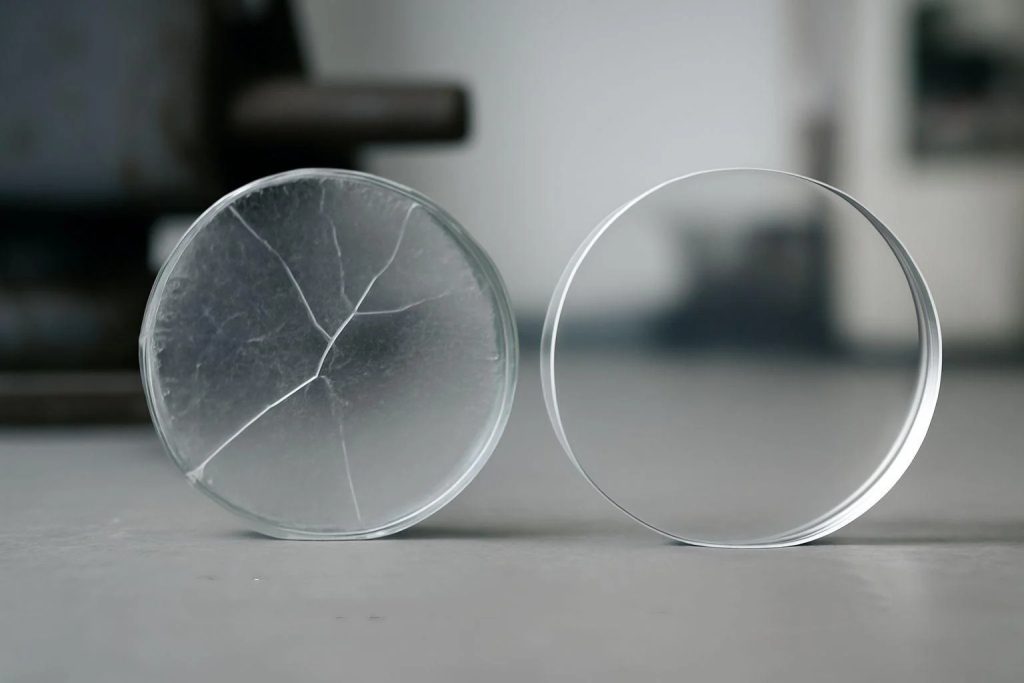
통역: 석영 유리는 열을 가하면 팽창이 훨씬 적어 열 충격에 매우 강합니다. 예를 들어
- 소다석회 유리잔에 끓는 물을 부으면 깨질 수 있습니다.
- 석영 유리는 섭씨 수백 도의 급격한 온도 변화를 견딜 수 있습니다.
연화 온도
- 일반 유리: ~700-800°C(소다 석회)
- 붕규산염: ~820-850 °C
- 석영 유리: >1600 °C
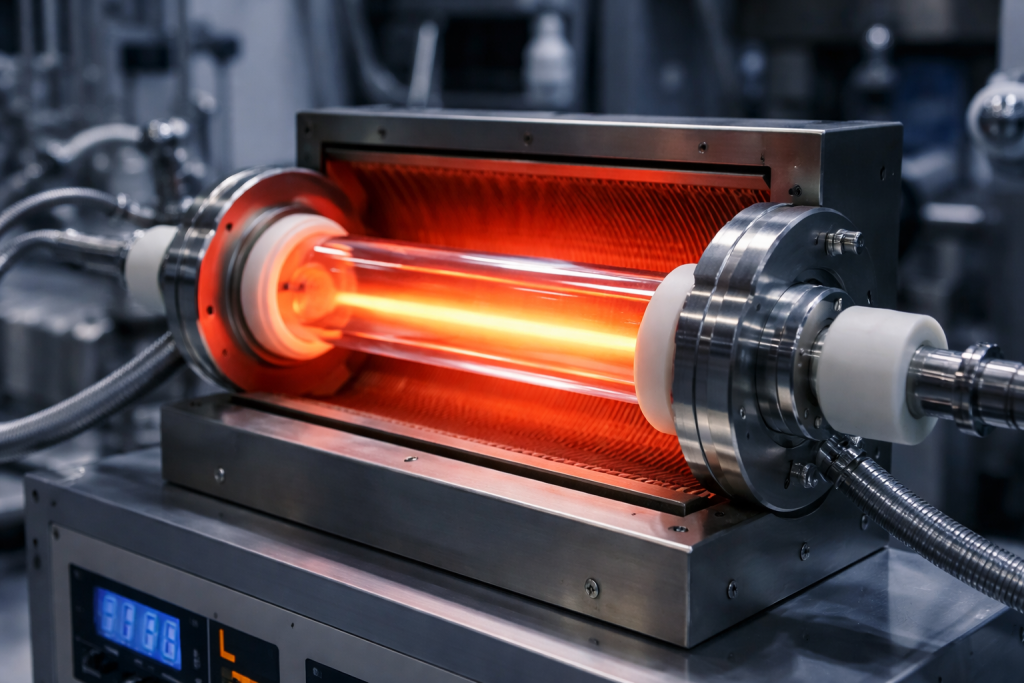
석영 유리는 일반 유리가 변형되거나 녹을 수 있는 고온 용광로, 반도체 공정 및 산업용 광학 분야에서 사용할 수 있습니다.
4. 내화학성
석영 유리는 화학적 안정성이 뛰어납니다:
- 산에 대한 내성(불산 제외)
- 알칼리성에 대한 내성
- 이온을 침출하지 않음
일반 유리는 화학적 반응성이 더 높습니다:
- 소다 석회 유리는 강산과 알칼리에 의해 공격받을 수 있습니다.
- 붕규산 유리는 내성이 강하지만 여전히 극한 조건에서 반응합니다.
화학 반응기, 실험실 유리 제품 또는 포토닉스 분야의 경우 석영 유리가 선호되는 경우가 많습니다.
5. 기계적 특성
- 경도: 석영 유리(Mohs 6-7)는 일반 유리(Mohs 5-6)보다 단단합니다.
- 힘: 둘 다 깨지기 쉽지만 석영 유리는 변형없이 더 높은 온도를 견딜 수 있습니다.
- 내구성: 석영 유리는 긁힘과 마모에 더 강합니다.
6. 애플리케이션 비교
| 속성 / 애플리케이션 | 일반 유리 | 석영 유리 |
|---|---|---|
| 광학 창 | 가시광선 | ✓ 자외선, 가시광선, 적외선 |
| 실험실 비커 | ✓ | 고온 화학 애플리케이션 |
| 열 충격 저항 | 낮음 | 매우 높음 |
| 고온 처리 | 제한적 | 우수 |
| 광섬유 | ✗ | ✓ |
| UV 레이저 광학 | ✗ | ✓ |
| 비용 | 낮음 | 높음 |
요약: 일반 유리는 일반적인 목적과 저비용 애플리케이션에 충분합니다. 석영 유리는 다음과 같은 경우에 선택됩니다. 고순도, 극한의 온도 내성, 넓은 광학 범위 및 화학적 비활성성 가 필요합니다.
7. 결론
석영 유리와 일반 유리는 서로 다른 용도로 사용됩니다:
- 일반 유리: 비용 효율적이며 일상적인 광학, 컨테이너 및 창문 애플리케이션에 적합
- 석영 유리: 과학 및 산업 분야의 고정밀, 고온 또는 고순도 응용 분야를 위한 프리미엄 소재
올바른 유리 유형 선택은 다음에 따라 다릅니다:
- 광학 파장 요구 사항
- 열 및 화학 환경
- 기계적 및 표면 내구성
- 예산 제약
실험실, 반도체, 자외선 광학 또는 고온 원자로의 경우 석영 유리는 종종 없어서는 안 될 필수 요소입니다. 일상적인 용도의 경우 일반 소다석회 또는 붕규산 유리가 여전히 표준입니다.