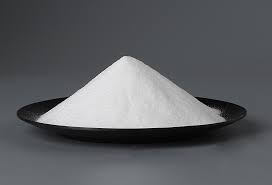
Semiconductor-grade quartz sand is a high-purity form of silicon dioxide (SiO₂) used as the foundational raw material for quartz components in semiconductor manufacturing. Unlike conventional industrial quartz sand, its value is not determined by abundance but by ultra-high purity, impurity control, batch stability, and qualification within semiconductor supply chains. This article reviews its material characteristics, purity classification, industrial chain, technological barriers, and strategic significance in advanced chip fabrication. Particular attention is given to purity grades (4N8 and above), emerging synthetic routes, and supply chain certification requirements.
1. Introduzione
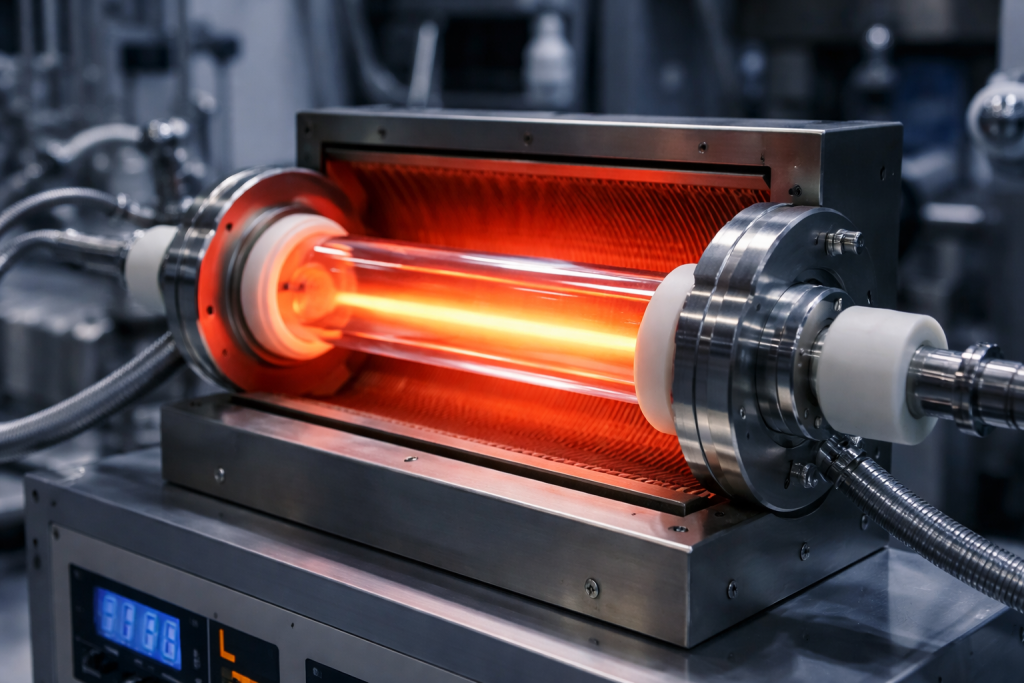
Quartz sand is commonly perceived as a basic industrial material used in glass or construction. However, in semiconductor manufacturing, high-purity quartz sand plays a fundamentally different role. It is transformed into critical consumables such as quartz tubes, quartz boats, quartz rings, and process chambers used in oxidation, diffusion, etching, deposition, and cleaning processes.
In these environments, even trace metallic contamination at ppm or ppb levels can significantly reduce wafer yield. Therefore, semiconductor-grade quartz sand is better understood as a high-purity functional material rather than a bulk commodity.
2. Definition and Material Characteristics
Semiconductor-grade quartz sand refers to ultra-high purity SiO₂ feedstock used to manufacture semiconductor quartz glass and components.
Its key distinction from conventional quartz sand lies in:
- Extremely low impurity content (especially metallic impurities)
- Controlled hydroxyl (OH) content
- Minimal inclusions and gas bubbles
- Strict particle size distribution
- High batch-to-batch consistency
- Qualification through semiconductor customer certification
A useful analogy is:
- Construction sand → structural material
- Optical/industrial quartz → engineered material
- Semiconductor quartz sand → ultra-clean “functional feedstock” for chip fabrication environments
The final products are used in wafer processing equipment where thermal stability, chemical resistance, and ultra-low contamination are required.
3. Purity Classification and Significance of 4N8+
Purity is the most critical parameter in quartz sand classification. The number of “N” indicates the number of nines in purity:
| Voto | La purezza | Applicazione |
|---|---|---|
| 3N | 99.9% | Industrial use |
| 4N | 99.99% | General optical / photovoltaic |
| 4N8 | 99.998% | Semiconductor baseline |
| 5N | 99.999% | Advanced semiconductor |
| 6N | 99.9999% | High-end / critical applications |
Moving from 4N to 5N or 6N is not a linear improvement. Each additional “nine” requires exponential increases in:
- purification process complexity
- analytical detection capability
- contamination control systems
- process reproducibility
As a result, only a limited number of suppliers can consistently meet semiconductor-grade requirements.
4. Strategic Resource Classification
Recent policy developments have elevated high-purity quartz resources to strategic importance. In 2025, high-purity quartz ore was formally recognized as a new mineral type in China, typically defined as quartz capable of achieving ≥99.995% SiO₂ purity under current technological conditions.
However, resource classification does not immediately translate into industrial output. The full value chain includes:
- Mining and ore characterization
- Beneficiation and purification
- Pilot-scale validation
- Mass production stability
- Semiconductor customer qualification
Thus, the bottleneck is not resource availability, but industrial conversion into qualified semiconductor-grade materials.
5. Industrial Demand Structure
The quartz sand industry is often misunderstood as supply-constrained. In reality, low-grade and mid-grade quartz materials are sufficient in supply. The structural scarcity lies in:
- semiconductor-qualified high-purity quartz
- stable, certified, long-term supply capability
Demand segments can be categorized as:
- Low-end industrial quartz: abundant supply, low barrier
- Photovoltaic quartz: large volume, cyclical demand
- Semiconductor quartz: small volume, high price, high switching cost
Although semiconductor demand volume is lower than photovoltaic applications, it exhibits significantly stronger technological and customer lock-in characteristics.
6. Industrial Value Chain
The semiconductor quartz industry can be divided into four layers:
6.1 Raw Materials
Includes natural high-purity quartz ore, chemical precursors, and synthetic SiO₂ sources.
6.2 Purification and Synthesis
Two main technological routes exist:
- Natural purification route: crushing, flotation, acid leaching, thermal treatment
- Synthetic route: chemical synthesis of SiO₂ with potential for ultra-high purity (up to 6N–7N levels)
Synthetic methods offer higher purity potential but face challenges in cost and scalability.
6.3 Quartz Glass and Components
Processed materials are formed into:
- quartz tubes
- quartz boats
- diffusion chambers
- quartz rings and flanges
- etching and deposition components
This stage requires both material purity and precision engineering.
6.4 Semiconductor End-Use
Final demand comes from:
- wafer fabrication plants
- semiconductor equipment manufacturers
- advanced packaging and memory production
Growth drivers include AI computing demand, advanced packaging, and 12-inch wafer fab expansion.
7. Technological Barriers
Key barriers in semiconductor quartz sand production include:
- Ultra-trace impurity control (ppb-level metals)
- Batch-to-batch consistency
- High-temperature stability
- Surface defect control
- Customer qualification cycles (often multi-year)
Even when physical production capacity exists, revenue realization depends on certification by semiconductor equipment or wafer manufacturers.
8. Emerging Technological Trends
Several technological developments may reshape the industry:
- Synthetic quartz materials reducing reliance on natural ores
- Advanced purification techniques (e.g., plasma or chlorine-based processes)
- Integrated supply chains combining material + component manufacturing
- Increased localization of semiconductor consumables
These trends may gradually shift competitive advantages from resource ownership to process engineering capability.
9. Risk Factors
Key structural risks include:
- Long qualification cycles delaying revenue realization
- Cyclicality of photovoltaic-driven quartz demand
- Potential oversupply in mid- to low-grade segments
- Technological disruption from synthetic quartz scaling
Therefore, industry valuation is highly dependent on the transition from capacity expansion to certified semiconductor adoption.
10. Conclusione
Semiconductor-grade quartz sand should not be interpreted as a conventional mineral commodity. Instead, it is a critical enabling material in semiconductor manufacturing, where value is determined by purity, process stability, and supply chain integration.
The core industry question is not “how much quartz exists,” but:
- Can it achieve semiconductor-grade purity?
- Can it maintain stable batch production?
- Can it pass and retain customer certification?
Until these conditions are consistently met, the industry will continue to oscillate between resource-driven valuation and fundamental performance verification.