In precision manufacturing and industrial engineering, material selection extends far beyond choosing the correct glass type. For BF33 borosilicate glass, thickness selection is one of the most critical design factors because it directly influences mechanical strength, thermal performance, optical characteristics, fabrication feasibility, and overall system reliability.
BF33 glass, commonly compared with Borofloat 33 due to its similar composition and performance characteristics, is widely used in optics, semiconductor processing, laboratory systems, display technologies, and industrial equipment. While engineers often focus on thermal expansion or transparency, selecting the proper thickness is equally important for ensuring stable operation and cost-efficient manufacturing.
Understanding how thickness affects performance helps optimize custom BF33 components for specific applications.
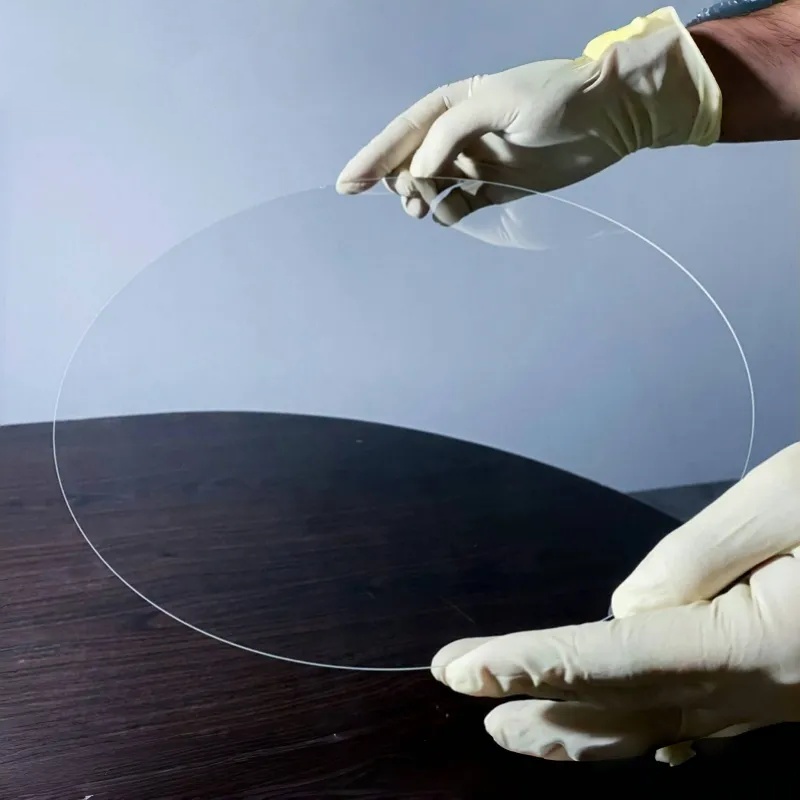
What Is BF33 Glass?
BF33 is a high-performance borosilicate glass characterized by low thermal expansion, excellent optical transmission, and strong resistance to chemical attack.
Typical material properties include:
| Ingatlan | BF33 üveg |
|---|---|
| Composition | Boroszilikát üveg |
| Sűrűség | ~2.23 g/cm³ |
| Hőtágulási együttható | 3.25 ×10⁻⁶/K |
| Lágyulási pont | ~820°C |
| Strain Point | ~515°C |
| Optikai átvitel | Kiváló |
| Kémiai ellenállás | Nagyon magas |
Because of these properties, BF33 is frequently used where thermal stability and precision are essential.
Why Thickness Selection Matters
Glass thickness is not merely a dimensional parameter. It directly affects several engineering aspects:
- Mechanical load capacity
- Thermal stress resistance
- Optical performance
- Weight
- Machining complexity
- Költségek
- Installation requirements
An improperly selected thickness can lead to:
- fracture risk
- excessive thermal stress
- unnecessary material costs
- optical distortion
- assembly problems
Therefore, thickness selection should be treated as an engineering optimization process rather than a simple specification choice.
Mechanical Strength Considerations
One of the primary factors influencing thickness selection is structural loading.
Thin glass structures experience greater bending under pressure or mechanical force.
Thicker glass generally provides:
- higher stiffness
- improved impact resistance
- reduced deflection
- better long-term durability
Typical application guidance:
| Alkalmazás | Recommended Thickness |
|---|---|
| Optical covers | 0.7–2 mm |
| Display windows | 1–3 mm |
| Laboratóriumi szubsztrátumok | 2–5 mm |
| Vacuum viewports | 5–15 mm |
| Semiconductor process windows | 3–10 mm |
| Heavy-load industrial panels | 10–25 mm |
Actual requirements vary depending on geometry and operating conditions.
Thermal Stress Requirements
BF33 is valued for its low coefficient of thermal expansion.
However, temperature gradients inside glass still create internal stresses.
When selecting thickness, engineers should consider:
Thin Structures
Advantages:
- faster thermal response
- reduced weight
- improved heat transfer
Korlátozások:
- lower thermal shock resistance
- increased mechanical fragility
Thick Structures
Advantages:
- stronger mechanical performance
- greater rigidity
Korlátozások:
- slower heat distribution
- higher internal stress during rapid heating
Applications involving repeated thermal cycling require careful balancing.
Optical Performance and Thickness
For optical applications, thickness directly affects transmission and imaging quality.
As glass thickness increases:
- transmission losses increase slightly
- internal reflections may increase
- optical path length changes
- distortion sensitivity may rise
For precision optical systems such as:
- laser equipment
- sensors
- imaging systems
- semiconductor inspection tools
thickness uniformity often becomes as important as thickness itself.
Manufacturers commonly specify:
- total thickness variation (TTV)
- flatness
- parallelism
- surface quality
Vacuum and Pressure Applications
Pressure differentials introduce additional design considerations.
BF33 windows used in:
- vacuum chambers
- analytical equipment
- semiconductor process systems
must withstand mechanical stress generated by atmospheric pressure.
Larger window diameters require greater thickness.
For example:
| Window Diameter | Typical Thickness Range |
|---|---|
| 50 mm | 3–5 mm |
| 100 mm | 5–8 mm |
| 200 mm | 8–15 mm |
| 300 mm | 15–25 mm |
Finite element analysis (FEA) is frequently used for critical designs.
Semiconductor Manufacturing Requirements
Semiconductor equipment introduces unique thickness selection factors.
Components such as:
- process windows
- chamber covers
- wafer handling substrates
- observation ports
must satisfy:
- contamination control
- dimensional stability
- thermal resistance
- precision machining tolerances
Excessive thickness can increase:
- weight
- machining cost
- thermal response time
Insufficient thickness can reduce operational reliability.
Typical semiconductor BF33 components commonly use thicknesses between 3–8 mm.
Manufacturing Constraints for Custom BF33 Parts
Thickness also affects fabrication processes.
As thickness increases:
Machining Difficulty Increases
Processes including:
- CNC grinding
- drilling
- polishing
- edge finishing
become more complex.
Processing Time Increases
Thicker glass often requires:
- longer cutting cycles
- additional stress-relief procedures
- slower polishing rates
Cost Increases
Material consumption and machining effort rise substantially.
Therefore, overdesign should be avoided.
Recommended Engineering Selection Process
A practical selection workflow includes:
Step 1
Define operating environment:
- temperature
- pressure
- chemicals
- mechanical loading
Step 2
Determine optical requirements:
- transparency
- flatness
- surface quality
Step 3
Evaluate structural dimensions:
- diameter
- unsupported span
- mounting method
Step 4
Estimate safety factors
Step 5
Perform simulations when required
Complex industrial applications often use structural analysis before finalizing specifications.
Future Trends in BF33 Glass Design
As precision manufacturing advances, BF33 customization increasingly emphasizes:
- thinner lightweight structures
- improved optical flatness
- larger-format components
- tighter tolerances
- semiconductor-grade cleanliness
Advanced processing technologies continue expanding the design possibilities of BF33 glass.
Következtetés
Selecting BF33 glass thickness for custom manufacturing involves much more than choosing a convenient dimension. Thickness directly influences structural reliability, thermal behavior, optical performance, and manufacturing cost.
An optimized design balances performance requirements with process feasibility and economic considerations. Whether designing optical windows, semiconductor components, laboratory systems, or industrial viewports, understanding the engineering principles behind thickness selection is essential for achieving reliable long-term performance.
GYIK
What is the most common BF33 glass thickness?
Common industrial thicknesses range from approximately 1–10 mm, depending on application requirements.
Does thicker BF33 glass always mean stronger performance?
Not necessarily. Greater thickness improves rigidity but may increase thermal stress, weight, and manufacturing cost.
How is thickness selected for vacuum windows?
Thickness is typically determined by window diameter, pressure differential, safety factors, and structural analysis.