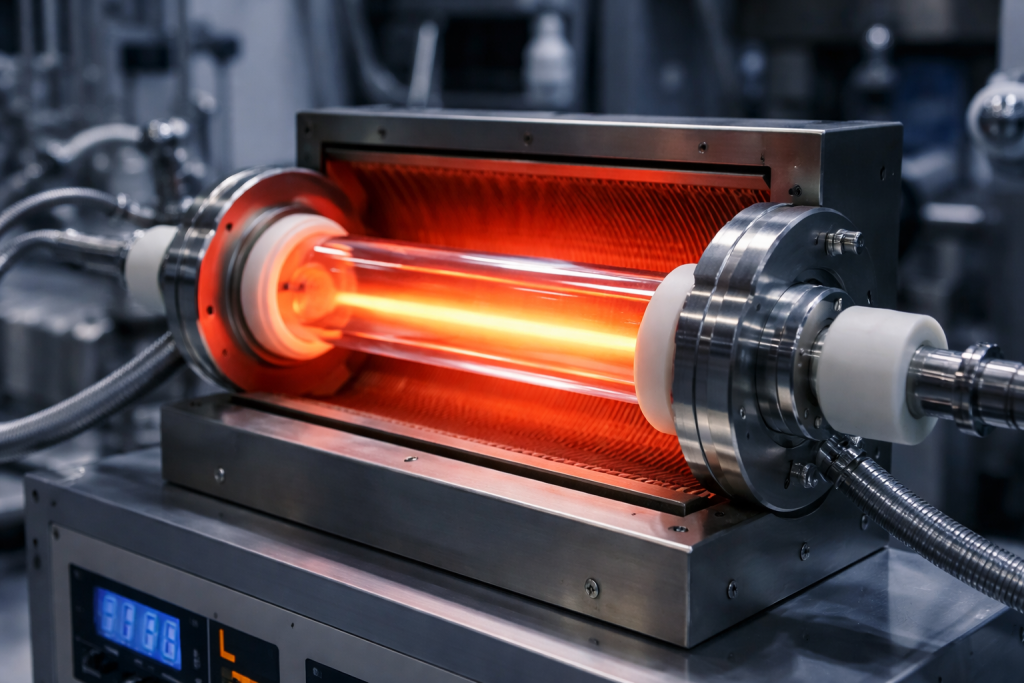
Quartz is one of the most important materials used throughout semiconductor manufacturing. It is widely employed in diffusion furnaces, oxidation systems, CVD equipment, wafer carriers, process chambers, optical inspection systems, and chemical handling components.
However, not all quartz materials are suitable for semiconductor applications. Depending on the process environment, quartz components may require different levels of purity, thermal stability, hydroxyl content, optical performance, and dimensional precision.
Selecting the appropriate quartz material is critical for minimizing contamination, maintaining process stability, and maximizing wafer yield.
Why Semiconductor Manufacturing Relies on High-Purity Quartz
Semiconductor fabrication involves numerous processes operating under extreme conditions:
- High temperatures exceeding 1000°C
- Corrosive process gases
- Reactive chemicals
- Ultra-clean manufacturing environments
- Nanometer-scale device structures
Under these conditions, even trace contamination from equipment materials can affect device performance.
As a result, semiconductor manufacturers typically use كوارتز مصهور عالي النقاء or synthetic fused silica instead of standard industrial quartz.
1. Ultra-Low Metallic Contamination
Material purity is one of the most important requirements for semiconductor quartz.
Metallic impurities may diffuse into wafers during high-temperature processing and impact electrical characteristics.
Particular attention is given to:
- Aluminum (Al)
- Iron (Fe)
- Calcium (Ca)
- Magnesium (Mg)
- Titanium (Ti)
- Sodium (Na)
- Potassium (K)
- Lithium (Li)
Rather than following a single universal specification, impurity limits are typically determined by the semiconductor process and equipment manufacturer.
For advanced semiconductor applications, impurity concentrations are often controlled at the ppm or sub-ppm level.
2. Excellent High-Temperature Performance
Many semiconductor processes operate between 800°C and 1200°C.
Quartz is widely used because it offers:
| الممتلكات | القيمة النموذجية |
|---|---|
| نقطة التليين | Approximately 1730°C |
| Continuous Service Temperature | Up to 1200°C |
| معامل التمدد الحراري | Approximately 0.5 × 10⁻⁶ /°C |
The extremely low thermal expansion coefficient helps minimize thermal stress during rapid heating and cooling cycles.
Common high-temperature quartz components include:
- أنابيب فرن الكوارتز
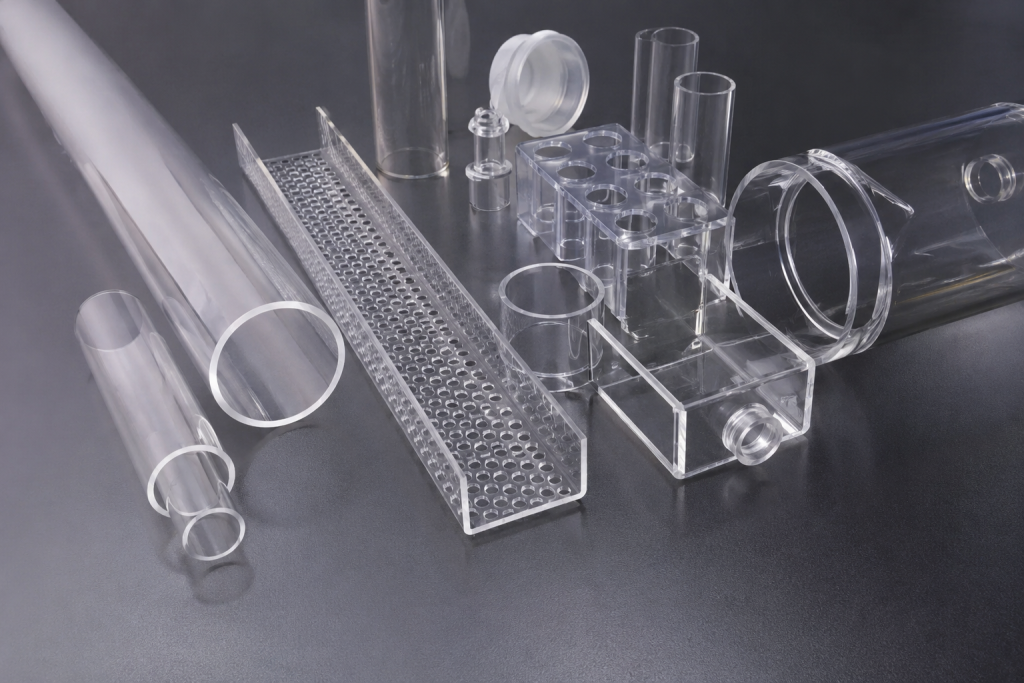
- Quartz boats
- Wafer carriers
- Process liners
- Pedestals
3. Hydroxyl (OH) Content Matters
One frequently overlooked factor is hydroxyl content.
The concentration of OH groups can significantly influence thermal stability and optical transmission characteristics.
Low-OH Quartz
Typically used for:
- Diffusion furnaces
- Oxidation furnaces
- LPCVD processes
Benefits:
- Improved thermal stability
- Reduced high-temperature deformation
- Better infrared transmission
High-OH Quartz
Typically used for:
- UV optical systems
- نوافذ بصرية
- Laser applications
Benefits:
- Enhanced UV transmission
- Superior optical performance
Different semiconductor applications require different OH specifications.
4. Bubble and Inclusion Control
Internal bubbles and inclusions are critical quality indicators for semiconductor quartz.
Excessive bubble density may lead to:
- Particle generation
- انخفاض القوة الميكانيكية
- Localized thermal stress
- Premature component failure
For critical semiconductor applications, quartz materials are often classified according to bubble density and inclusion content.
High-end semiconductor equipment generally requires extremely low bubble and inclusion levels.
5. مقاومة المواد الكيميائية
Quartz exhibits excellent resistance to most acids and process chemicals used in semiconductor manufacturing.
It performs well in environments involving:
- حمض الكبريتيك
- حمض النيتريك
- Hydrochloric acid
- Oxidizing chemicals
However, quartz can be attacked by:
- حمض الهيدروفلوريك (HF)
- Certain strong alkaline solutions at elevated temperatures
Therefore, material compatibility must always be evaluated based on the intended process chemistry.
6. Dimensional Accuracy and Surface Quality
Semiconductor equipment requires highly precise quartz components.
Typical requirements may include:
- التسطيح
- التوازي
- Concentricity
- Surface finish
- Edge quality
In addition, surfaces should be free from:
- Scratches
- Chips
- Cracks
- Foreign inclusions
Surface defects can become contamination sources and reduce process reliability.
7. Cleanliness and Particle Control
Modern semiconductor manufacturing places increasing emphasis on contamination control.
Quartz components often undergo:
- Precision machining
- Acid cleaning
- Ultrasonic cleaning
- High-purity water rinsing
- تغليف غرف التنظيف
A high-purity material alone is insufficient if the final component is not processed and packaged according to semiconductor cleanliness requirements.
Common Quartz Materials Used in Semiconductor Manufacturing
| Material Type | التطبيقات النموذجية |
|---|---|
| كوارتز مصهور | General semiconductor equipment components |
| High-Purity Fused Quartz | Diffusion and oxidation systems |
| Synthetic Fused Silica | Optical and photolithography applications |
| Low-OH Quartz | مكونات الأفران ذات درجة الحرارة العالية |
| High-OH Quartz | UV transmission components |
الخاتمة
Not all quartz materials are suitable for semiconductor manufacturing.
The selection of semiconductor-grade quartz should be based on multiple factors, including purity, hydroxyl content, thermal stability, bubble density, chemical resistance, dimensional precision, and cleanliness requirements.
Because each semiconductor process places different demands on the material, selecting the appropriate quartz grade is often just as important as choosing the correct component design.
For semiconductor equipment manufacturers and wafer fabrication facilities, the right quartz material can significantly improve process stability, reduce contamination risks, and extend component service life.