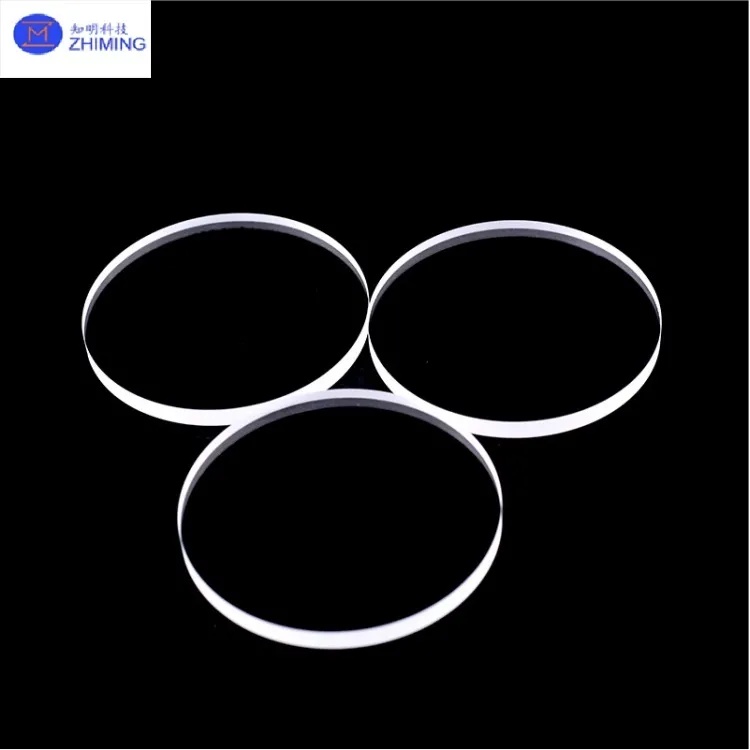
In modern optical systems, imaging in ultraviolet (UV) and infrared (IR) spectral ranges requires materials that combine exceptional transparency, thermal stability, and mechanical durability. Fused silica, a high-purity form of silicon dioxide (SiO₂), has emerged as a leading material for optical lenses in these applications due to its unique combination of optical, thermal, and chemical properties. This article provides an in-depth analysis of fused silica optical lenses, focusing on their material characteristics, advantages, and practical applications in UV and IR imaging.
Optical Properties of Fused Silica
Fused silica exhibits a broad transmission range, from approximately 180 nm in the ultraviolet to over 3,500 nm in the infrared, making it highly versatile for multi-spectral imaging. Its high transparency in the UV range is particularly valuable for applications such as UV spectroscopy, photolithography, and scientific imaging, where conventional optical glasses are often opaque or strongly absorptive. In the IR range, fused silica maintains excellent transmission while offering low absorption, which is critical for thermal imaging and IR laser systems.
Additionally, fused silica has a very low refractive index variation across a wide wavelength range, minimizing chromatic aberration. This allows optical designers to produce high-resolution lenses with minimal distortion, which is essential for precision imaging in both scientific research and industrial applications.
Thermal and Mechanical Stability
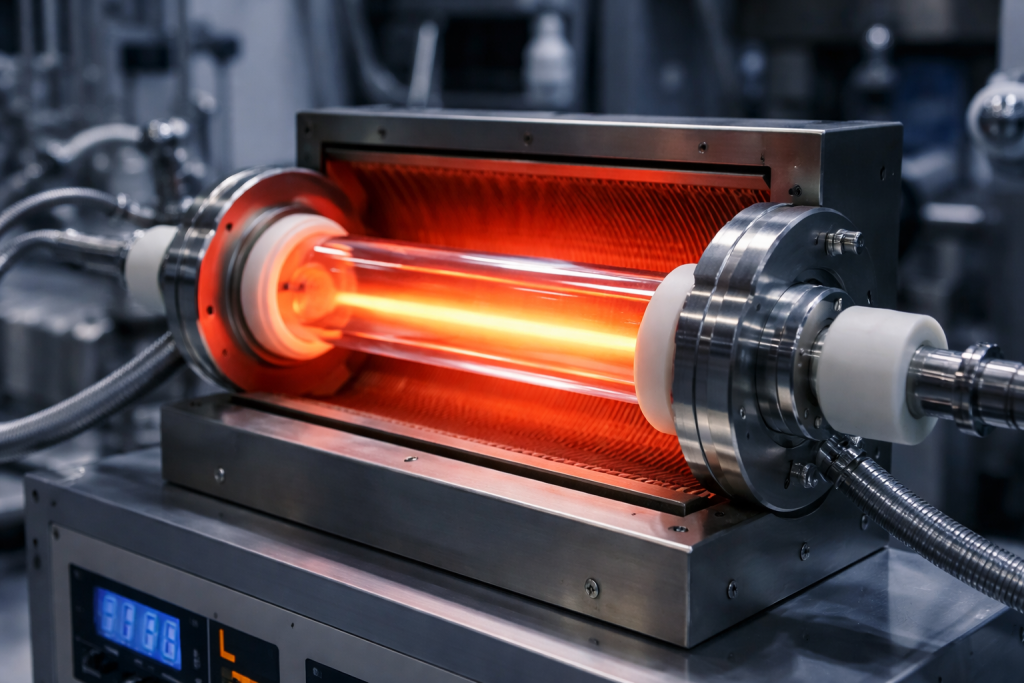
One of the most significant advantages of fused silica lenses is their outstanding thermal stability. Fused silica has a very low coefficient of thermal expansion (approximately 0.5 × 10⁻⁶/K), which allows optical lenses to maintain their shape and alignment even under rapid temperature fluctuations. This property is crucial for UV and IR imaging systems, which may operate in high-power laser setups or outdoor environments where temperature variations are frequent.
Fused silica also demonstrates excellent mechanical durability. With a Mohs hardness of around 6.5–7 and a high Young’s modulus, it can resist scratching, bending, and mechanical stress. This ensures that lenses maintain their optical performance over long-term usage and in harsh conditions, such as laboratory experiments, semiconductor inspection, or industrial imaging systems.
Chemical Resistance and Longevity
In addition to optical and mechanical properties, fused silica is highly resistant to chemical corrosion. It does not react with most acids, bases, or organic solvents, making it suitable for use in chemically aggressive environments. For UV and IR imaging systems that require regular cleaning or exposure to industrial gases, this chemical resistance extends the service life of optical components and reduces maintenance requirements.
The combination of thermal stability, mechanical durability, and chemical resistance ensures that fused silica optical lenses offer a long operational lifetime, maintaining consistent imaging quality over time. This reliability is a key factor in both research-grade instrumentation and high-volume industrial production.
Applications in UV and IR Imaging
Fused silica optical lenses are widely employed in diverse applications requiring high-performance UV and IR imaging:
- Scientific Research: UV spectroscopy, microscopy, and high-resolution imaging systems rely on fused silica lenses to provide accurate, distortion-free light transmission.
- Industrial and Semiconductor Inspection: IR imaging and laser systems used in wafer inspection, photolithography, and microelectronics manufacturing benefit from the thermal and mechanical stability of fused silica lenses.
- Medical Imaging and Diagnostics: Certain IR imaging systems, such as thermal cameras for medical diagnostics, use fused silica lenses for high transparency and minimal optical aberration.
- Laser Systems and Photonics: High-power UV and IR lasers, including excimer and CO₂ lasers, require optical components that can withstand intense radiation without degrading. Fused silica lenses are well-suited for these applications due to their low absorption and high damage threshold.
الخاتمة
Fused silica optical lenses represent an essential material for high-performance UV and IR imaging systems. Their broad spectral transmission, low thermal expansion, high mechanical durability, and chemical resistance make them indispensable in scientific, industrial, and medical applications. As imaging systems continue to demand higher precision, greater stability, and longer operational lifetimes, fused silica lenses will remain a cornerstone of optical design, enabling accurate, reliable, and high-quality imaging across the UV and IR spectrum.